0
0

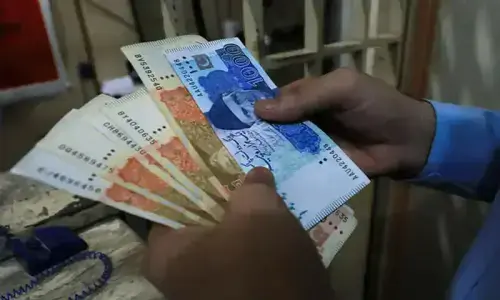
As inflation climbs into double digits, most Pakistanis are living day to day, struggling to make ends meet. With the national budget under preparation, it is a busy period for corporates, who rely on networks for insights into likely measures while using formal and informal channels to engage policymakers and present their wish lists.
Ordinary Pakistanis, largely disengaged from the technicalities of budget-making and wary of number juggling, judge national budgets by their impact on their pockets. A politically opinionated public remains sceptical, expecting little relief from a government preoccupied with geopolitics currently.
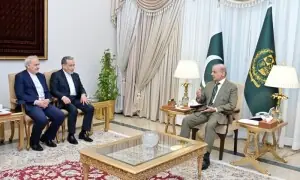
Businesses, while backing Prime Minister Shahbaz Sharif’s globally recognised peace initiatives, want the same urgency applied to removing domestic irritants that deter investment, weaken capital formation and constrain job creation.
While most regional and sectoral business bodies are still finalising their proposals, information gathered suggests that several leading national business forums submitted detailed budget recommendations to the government earlier this month and remain actively engaged with the official economic team.
Several leading national business forums have submitted detailed recommendations to the government and remain actively engaged with the official economic team
Khurram Schehzad, adviser to the finance minister, confirmed the month but not a specific date. “The budget will be announced in June as usual, though the exact date has yet to be decided. It is likely to be in the first half of the month,” he said when approached. Senior officials at the Ministry of Finance declined to comment on any budget-related matters at this stage.
“Without bold initiatives to energise the private sector, boost capital formation, create jobs and deliver a decent GDP growth rate, improved global perception will not suffice. We understand the value of adverse image well, having often faced difficult, even humiliating, treatment from trade partners during negotiations,” a distressed tycoon said privately.
“One must also remember, however, that lasting strength and respect of a country in the comity of nations rests on economic resilience. If we fail to put our house in order, the goodwill earned with effort will dissipate quickly,” he added.
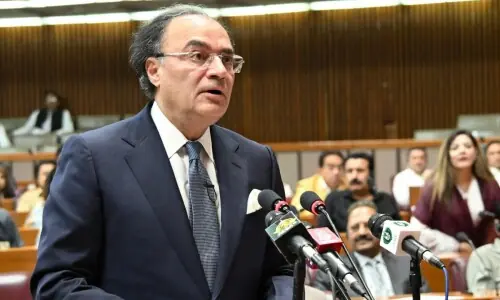
According to senior officials involved in the budget process, the Pakistan Business Council (PBC) has presented its policy recommendations to Finance Minister Aurangzeb Khan in Islamabad ahead of his departure for the Spring Meetings of the World Bank and the International Monetary Fund in the US.
During the interaction, the PBC highlighted structural and external barriers constraining export growth. It pointed to a slightly overvalued exchange rate and cited smuggling, dumping and under-invoicing as key factors undermining competitiveness, alongside limited market access and weak trade agreements. With exports at around 10–10.5 per cent of the GDP, Pakistan lags behind peers such as India, Bangladesh and Vietnam.
The council called for a shift from import substitution to export-led growth, supported by duty-free access to raw materials, stronger export financing and insurance. It recommended restoring the one per cent Final Tax Regime to ease liquidity and fully reinstating the Export Facilitation Scheme to reduce input costs.
Energy constraints, particularly high and unpredictable tariffs and unreliable supply, were flagged as a major impediment, requiring pricing reforms, supply continuity and market deregulation. The PBC also highlighted that high personal taxes and the Capital Value Tax are driving capital and talent offshore, underscoring the need to reduce tax distortions and improve the ease of doing business, particularly in contract enforcement and property registration.
It stressed that sustained progress in Pakistan hinges on institutional reforms, including a Charter of Economy, to ensure policy continuity and unlock investment, exports and long-term growth.
Abdul Aleem, Secretary General of the Overseas Investors Chamber of Commerce and Industry (OICCI), said the chamber has already shared its budget proposals with the government. “As part of this engagement, the Minister of State for Finance and Revenue, Bilal Azhar Kayani, visited OICCI on April 19th, 2026, to discuss our recommendations with senior leadership,” he noted.
He said OICCI proposals focus on broadening the tax base and creating a more equitable tax framework by bringing under-taxed sectors, including agriculture, retail, wholesale, real estate and services into the documented economy through a structured digitised approach.
The chamber has also proposed phasing out the Super Tax, lowering corporate tax rates to improve regional competitiveness, rationalising withholding taxes, and gradually reducing sales tax. It further called for faster tax refunds, better coordination between federal and provincial tax authorities, and a curb on excessive audits and recovery actions.
On the broader role of business, Mr Aleem emphasised that the private sector remains central to investment, job creation, and economic stability. Despite policy challenges, OICCI members, many of whom represent multinational firms, continue to invest and expand. With a stable and predictable policy environment, he said, businesses can scale up investment, strengthen supply chains, boost exports, and create quality jobs, helping revive demand and sustain long-term growth.
Eizaz Sheikh, a senior leader of the cement industry, urged the government to rein in spending, ease the tax burden on industry and accelerate the privatisation of resource-draining state-owned enterprises to put the economy back on a sustainable growth path.
Published in Dawn, The Business and Finance Weekly, April 27th, 2026