Wheat harvesting — changing dynamics and fallout


 0
0
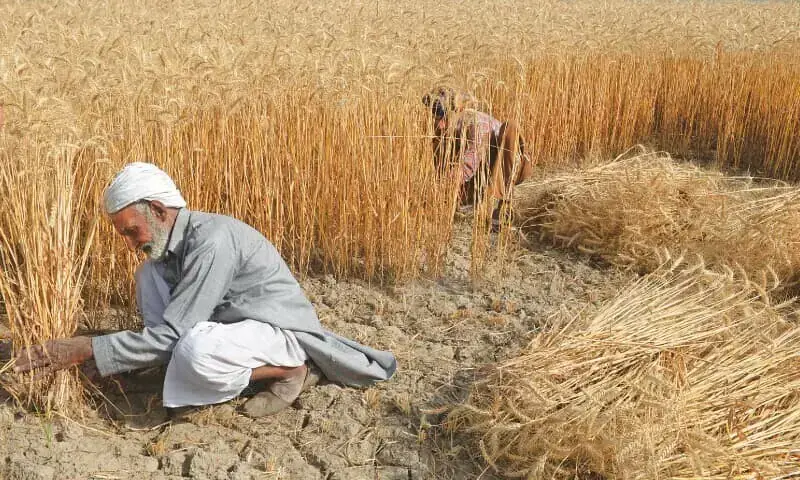

The wheat harvest season is currently in full swing in Punjab, while in Sindh, it is drawing to a close. Over time, wheat harvesting practices have steadily evolved in response to technological advancement and a range of emerging challenges, including climate change, a shrinking harvest window, and growing labour constraints.
In this changing environment, four distinct wheat harvesting methods are now widely practised. However, farmers’ preferences vary across regions, shaped by factors such as farm sizes, the need for wheat chaff (toori), the risk of erratic rainfall, access to harvesting and threshing machinery, and relative cost considerations.
For the past several decades, farmers across most districts have relied on the traditional method: manually cutting the crop with sickles, tying it into bundles, leaving them in the field for a few days to reduce moisture, and then threshing with tractor-driven threshers. This method remains particularly attractive for smallholders, as it produces high-quality chaff (toori), highly valued as livestock feed.
A slightly mechanised variant involves tractor-mounted reapers — costing around Rs200,000 — for cutting, while labour is still employed to tie the crop into bundles, which are then fed into the thresher. A more advanced version, the reaper-cum-binder, performs both cutting and binding simultaneously. However, it increases cost as the binding thread alone costs around Rs2,500 per acre, compared to traditional rope made from rice straw.
The rapid shift towards capital-intensive harvesting is transferring income from small farmers and labourers to machinery service providers, further widening the rich-poor gap
Once popular among farmers, the use of threshers and reapers is now declining rapidly in Pakistan, as farmers increasingly shift towards combine harvesters.
According to Usman Mughal, Managing Director of Greenland Engineers, Daska (District Sialkot), manufacturers in the Daska cluster alone used to produce over 15,000 reapers annually a decade ago; this figure has now dropped to barely 3,000 units in 2026. At the same time, thresher sales have also declined sharply — by nearly 50pc over the past four years.
He attributes this shift primarily to weather-related risks and labour shortages. Unlike combine harvesters, reapers cannot effectively handle lodged crops — a problem that has become more frequent due to untimely rainfall and windstorms during March and April. Moreover, rising machine prices — a thresher now costs 0.8 to one million rupees — and the declining purchasing power of farmers are key factors behind the drop in sales.
Even so, threshers and reapers continue to retain their relevance in some regions, such as Pothohar, where farm fields are small, irregular, and uneven, making the movement of combine harvesters difficult. Likewise, threshers remain widely used among smallholders who rely on family labour for crop cutting or require fine wheat chaff for their livestock.
As a natural outcome of declining new sales, the repair, maintenance, and spare parts business for ageing threshers and reapers has expanded significantly. However, these older machines tend to consume more tractor diesel and cause higher harvesting losses.
Another critical factor driving the shift toward combine harvesting is the narrowing harvest window. A few decades ago, wheat harvesting in a given district of Punjab extended over nearly two months. Today, it has shortened considerably due to erratic rainfall and other climate-related risks. At the same time, increasing economic pressure — especially on small farmers —forces them to clear fields quickly to fit in an additional crop — like sesame or fodder — between the Rabi and Kharif seasons. This requires immediate land clearance — something that is only feasible with combine harvesters.
Although labour remains available in rural areas of most districts due to sluggish industrial and commercial activities in the country, the compression of the harvest season creates sharp, short-term spikes in demand. During the peak harvest period, labour availability comes under severe pressure as most farmers rush to complete harvesting within a limited timeframe. In such circumstances, combine harvesters offer a practical advantage, making them an increasingly preferred choice, irrespective of harvesting cost.
Previously, many farmers disliked combine harvesters, as they left wheat straw and residue scattered in the field. However, over the past two years, locally modified combine harvesters — equipped with choppers and D-shaped tanks for chaff collection — have been gaining traction. These modifications enable farmers to harvest both grain and wheat straw in a single operation.
As a result, farmers are no longer compelled to burn crop residue to clear their fields — thereby reducing air pollution — or to rely on tractor-driven straw choppers to make chaff from leftover straw or use balers to collect, compress, and bind this wheat straw.
In this evolving scenario, the increasing reliance on combine harvesters has broader economic implications. Unlike India, Pakistan does not manufacture combine harvesters. The growing dependence on imported machinery and the recurring cost of spare parts place additional pressure on foreign exchange reserves. Given the high cost of new machines, models from the 1970s and 1980s remain in operation, resulting in higher harvesting losses.
On the other hand, hundreds of small and medium enterprises (SMEs) engaged in manufacturing threshers and reapers — particularly in clusters such as Daska, Faisalabad, Okara, and Mian Channu — are facing severe business decline.
This downturn has also adversely affected the business of their vendors and significantly reduced employment opportunities. Similarly, increased use of combine harvesters is displacing rural labour that once relied on seasonal harvesting work, thereby exacerbating rural poverty.
Given these developments, the government must closely monitor the ongoing transformation of the agriculture sector and its spillover effects on industry, employment, and income distribution. The rapid shift towards capital-intensive harvesting is transferring income from small farmers and labourers to machinery service providers. This is further widening the rich-poor gap and deepening rural distress.
Khalid Wattoo is a development professional and a farmer. Dr Waqar Ahmad is a former Associate Professor at the University of Agriculture, Faisalabad.
Published in Dawn, The Business and Finance Weekly, April 27th, 2026