Century-old historic structures obscured by new walls in Chakwal
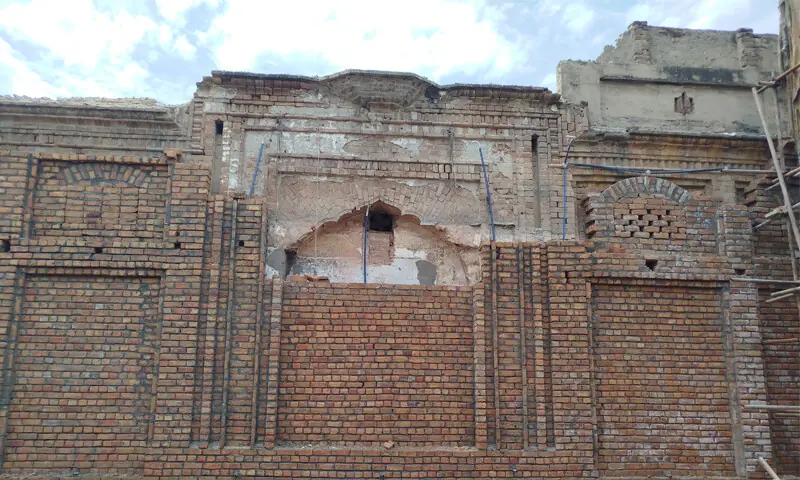
Instead of preserving the few remaining historic monuments, the Chakwal administration, in its apparent pursuit of ‘beautification’, is burying century-old buildings by constructing new walls in front of them.
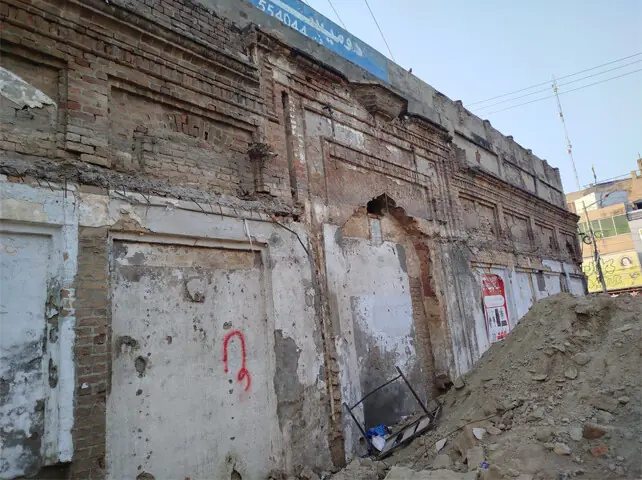
A 108-year-old deorhi (a fortified entrance) and the facade of a century-old historic school have vanished from sight as new brick walls have been raised in front of them.
These historic structures are not only part of Chakwal’s architectural heritage but also symbols of the peaceful coexistence of Muslims, Hindus and Sikhs before partition.
Their disappearance from view threatens to erase that shared past.The move has drawn criticism from citizens, who termed it bureaucratic indifference towards heritage.
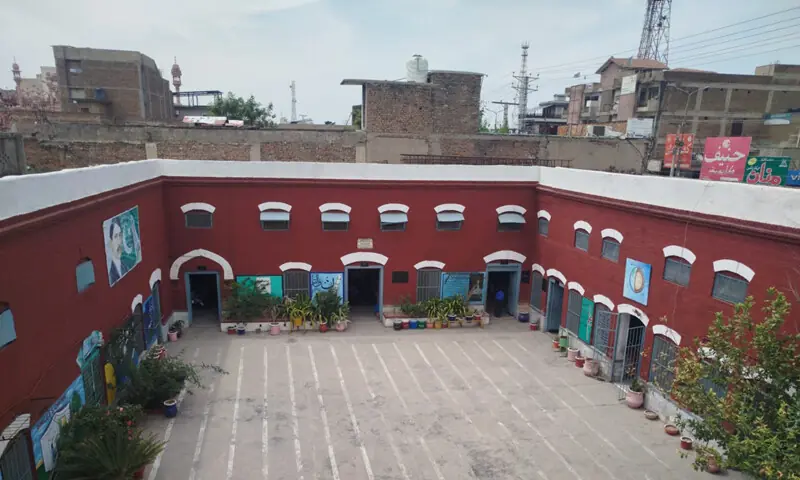
The administration is racing against time to complete the beautification project, being carried out at a cost of more than Rs300 million in Chhapar Bazaar.
The deorhi was built in 1917 by Lala Ram Chand Chadha, a philanthropist from the historic village of Roopwal, in memory of his father, Lala Anokh Rai, at the entrance of Chakwal’s Chhapar Bazaar. Its exact purpose remains unclear, but it is believed to have been an extension of a primary school established by the Hindu residents of Chakwal under the Arya Samaj movement, named Sanatan Dharam Dayanand School.
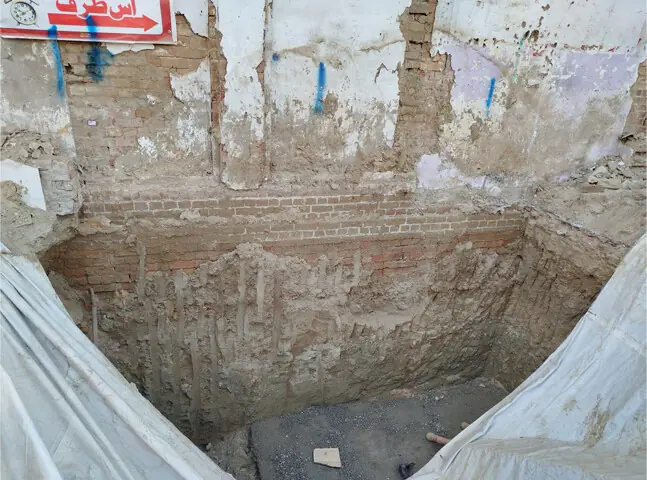
“Deorhi was, in fact, the main entrance of the school opening onto Chhapar Bazaar, but later the school’s gate was installed on Talagang Road,” said Tallat Mehmood, 84, a retired schoolteacher.
A plaque still installed on a wall of the school states that the building was constructed by Thakar Harbhagwan in memory of his lord, General Partap Singh, in 1980 Bikrami, corresponding to 1924 in the Gregorian calendar.
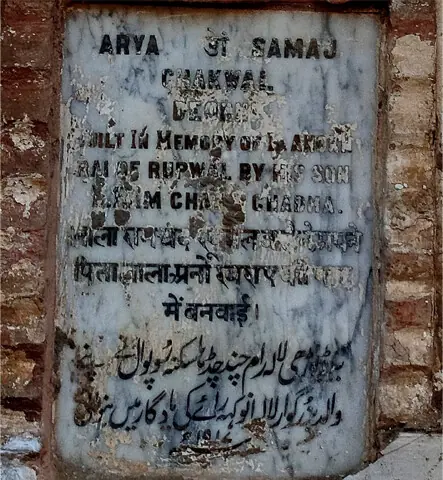
This suggests that the structure built by Thakar Harbhagwan was an addition to an already existing building that had a deorhi constructed in 1917.
The deorhi, which initially served as the main entrance to the school, was later converted into a telegraph office after partition and subsequently into a post office, becoming part of Chakwal’s daily life.
Lala Ram Chand Chadha, along with other Hindu and Sikh residents of Chakwal district, was forced to leave during partition.
However, institutions established by them, including schools in Neelah, Munday, Hasola, Bhoun, Vahali and Dhudial, as well as four schools in Chakwal, including this one, and two hospitals, remained as symbols of their contributions.Sanatan Dharam Dayanand High School survived Partition but lost its original name.
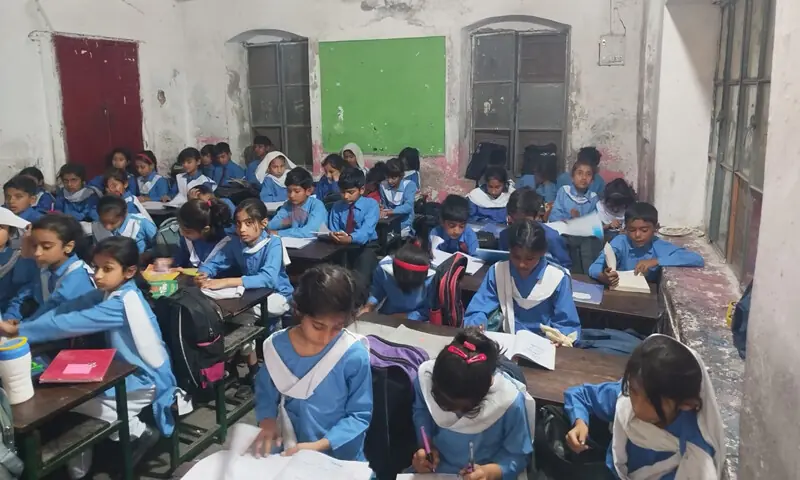
It was downgraded to the elementary level and renamed Municipal Committee Elementary School, Chakwal.
The historic building, which now has 360 students, 10 teachers and one class-IV employee, is in need of urgent attention, as its ceilings leak during rains and its wall facing Chhapar Bazaar has also been damaged during the ongoing beautification drive.
The deorhi built by Lala Ram Chand Chadha has also suffered due to official neglect.
Following the 1971 crisis, sixteen shops were constructed for Bihari migrants in front of the deorhi, with its raised ramp demolished and entrance blocked.
Over time, the structure faded from public memory. However, during the current beautification drive, the shops built in the 1970s were demolished last January, revealing the historic wall of the deorhi with a plaque at its centre.
Years of neglect failed to damage the historic structure, but instead of preserving it, the district administration has now built another wall in front of the deorhi and the school façade, concealing them from view.
“There is a significant difference between renovation and preservation. Unfortunately, our officers tasked with running districts are incapable of preservation,” lamented Salman Rashid, a veteran travel writer.
“This plastering over of Chakwal’s pluralistic heritage has erased an authentic cultural memory, replacing it with a replica that feels hollow and artificial,” said retired Prof Shahid Azad, president of the Chakwal Awami Forum.
When contacted, Additional Deputy Commissioner (General) Bilal Bin Abdul Hafeez said preservation was too costly and could be undertaken through the Walled City Authority Lahore.
“The new design was prepared by Nespak, which is the consultant for the ongoing beautification drive of Chhapar Bazaar,” he added.
Published in Dawn, April 27th, 2026