“BOOKS are on their way to extinction”, cynics declare ceremoniously. “Urdu books! who reads them anyway?”, some naysayers announce sardonically. On the contrary, on World Book Day, celebrated annually on April 23 under Unesco, we can rest assured that books do sell well and there are people who do read Urdu books and cherish them. The latest evidence to the statement is the third edition of an Urdu book on a topic even scholars barely browse through, let alone students and common readers: it is a book on rhetorical, expositional, semantic and artistic devices that are used to embellish literary works.
Titled Urdu Mein I’lme-i-Bayaan Aur I’lm-i-Bad’ee Ke Mabahis: Tehqeeqi-o-Tanqeedi Jaaeza, or debates on rhetoric and embellishment devices in Urdu, a research and critical survey, the book is a doctoral dissertation by Dr Muzzammil Husain. Though originally awarded a degree about a couple of decades ago, it took some time to be published in book form. As soon as it hit the bookshelves, the book became quite popular and was considered a reference work for those working on the related topics or teaching literary techniques and criticism at universities. Soon it ran into a second edition and the persistent demand has resulted in a recent third edition. In a country that has never been referred to in enviable terms when it came to reading habits, the publication of the third edition of a book that apparently sounds ‘dry’ and ‘drab’ is indeed a reason to celebrate and a proof that people do read Urdu books and love them, provided that the book in question will get them their money’s worth.
Dr Muzzammil Husain first defines i’lm-i-balaaghat, or rhetoric. He says fasaahat, or perspicuity — or the use of language that is lucid, free from obscurity and in line with the standards — is considered a part of rhetoric. I’lm-i-balaaghat has two branches, the first is i’lm-i-bayaan, or the knowledge of eloquence that deals with metaphorical language, such as, tashbeeh (simile) and isti’aara (metaphor). It also includes kinaaya (metonymy), majaaz-i-mursal (synecdoche or a part presenting the whole and vice versa) and their secondary varieties. The other branch is i’lm-i-bad’ee, or the art of embellishing the literary texts with devices. Then he says i’lm-i-bad’ee has two main parts, one is called sanaa’ema’anavi (tropes or the use of words in deeper or different sense) and the other is sanaa’e lafzi (schemes or creative manoeuvring of letters or words or sounds). Both have some secondary categories that poets and prose writers use for rhetorical effects, for instance, tajnees (homonymy), zu qaafiyatain (doubly rhymed), zu lisaanain (macaronic verse), idmaaj (double entendre), tazaad (antonymy), tajaahul-i-a’arifaana (aporia or pretended ignorance), talmeeh (allusion), husn-i-ta’leel (poetic aetiology), mubaalgha (hyperbole), hajv-i-maleeh (implied lampoon) and a whole host of other terms. In fact, Dr Mazzammil’s mastery over these terms is amazing. What makes it more attractive is that he defines these terms with lucid example from Urdu poetry. The couplets selected for explanation, too, denote his vast reading of classical Urdu poetry.
He says in his intro that the book is basically a research work on books written in Urdu on bayaan and bad’ee and is an endeavour to find out how these topics developed in Urdu. The first two chapters discuss the nature of these branches of knowledge and their categories and sub-categories with examples. The third chapter traces and evaluates Urdu books written on bayaan and bad’ee. Aside from an early work penned in Deccan and a couple of translations from Persian, such as Darya-i-Lataafat and Hadaaeq-ul-Balaaghat, the earliest Urdu work on balaaghat is Tazkirat-ul-Balaaghat, written by Zulfiqar Ali, published in 1909, says the author. The analysis of the literary devices used by poets of Urdu, right from beginning in Deccan to the modern times, along with examples from their verses, is an interesting study. The couplets quoted crystalise the literary devices.
Published by Islamabad’s Idara-i-Farogh-i-Qaumi Zaban, formerly Muqtadira Qaumi Zaban or the National Language Authority, the 521-page book comprehensively covers almost all the rhetorical and compositional devices. Dr Saleem Mazhar, the director general, while quoting Dr Syed Abdullah, says i’lm-i-balaaghat, or the art of rhetoric and eloquence, is among the branches of knowledge that are our cultural identity. The study covers Urdu poets from beginning to the early 2000s, he adds.
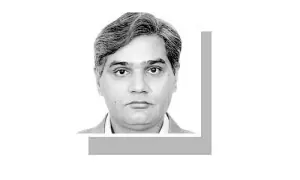
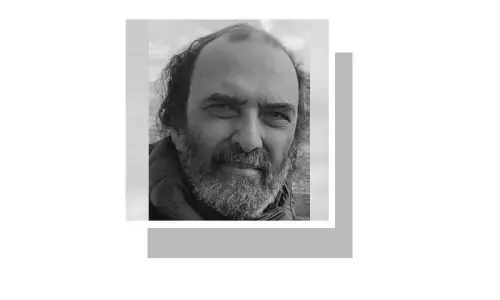
Born on Jan 25, 1962, in district of Layyah (also spelt Leiyah), Punjab, Dr Muzzammil Husain is an academic, critic and researcher known for his works on Urdu and Seraiki literatures. He has to his credit over 20 books, both in Urdu and Seraiki.
Published in Dawn, April 27th, 2026