NA panel seeks review of high taxes on mobile phones
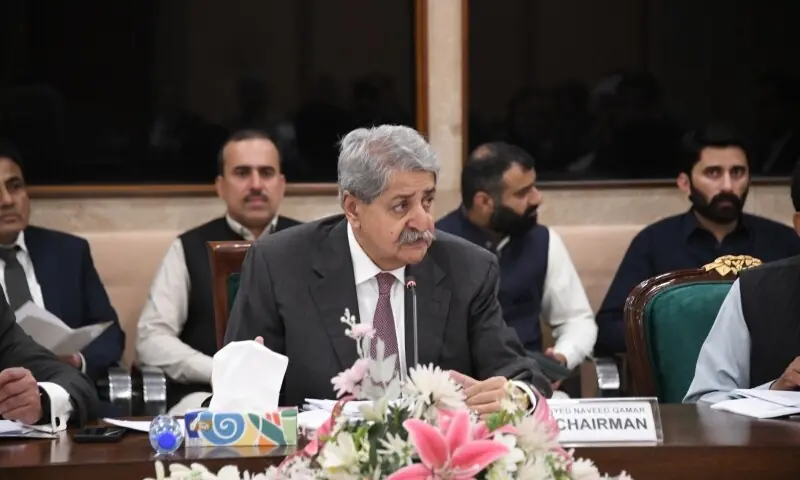
• Recommends tax reduction for sake of affordability; Qamar likens income tax on phones to sales tax
• Senate committee questions high SMS alert charges
ISLAMABAD: A parliamentary committee on Thursday expressed concern over the high tax burden on mobile phones, directing the Tax Policy Office (TPO) in the Ministry of Finance to submit a detailed report on the existing taxation structure for both imported and locally manufactured devices.
The National Assembly Standing Committee on Finance, chaired by MNA Naveed Qamar, observed that income tax on mobile phones was effectively being treated as a sales tax and directed the authorities to review the practice.
The committee also asked for a detailed written note outlining the rationale, revenue implications and policy objectives behind the current tax regime. FBR Chairman Rashid Mahmood Langrial briefed the committee on the mobile taxation.
After a presentation, the committee recommended a reduction in mobile phone taxes. Tax officials assured the committee that the matter would be reviewed during the upcoming fiscal year budget process.
Mr Qamar called for a detailed report, particularly on the tax treatment of mobile phones under the Completely Built Unit (CBU), Completely Knocked Down (CKD) and Semi Knocked Down (SKD) categories.
The committee recommended a review of the existing taxation structure to ensure equity, improve affordability and support local manufacturing, while also assessing exemptions available under the Income Tax Ordinance, 2001, and the Baggage Rules, 2006.
Members were informed that imported mobile phones priced above $500 attract a total tax burden of around Rs76,000, translating into an effective tax rate of about 54pc. Devices in the $700-$750 range face a slightly higher incidence, with taxation reaching nearly 55pc.
FBR officials said imported handsets were taxed at around 54pc of their value, while locally manufactured or assembled devices were subject to a lower rate of roughly 25pc.
The briefing noted that an 18pc general sales tax (GST) applies to mobile phones, along with concessional income tax and a withholding tax of approximately Rs11,500 on higher-end devices.
FBR officials maintained that there was currently no room to reduce the GST or withholding tax rates.
Mr Qamar stressed the need to promote access to modern technology, saying it was vital for economic growth. He observed that the imposition of additional income tax on mobile phones was unjustified when sales tax was already being charged.
The committee was also informed about statutory exemptions for mobile phones imported by visually impaired persons and those brought under the personal baggage rules, as well as the applicable ad valorem sales tax rates ranging from 18pc to 25pc, depending on the value and classification of the devices.
The panel also recommended, with amendments, the passage of the Special Economic Zones Amendment Act, 2026, the Parliamentary Budget Office Bill, 2025, and the Export-Import Bank of Pakistan Amendment Bill, 2026.
Senate panel
Separately, the Senate Standing Committee on Finance, chaired by Senator Saleem Mandviwalla, received a detailed briefing from the State Bank of Pakistan (SBP) on SMS alert charges in the banking sector.
The committee expressed displeasure at telecom companies’ failure to submit data. The Pakistan Telecommunication Authority (PTA) chairman informed members that banks use bulk SMS services via aggregators, thereby increasing per-message costs.
It was noted that customers receive an average of around 15 SMS alerts per month.
Mr Mandviwalla directed banks and telecom companies to submit detailed data on SMS costs and revenue generation and instructed the PTA to develop a comprehensive solution in consultation with stakeholders.
The committee also reviewed a request for government support to promote PayPak. The minister of state for finance told the panel that the government was advancing cashless transactions through QR-based payment systems.
Members were informed that PayPak usage had increased significantly and was being co-badged with international systems such as Visa. The committee appreciated the progress and emphasised the need to promote PayPak further to reduce reliance on international payment networks and limit foreign exchange outflows.
The issue of asset declarations by government servants was also discussed, with the committee expressing concern about the FBR’s non-implementation of relevant laws. Senator Sherry Rehman termed the lack of seriousness a “gross violation of law”.
The committee chairman directed the minister of state to coordinate with the Establishment Division and the FBR to resolve the matter and report back at the next meeting.
The committee also considered the Corporate Social Responsibility Bill, 2026, and unanimously recommended it for passage with amendments, including making the disclosure of CSR activities mandatory.
Published in Dawn, April 17th, 2026