0
0

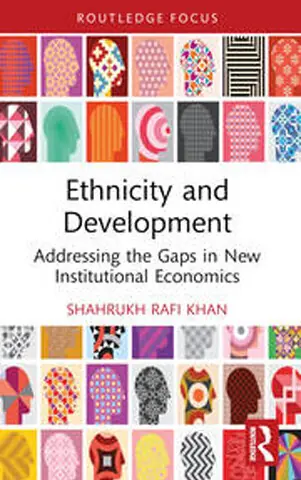
Ethnicity and Development: Addressing the Gaps in New Institutional Economics
By Shahrukh Rafi Khan
Routledge
ISBN: 978-1032630830
92pp.
Identifying the factors that caused some nations to progress and prosper, while most others continue to struggle in poverty and deprivation, is the holy grail of development economics.
There are a number of theories, ranging from the obvious effects of the gains of colonialism (which essentially involved plunder), to theories on the effects of climate on development (the idea that people work less in hot countries). The only consensus is that there is probably a mix of factors — geography, history, environment and the occasional sagacious ruler — that have, over millennia, shaped the world as it exists now.
Amongst the long list of development economists who have tried to crack the code, so to speak, the name of Douglass North — and his framing of New Institutional Economics (NIE) — has stood out over some decades. North was an economic historian who emphasised the role of institutions in shaping development.
The core idea was simple — that economic agents may well be considered rational, but they lack complete information on markets, and incur costs in investigating potential partners and rivals, as well as market trends in general. However, if countries build institutions that can enforce contracts, ensure basic law and order, and provide reliable information on how markets are operating, then rational economic agents can operate with minimal transaction costs. This gives them an incentive to invest and save and thus drive economic growth. North’s essential premise has been examined further by many academics, notably Daron Acemoglu and James Robinson.
A brief treatise by a well-known Pakistani economist explores the impact of ethnic friction on the success or failure of nations
The brief treatise that is the subject of this review was written by Dr Shahrukh Rafi Khan, a well-known Pakistani economist. It examines the NIE hypothesis and posits that it is blind to the effects of ethnic diversity and conflict on development. Thus, according to Dr Khan, low- and lower middle-income countries (L/LMICs) that have ethnically diverse populations need to build national cohesion as a priority, along with building institutions for economic regulation and the establishment of the rule of law.
This premise is explained in some detail in this book, which reads like a paper in an academic journal, and is also structured as such. The book begins with a detailed review of literature on the success and failure of nations. But the first chapter concludes with the contention that L/LMICs, most of which are post-colonial states characterised by hastily drawn borders, need to focus first on “horizontal inclusion”, and build a sense of nationhood amongst their (often) ethnically diverse populations, before institutions of the state and regulators can effectively do their jobs.
To explain his point further, Dr Khan makes a distinction between what he calls “natural” nations, or those which feature a dominant ethnic identity, and “constructed” nations, which are ethnically, as well as culturally and/or religiously diverse. He cites a number of quantitative, cross-country studies that uphold the hypothesis that ethnically diverse nations are more prone to internal conflict, which in turn undermines social and economic development.
Dr Khan picks up two case studies to further explore how ethnic diversity (or, on the other hand, uniformity) may impact economic development. The first is a “natural” experiment, ie the comparison of Pakistan and Bangladesh. This is a case that lends itself to the examination of Dr Khan’s hypothesis, given that the two nations were once two wings of the same country, but had quite different ethnic characteristics. East Pakistan (now Bangladesh), being largely ethnically homogenous, and West Pakistan being anything but.
After the 1971 war, and Bangladesh’s declaration of independence, the two countries have diverged significantly in terms of economic and social progress. Dr Khan examines a range of economic and governance indicators and, unsurprisingly, finds that Bangladesh has not only left Pakistan behind on key indicators, but has also succeeded in progressing without exacerbating inequality in society. Thus, Bangladesh has not only demonstrated sustainable growth over the last decade or so, but seems to have achieved this in an inclusive manner.
The second case is that of the Balkans, mainly the nations that once constituted the former Yugoslavia. Of the eight Balkan states whose data was analysed, two (Croatia and Kosovo) are largely ethnically homogenous, while two more (Serbia and Slovenia) also have a homogenous population (with more than 80 percent of the population belonging to one ethnic group). But the four other nations are ethnically diverse, and have not only witnessed ethnic tension, but in some cases, outright conflict.
However, the social and economic progress of all eight Balkan states was exceptional, post-independence. According to Dr Khan, the push factor in this case may have been independence itself, which encouraged national development, with or without ethnic diversity.
There is no denying that the basic hypothesis of this study is intriguing and has interesting policy implications. And the hypothesis, stated simply, is that building an inclusive and just society that can counter ethnic and social conflict is crucial for long-term sustainable development. Whether or not it is proved from the data and two case studies cited is a point for discussion.
One could argue that Bangladesh, despite its ethnically homogenous population, was a low-income economy for many years post-independence. Its growth is more due to corporate giants searching for cheap labour (reference Daewoo’s pioneering partnership with Desh Garments, which launched readymade garments manufacturing in the country) and quota restrictions on China and India than any social developments. The author also acknowledges that, while ethnic conflict is practically non-existent in the country, it is riven by political and ideological conflict.
Similarly, with the Balkan states, their emergence as independent nations was preceded by more than four decades of Communist rule, which may have been oppressive and stultifying but did equip them with systems for universal healthcare and provision of basic education across the board. With that strong base, the move towards high growth and social development was perhaps easier to accomplish.
As the extensive literature on the subject suggests, it is notoriously difficult to understand what makes human societies develop (or descend into anarchy). Often, there are too many factors at play. But any scholarship that seeks to shed light on the underlying issues is welcome, and Dr Khan’s research has added a new dimension to the existing work.
The questions raised here need to be discussed more widely, and presented to a wider research community. We hope that the publication of this book will set that wheel in motion.
The reviewer is a researcher and policy analyst
Published in Dawn, Books & Authors, April 19th, 2026