0
0

BEIJING: China’s President Xi Jinping met Russian Foreign Minister Sergei Lavrov on Wednesday as a string of leaders of countries affected by the Middle East war flock to Beijing.
Lavrov joined Spanish Prime Minister Pedro Sanchez, Abu Dhabi’s Crown Prince Sheikh Khaled bin Mohamed bin Zayed Al Nahyan and Vietnamese leader To Lam in meeting Xi Jinping this week.
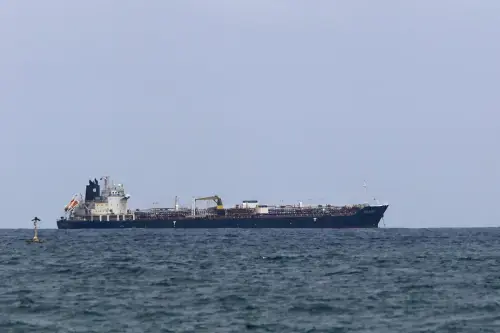
The top Russian diplomat told a news conference after meeting Xi that Moscow could “compensate” for China’s energy shortage as shipping through the Strait of Hormuz remains choked by the Iran war.
Xi has sought to position China as a mediator and stable partner in the face of the US- and Israeli-led conflict.
Lavrov says Moscow could help Beijing overcome energy shortage following closure of Hormuz
He told Abu Dhabi’s crown prince on Tuesday that China would play a “constructive role” in promoting peace talks in the Middle East.
In talks with Spain’s Sanchez, Xi warned that the world was facing “chaos and turmoil” and “a contest between justice and force”, urging closer cooperation.
Sanchez welcomed China’s role in seeking to resolve the conflict in the Middle East.
While the level of diplomatic activity is normal for Beijing, the Middle East war, particularly the issue of energy security, has taken on new urgency in diplomatic discussions, said Dylan Loh, associate professor at Singapore’s Nanyang Technological University.
“China has got leverage and influence over Iran, and there are some hopes and expectations that China can use this influence in a more direct way,” Loh said.
Countries, particularly in the Gulf, could be hoping China can pressure Iran to stop its attacks on Gulf countries and to persist with diplomatic negotiations, he said.
“Adjusting to realities’
The string of visitors “demonstrates that various actors are adjusting to the realities of an uncertain world. Engaging with the PRC, including over areas of difference, is part of this adjustment”, said Ja Ian Chong, a political scientist at the National University of Singapore.
While many visits were likely planned before the Middle East crisis, those from Gulf countries’ representatives and the Russian foreign minister “seem more of a direct result of the conflict and the desire to de-escalate”, Chong said.
However, “Moscow and Beijing’s interests may diverge somewhat on the war in Iran”, he said.
High energy prices are disruptive for China’s economy, Chong said, but can help Moscow fund its war in Ukraine.
Lavrov, who is on a two-day visit to China to boost bilateral ties, said Russia could help China with energy resources following the blockade of the vital Strait of Hormuz.
China is a net importer of oil and has seen prices for petrol, plastics, and fertilisers spike due to the war.
“Russia can, without doubt, compensate for the shortfall in resources that has arisen both for the PRC and for other countries that are interested in working with us,” Lavrov said during a news conference in Beijing.
Russia, which has been strengthening ties with China over past decades, can expand supplies of oil and gas transported via pipelines, tankers and railways, Russian energy analyst Tamara Safonova said.
“There is considerable potential for redirecting LNG supplies that were previously destined for the European Union,” she said, adding that pipeline gas supplies were already expected to increase by about 15 per cent.
For oil, she said there is potential to boost supplies via sea and railway.
Xi urged China and Russia to “give full play to the advantages of geographic proximity and complementarity, deepen all-round cooperation and raise the resilience of each other’s development”, according to a readout from Chinese state broadcaster CCTV.
“Both sides should maintain strategic focus, trust each other, support each other, develop together,” Xi said during his meeting with Lavrov at Beijing’s Great Hall of the People.
Lavrov told Xi that China-Russia relations “play a stabilising role in world affairs”, according to Russian state news agencies.
Lavrov and Chinese Foreign Minister Wang Yi “conducted in-depth exchanges on the US-Iran conflict, the Asia-Pacific situation, the Ukraine crisis” and other issues on Tuesday, according to the Chinese foreign ministry.
They also discussed plans for a meeting between Putin and Xi, which Lavrov said would take place in the first half of this year.
Beijing and Moscow are close economic and political partners, and the relationship has deepened further since Russia’s invasion of Ukraine in 2022.
Published in Dawn, April 16th, 2026