SINCE 9/11, Pakistan’s response to terrorism, which has intensified due to suicide attacks, lone-wolf acts and technology misuse, has been mainly kinetic, with hard and soft approaches like security operations and peace pacts. The need to defeat militant ideology is overlooked.
Legal and institutional responses to CT are mainly reactive and punitive. Rehabilitation, reintegration and deradicalisation are low priorities. An effective response to violent extremism needs a diagnostic approach; a solely security-based one shuts out human rights. Collective resolve, political ownership and support and volunteerism in communities where extremism breeds are needed. Is countering VE through rehabilitation only the state’s responsibility or a shared domain? In fact, CVE needs collaboration with communities, LGs and NGOs. Wars on terror require a broader view of the reasons behind VE. To prevent VE, civil society is key, as the UK, which collaborated with 82 CSOs in over 40 areas, realised.
In Pakistan, at first there was little awareness of peace education’s importance. A few universities began peace and conflict studies degree programmes but schools, where curricula are based on narratives of hatred and intolerance, neglected it. Articles 140-A and 25-A may help deradicalisation. But the challenge is to make it feasible; Unicef says 25.1 million children here are out of school. To prevent VE and reduce violent narratives, a long-term plan is needed to enrol them. This needs political resolve and consensus in federating units.
After the Malakand operation, many terrorists/extremists were arrested; hundreds were selected for deradicalisation and rehabilitation, including economic empowerment through skills training. The programme’s aim was to deradicalise and rehabilitate by unlearning and seeking help from extremists’ families. An issue is weak post-programme monitoring. A ‘no blood on their hands’ policy filters participants, including militants who haven’t killed or caused severe injuries. There are four phases: selection, deradicalisation, reintegration and monitoring through psychologists, religious scholars, vocational teachers and social workers.
Civil society is key to countering VE.
Hurdles are political, social, institutional and ideological. Without a unified national deradicalisation policy, results in the centre and provinces are uneven, leading to ad hoc donor-funded programmes and unclear roles. Trouble spots are scattered, and programmes are small-scale with fewer resources — thus unsustainable.
Online radicalisation fuels fake news and extremist narratives. Civil society is ill-equipped to effectively counter it. Social media has a role in radicalisation and deradicalisation. The latter needs the engagement of youth influencers and civil society, localised counter-narratives, improved digital literacy and AI-based monitoring and content removal. Socioeconomic inequalities breed radicalisation and hinder deradicalisation. Efforts at the latter by women or donors may be met with distrust in conservative societies. Societies with strict norms usually don’t support reintegration, enhancing the risk of relapse into extremism. They may reject former militants because of the stigma linked to VE. Government-administered projects and NGOs may lack expertise in psychology, ideology and rehabilitation, and may not understand local extremism drivers.
While supporting deradicalisation and rehabilitation, parents face social, psychological and structural hurdles. Many of them in militancy-hit areas can’t understand early radicalisation signs or respond to extremist views. Their rejection or ignorance can strengthen extremism.
Radicalised individuals’ families may face isolation due to community pressure and stigma, making reintegration difficult. Externally designed programmes have weak community ownership — often due to ethnic and sectarian diversity — and poor grassroots participation. They focus on radicalisation from a religious ideological context, overlooking poverty, identity crises, lack of justice and political grievances as local drivers. Many programmes rely on imported content, with NGOs seen as foreign subsidiaries. Hence the focus must be on local needs and narratives.
Extremists threaten political and social workers and NGOs. In the merged districts and Balochistan, polio workers, NGO staff, maliks and politicians are targeted, limiting outreach. In developing societies, especially those facing internal conflict, civil society can’t freely engage in CVE. By promoting dialogue, challenging violent narratives and creating opportunities for marginalised groups, civil society acts as a preventive and rehabilitative force. Collaboration between institutions and civil society builds resilient communities and ensures peace.
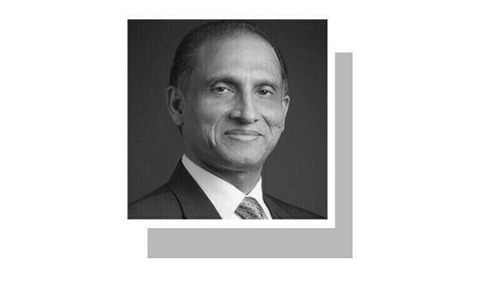
The writer is a security analyst and author of Pakistan: In Between Extremism and Peace.
X: @alibabakhel
Published in Dawn, April 14th, 2026