Punjab Assembly panel approves bill setting minimum marriage age at 18 for both males and females
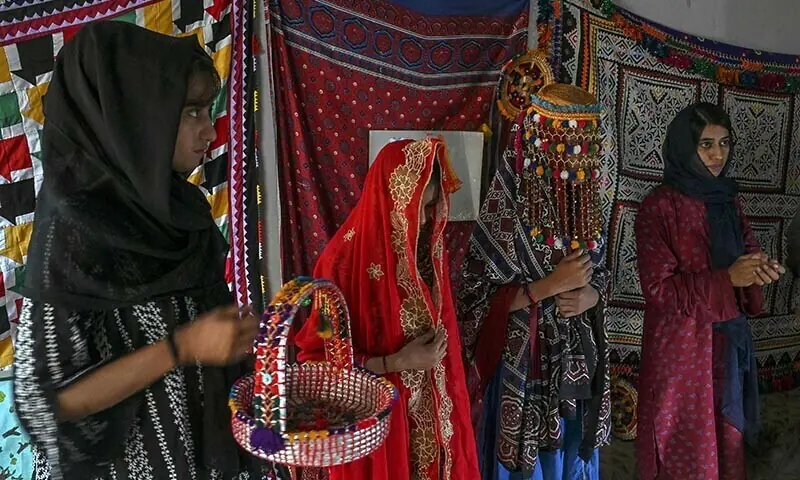
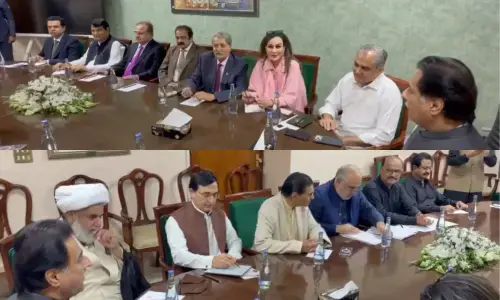
LAHORE: Punjab Assembly’s Standing Committee on Local Government and Community Development approved the Child Marriage Restraint Bill 2026 on Monday, even as some members, including the panel’s chairperson, expressed reservations regarding the legislation.
The meeting was chaired by PML-N MPA Pir Ashraf Rasool, and members of the Women Parliamentary Caucus were also invited to witness its proceedings.
The bill discussed during the meeting sets 18 years as the minimum legal age for marriage for both boys and girls in Punjab. Previously, the minimum legal age for marriage in Punjab was 18 years for men and 16 years for women under the Punjab Child Marriage Restraint Act, 1929.
That changed with the promulgation of the Child Marriage Restraint Bill 2026 as an ordinance by Punjab Governor Saleem Haider in February. The ordinance, however, will lapse in May — 90 days after its promulgation — and hence, the legislation needs the Punjab Assembly’s approval to remain in effect.
After being passed by the standing committee, the bill will now be referred to the Punjab Assembly for its approval.
While discussing it in its meeting, the standing committee observed that the bill aimed to stop underage marriages, remove gender-based discrimination and strengthen child protection laws in Punjab.
It issued directives for the Punjan local government secretary to prepare the final draft of the rules of the proposed law and present them to the committee within 60 days for its approval.
For their part, committee chairperson Rasool and member Zulfiqar Shah opposed the bill, arguing that it was in violation of the Constitution.
Rasool submitted his reservations in a three-page document.
Shah also shared his views on the legislation while speaking to Dawn, saying that the bill was a “contravention to the Constitution that allows every citizen to practice his/ her religion freely”. He also contended that under Islamic law, marriage was permissible when one attained puberty.
He sought the inclusion of some exceptions in the proposed law, arguing that the socio-economic conditions of the parents of an underage bride should also be kept in mind.
“Poor parents tend to marry their daughters early; they neither have resources for providing for the girl nor to ensure their safety,” he said.
The MPA suggested to the committee that some exceptions be incorporated into the legislation.
However, other committee members objected to his suggestion, saying that exceptions would lead to the misuse of the law.
Eventually, he pledged to fight the case in the House by submitting an amendment bill.
The bill
Apart from setting 18 years as the minimum legal age of marriage for both males and females, the bill bars nikah khawans (marriage registrars) from registering child marriages and proposes imprisonment of up to one year and a fine of Rs100,000 in case of violations.
Similarly, adults contracting marriage with a child are to face rigorous imprisonment of up to three years but not less than two years, as well as a fine of up to Rs500,000.
The bill also criminalises cohabitation resulting from a child marriage as “child abuse”, carrying penalties of five to seven years’ imprisonment and a minimum fine of Rs1 million.
It also introduces strict punishments for child trafficking linked to marriage and holds guardians accountable for promoting or failing to prevent underage marriages.
It further states that if a guardian or any other person in any capacity, lawful or unlawful, committed any act to promote child marriage, child abuse or permitted child marriage to be solemnised, or intentionally or negligently failed to prevent it from being solemnised, they will be punished with rigorous imprisonment between two to three years and will also be liable to a fine of up to Rs500,000.
All offences under the bill have been declared cognisable, non-bailable and non-compoundable, and will be tried exclusively by Courts of Session, with cases to be concluded within 90 days.