0
0

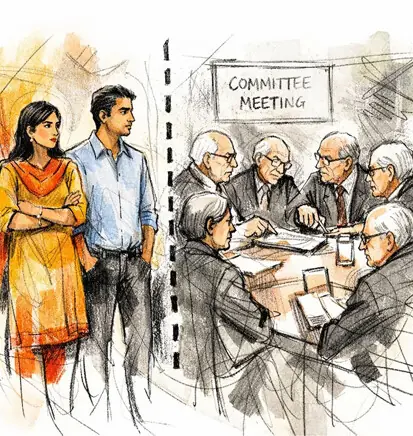
IT is a well-established norm in academic institutions that major activities, whether related to curriculum reform, research strategy, promotions or funding allocation, are overseen by formally constituted committees. These committees are typically structured across different cadres, reflecting hierarchy, seniority and ad-ministrative experience. Such structuring ensures procedural stability and insti-tutional continuity. However, one striking gap often observed in these configurations is the limited or complete absence of junior members.
Senior academics are indispensable. Their institutional memory, policy experience, and long-term exposure to the discipline provide depth, caution and stability. Yet, the absence of early-career scholars, particularly those recently trained at globally competitive institutions in Europe, Canada, Japan or the United States creates an imbalance. These individuals often carry firsthand exposure to cutting-edge methodologies, advanced research infrastructure, interdisciplinary models, open science practices, and due innovation ecosystems.
They are frequently more immersed in contemporary laboratory standards, grant-writing cultures, translational research frameworks, and, indeed, emerging technologies.
The exclusion creates an interesting and somewhat paradoxical scenario. Consider a university that constitutes a committee to promote science, technology and research excellence. If such a body or committee is composed exclusively of senior fellows, however respected, without the inclusion of younger scholars, who have recently navigated advanced research environments abroad, the committee may unintentionally operate within older paradigms.
The absence of practical exposure to current international research systems, collaborative digital platforms, high-impact publication strategies, or modern inno-vation pipelines can limit forward-looking decisions. The objective of promoting science and technology risks being framed in traditional rather than globally competi- tive terms.
This is not a critique of senior leadership; rather, it is an observation about structural complementarity. Experience without contemporary exposure may slow trans-formation. Conversely, youthful exposure without institutional wisdom may lack grounding. The optimal configuration lies in synthesis.
To strengthen academic governance and strategic research planning, it is important to ensure balanced representation across multiple career stages. Committees should not only include senior academics, but also early-career faculty members and recently returned international graduates who bring exposure to contemporary research environments and evolving global standards.
Waseem Hassan
Peshawar
Published in Dawn, April 6th, 2026