US forces rescue 2 airmen downed in Iran; Trump says crew member injured but ‘safe’


 2
2
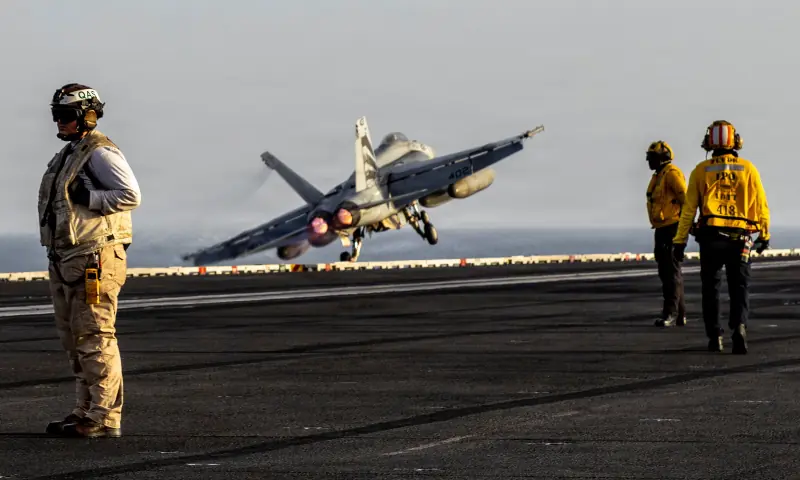
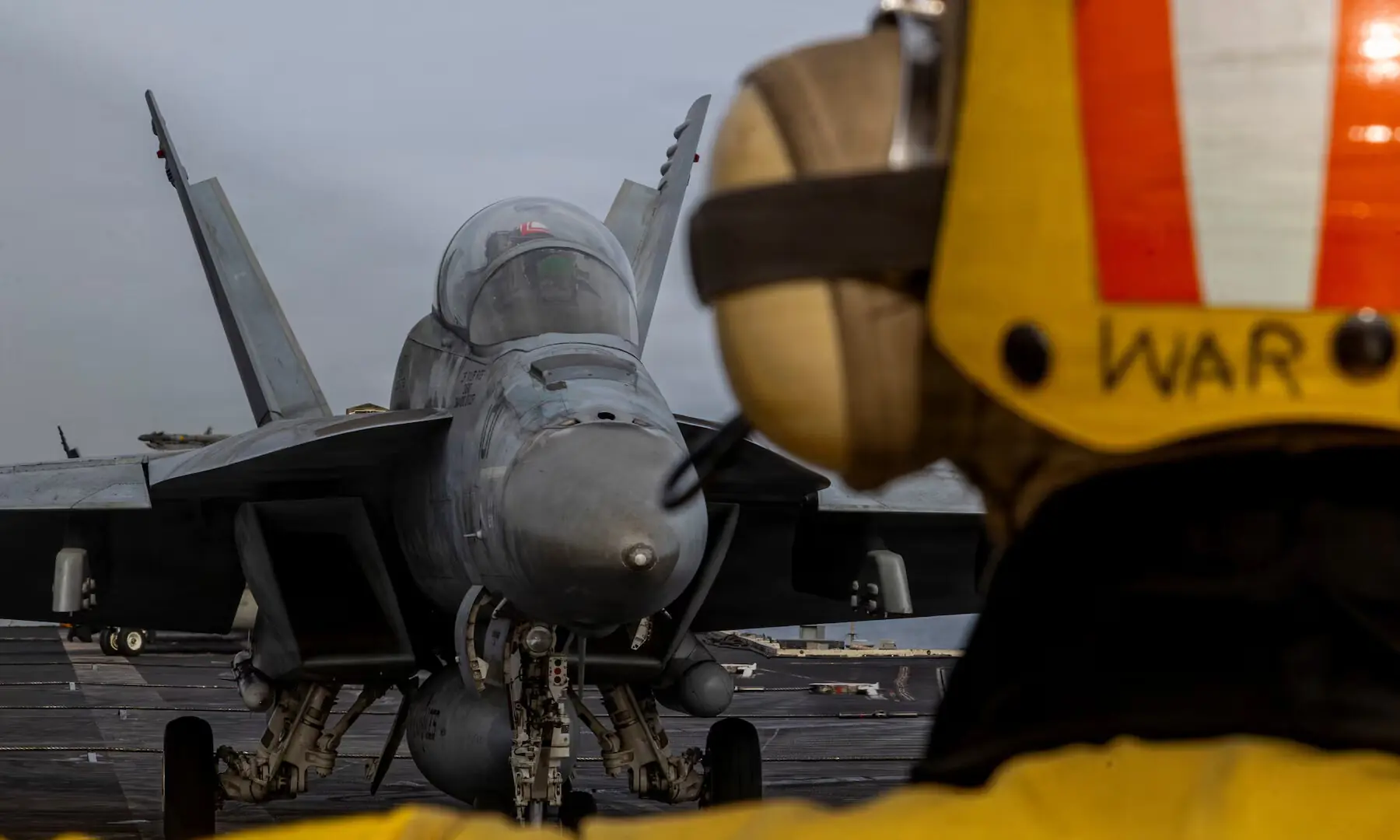

United States President Donald Trump said on Sunday that US forces had safely recovered a second airman downed in Iran, calling it “one of the most daring search and rescue operations in US history”.
The announcement came as Iran launched missiles and drones at Israel and Kuwait earlier on Sunday, and a day after Trump warned the Islamic republic it had 48 hours to cut a deal or face “all Hell”.
“This brave Warrior was behind enemy lines in the treacherous mountains of Iran, being hunted down by our enemies,” Trump said on Truth Social.
“He sustained injuries, but he will be just fine,” he added.
“This miraculous Search and Rescue Operation comes in addition to a successful rescue of another brave Pilot, yesterday, which we did not confirm, because we did not want to jeopardise our second rescue operation.
“This is the first time in military memory that two US Pilots have been rescued, separately, deep in Enemy Territory. WE WILL NEVER LEAVE AN AMERICAN WARFIGHTER BEHIND!” Trump asserted.
He repeated his claims of the US achieving “overwhelming Air Dominance and Superiority over the Iranian skies”.
According to US media, the crew member, a weapons systems officer, was wounded after ejecting on Friday but was able to walk and evaded capture in the mountains for more than a day.
The unidentified airman was equipped with a pistol, a beacon and a secure communications device to coordinate with rescuers, the New York Times reported.
American commandos converging on the officer fired their weapons to keep Iranian forces away from the rescue site, the NYT said.
Two of the planes meant to transport the airman and his rescuers to safety were stuck in a remote base in Iran and had to be destroyed to prevent them from falling into Iranian hands, the NYT and CBS reported.
Both crew members were rescued in coordinated operations inside Iran, highlighting a daring military response to one of the US military’s most dangerous scenarios in the region.
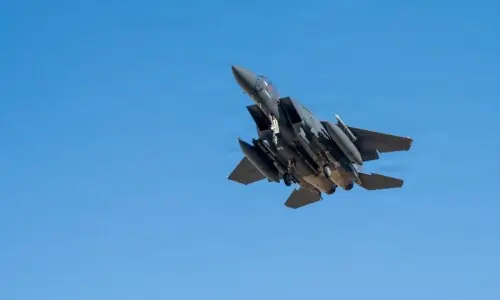
The F-15 pilot was rescued several hours after ejecting, while a US Blackhawk helicopter involved in that operation was struck by Iranian fire, wounding crew members but returning to base.
The second rescue operation, conducted on Saturday, involved a specialised commando unit with heavy air support, and all forces were extracted safely. Reports claim US Air Force jets also struck Iranian positions to prevent the Islamic Revolutionary Guard Corps (IRGC) from intercepting the operation.
Iran also downed an A-10 attack aircraft on Friday, challenging claims from US officials of unchallenged air dominance over Iranian skies. That pilot was able to fly to friendly territory and eject safely.
According to these reports, Trump and senior administration officials monitored the rescue operations from the White House Situation Room, underscoring the high stakes of the incident.
Iran military says US rescue operation ‘completely foiled’
On the other hand, Iran’s military said that the US operation to rescue the airman had been “completely foiled”, without suggesting he had been captured.
The statement came after Trump said the officer had been rescued in a search and rescue operation.
“The so-called US military rescue operation, planned as a deception and escape mission at an abandoned airport in southern Isfahan under the pretext of recovering the pilot of a downed aircraft, was completely foiled,” said Ebrahim Zolfaghari, spokesman for the military’s central command, Khatam Al-Anbiya.
In a video statement carried by state television, he said that “two C-130 military transport planes and two Black Hawk helicopters were destroyed” during the operation.
He added that Trump went ahead with “empty rhetoric and diversion although the reality on the ground demonstrates the superior position of Iran’s powerful armed forces.”
State media shared images of charred wreckage scattered across a desert area, with smoke still rising from the site.
Aggressive rhetoric places region at dangerous juncture
On Saturday, Trump renewed his threats against Tehran and asked it to make a deal or “open up” the Strait of Hormuz within 48 hours or face oblivion.
“Time is running out — 48 hours before all Hell will reign [sic] down on them,” he wrote on Truth Social.
The new deadline came as Iran struck Israel multiple times on Saturday, including its defence ministry headquarters in central Tel Aviv, while also claiming that it deployed a new air defence system to deny the US-Israeli jets air superiority.
Meanwhile, diplomatic efforts have shown very little progress in recent days, leaving military actions as the primary means of responding to the crisis.
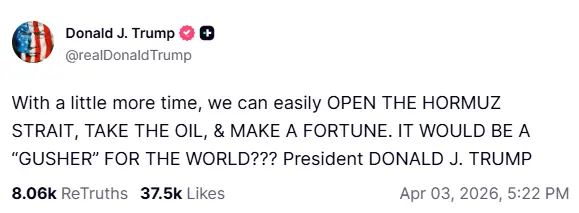
Adding to tensions, Trump posted on social media on Friday that with “a little more time”, the US could “OPEN THE HORMUZ STRAIT, TAKE THE OIL, & MAKE A FORTUNE”.
The remarks referred to the Strait of Hormuz — the narrow waterway between Iran and Oman through which roughly a fifth of the world’s traded oil passes.
Analysts caution that the president’s language, particularly “take the oil” is highly provocative. It frames control of the strait not only as a strategic military objective but also as a financial opportunity, raising the risk of severe regional backlash.
Iran considers the waterway a matter of national security, while Gulf Arab states and energy-importing countries like Pakistan rely heavily on the strait for their exports. Any disruption could spike oil prices, strain global markets, and heighten economic pressures worldwide.
Iran has authorised the passage of vessels carrying essential goods to its ports through the Strait of Hormuz, while a second Turkish ship also sailed through the strait.
The combination of military engagements and aggressive rhetoric places the region at a dangerous juncture.
The US has demonstrated the ability to carry out high-risk operations, including strikes to protect its personnel, but Iran’s willingness and capability to target US aircraft suggest that further confrontations are possible.
In the short term, the situation is likely to remain tense, with controlled military operations and shows of force. However, miscalculations or additional provocations — particularly regarding the Strait of Hormuz — could escalate the conflict rapidly.
Global economic and political pressures may restrain both sides from full-scale war, but the standoff underscores the fragility of the situation, where words and actions carry the risk of triggering a wider regional conflict.
The twin developments — daring rescues of US airmen and the president’s aggressive stance on Hormuz — illustrate how military, economic, and geopolitical factors are intertwined.
The Gulf remains a strategic fulcrum where even limited incidents can reverberate globally, leaving the world watching as US-Iran tensions remain at a critical peak.