White House seeks $1.5tr defence budget as war on Iran drives costs
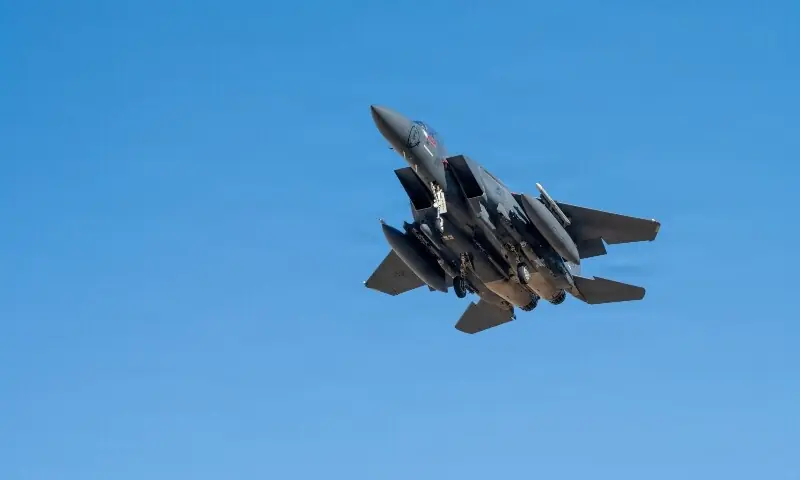

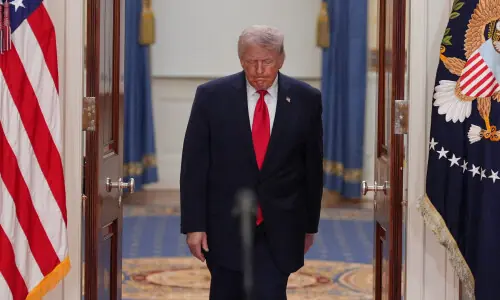
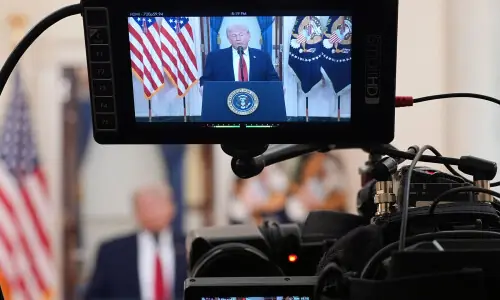
United States President Donald Trump asked lawmakers on Friday to approve a massive $1.5 trillion defence budget for 2027, as the country faces rising costs from its war on Iran and mounting global security commitments.
The proposal would lift Pentagon spending by more than 40 per cent in a single year — the sharpest increase since World War II — as Washington seeks to sustain military operations and rebuild depleted weapons stockpiles.
The request highlights the growing financial pressure of a conflict now in its fifth week, and sets up a political battle in Congress over how to fund a dramatic expansion of military spending.
US media — citing closed-door congressional briefings — have reported that the Iran war could be costing as much as $2 billion per day, underscoring the scale of the burden even before longer-term reconstruction and resupply costs are factored in.
To offset part of the increase, the administration is proposing around $73bn in cuts to non-defence spending — roughly 10pc — targeting a range of domestic programs including environmental initiatives, housing assistance and education funding.
White House officials say the reductions would eliminate what they describe as wasteful spending and shift some responsibilities back to state and local governments.
Trump has framed the defence increase in urgent terms, arguing that military investment must take precedence during wartime, even at the expense of federal social programs.
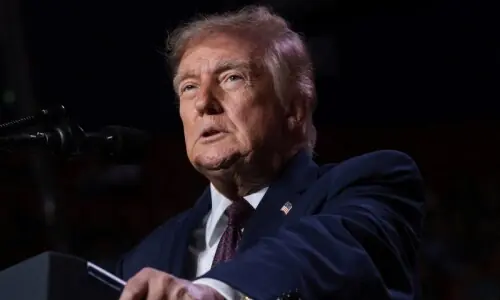
“It’s not possible for us to take care of day care, Medicaid, Medicare,” Trump said at a recent private event, adding that such responsibilities could be handled at the state level while Washington focuses on “military protection”.
‘Reckless war’
The budget outline, released in summary form, is not binding but serves as a statement of the administration’s priorities as Congress begins drafting spending legislation.
Lawmakers retain the power to rewrite or reject the plan.
Trump is urging Congress to approve the bulk of the defence budget — more than $1.1tr — through the standard appropriations process, while seeking to pass a further $350bn using a party-line mechanism that would bypass Democratic support.
Republican leaders have shown openness to that approach, particularly as they push for higher defence and immigration enforcement spending. But the plan may face resistance within Trump’s own party, where some lawmakers are wary of deepening federal deficits.
The United States is already running annual shortfalls approaching $2tr, with total debt exceeding $39tr, leaving limited fiscal space for new spending without further widening the gap.
Lawmakers from both parties have also raised concerns about the scale of the proposed military increase, particularly as the administration has provided limited detail on the trajectory of the Iran conflict.
There is similar scepticism about the domestic cuts, many of which Congress has previously rejected. Spending bills passed earlier this year largely preserved funding for programs the White House is again seeking to reduce or eliminate.
Beyond defence, the administration is also proposing increased funding for federal law enforcement, including a boost of more than $40bn for the Justice Department.
Even so, the plan could add trillions more to the federal debt over the coming decade if enacted in full, highlighting the trade-offs facing lawmakers as they weigh wartime demands against long-term fiscal pressures.
“The American people want health care, not warfare. The Trump administration has spent billions on a reckless war with Iran but refuses to increase funding for health care,” House Democrats said in a statement on social media.
“It’s heartless, and House Democrats will not stand for it.”