KARACHI: The Sindh School Education Department has decided to develop a comprehensive framework to strengthen the governance of institutions responsible for teacher training.
The decision includes restructuring existing institutions, defining administrative strategies, and establishing a complete guidance system from teacher training to the acquisition of teaching licenses.
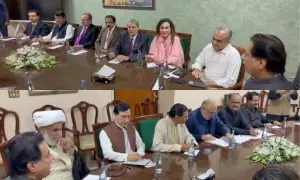
The decision was taken in a meeting chaired by Minister for Education Syed Sardar Ali Shah.
The meeting was attended by Secretary School Education Zahid Ali Abbasi, Project Director of the Sindh Secondary Education Improvement Project (SSEIP) Rizwan Soomro, Executive Director of Sindh Teachers Education Development Authority (STEDA) Rasool Bux Shah, along with senior officials from Monitoring & Evaluation, Provincial Institute of Teachers Education (PITE), Teachers Training Institutions (TTIs), and other relevant departments.
Reforms to focus on governance, administrative strategies and guidance system in teachers’ licensing
During the meeting, the provincial minister stated that the government has decided to introduce comprehensive reforms to make the teacher training system more effective. He emphasised that a clear objective is to strengthen teacher education, continuous professional development (CPD), and the teacher licensing system to enable the teaching workforce to perform more effectively.
He further highlighted that institutional coordination, monitoring, and performance management systems will be improved. It was decided to clearly define the roles and responsibilities of STEDA, PITE, TTIs, SSEIP, and the Human Resource Wing to eliminate fragmented efforts and establish a cohesive system.
Under the proposed framework, STEDA will be responsible for teacher quality standards, the development of a central database, and oversight of CPD. PITE will focus exclusively on teacher education and implementation frameworks, including training modules and assessment mechanisms. Meanwhile, TTIs will be activated as district-level training centres to ensure effective delivery of training modules.
The Human Resource Wing will manage teachers’ HR matters and career progression, maintaining a complete record of each teacher from recruitment to professional development stages. The meeting also stressed the establishment of a central teacher database and dashboard to improve training, performance tracking, and planning, along with strengthening monitoring systems through clearly defined Key Performance Indicators (KPIs).
It was shared that under the SSEIP programme, 2,630 secondary school teachers have already been trained across various clusters, with plans to expand further through STEDA and TTIs.
The meeting also decided to conduct a comprehensive review of 46 Teachers Training Institutions across Sindh, assessing their capacity, infrastructure, and administrative challenges. A committee led by STEDA, comprising representatives from SSEIP, PITE, TTIs, the Human Resource Wing, and Monitoring & Evaluation, will develop a comprehensive teacher training strategy within two weeks and present a detailed roadmap within 15 days.
Additionally, PITE has been directed to sign a Memorandum of Understanding (MoU) with Hussainabad Institute to enhance training collaboration.
The meeting concluded with consensus on streamlining the training sector under a unified strategy to improve implementation efficiency. These measures are expected to significantly enhance teachers’ professional capacity and improve the overall quality of education in Sindh.
Published in Dawn, April 2nd, 2026