Move to curtail SHC CJ’s role in hiring of ATC, drug court judges challenged
• Constitutional bench issues notices to CS, federal and provincial law officers for 18th
• SHCBA, lawyers impugn amendments to ATA, Sindh CNS Act
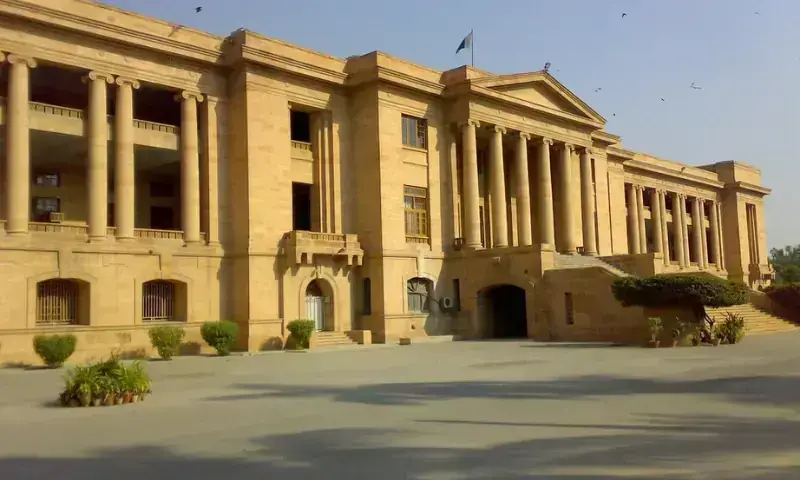
KARACHI: The Sindh High Court has issued notices to the provincial government authorities on two petitions impugning amendments made to anti-terrorism and nacrocitcs substance laws aimed at reducing the role of chief justice of the province in appointment of judges at the antiterrorism and anti-narcotics courts.
The petitioners submitted that the challenged changes have explicitly stripped the chief justice of the SHC of primary domain of judicial selection, reducing his role from an active and binding “consultation” to a mere back-end “concurrence” on an executive-curated panel of nominees.
Citing the chief secretary of Sindh and secretary of law department as well as ministry of law & justice as respondents, the Sindh High Court Bar Association, its president Haseeb Jamali and two other lawyers have filed two petitions challenging the amendments made to Section 14 of the Anti-Terrorism Act (ATA) and Section 8 of the Sindh Control of Narcotic Substances (CNS) Act.
They argued that as per statutory mandate of the federal law (ATA), appointment of judges to antiterrorism courts (ATCs) was to be executed by government in consultation with the chief justice of high court concerned and it placed the primary domain of selecting, identifying and evaluating judicial candidates squarely within the hands of the judiciary.
However, they also contended that through the impugned amendment, the provincial legislature has rewritten Section 14(2) of the ATA in August last year and such structural shift explicitly stripped the chief justice of primary domain of judicial selection, reducing the judicial branch’s constitutional role from an active, binding “consultation” to a mere backend “concurrence” on an executive-curated panel of nominees.
They further submitted that the provincial assembly cannot unilaterally dilute, reconstruct or reverse the core institutional appointment safeguards carefully embedded by the federal parliament within the parent statute.
Similarly, the petitioners maintained that the provincial assembly had also made changes to the Sindh Control of Narcotic Substances Act last year in Section 8 as the power of appointment of judges of provincial CNS courts has been vested solely in the government through the use of mandatory expression “shall appoint” and the same was in violation to the principles of natural justice, due process, fair trial, independence of judiciary and doctrine of separation of powers.
They argued that now, the executive’s law department will generate a panel of three nominees and send it for the chief justice’s “concurrence” and such modifications in the laws enabled the executive to effectively usurp the right to initiate, select and filter candidates and limit the chief justice’s selection pool to those pre-approved by the political executive stripping away the independent initiative of the judiciary.
The petitioners also stated that impugned provisions have essentially enabled members of the executive to pick and choose from their blue-eyed candidates and make appointments based on favouritism, political allegiances and influence and it has seriously posed a question on impartiality of such illegally appointed judges.
They contended that appointment of judges by the executive, particularly in cases involving prosecutions, created a reasonable apprehension of bias, thereby infringing the fundamental right to fair trial and due process guaranteed under Articles 4 and 10-A of the Constitution. They maintained that the impugned amendments have vested the law department of provincial government with exclusive and dominant authority in the appointment of judges of these special courts thereby excluding meaningful participation of the judiciary including the chief justice of Sindh.
The petitioners pleaded to declared the impugned Section 14 of the ATA and Section 8 of the SCNS Act illegal, unconstitutional and in contravention to Articles 175(3), 203 of the Constitution.
They also asked the SHC to hold that the consultation, initiation and appointment of judges in the judiciary is the sole, exclusive and prerogative of the chief justice of the province and that any dilution of this power undermines the integrity of the judicial process.
They further asked the court to declare that since the ATA was a federal statute, the provincial assembly lacked the legislative competence, jurisdiction and authority under Articles 141, 142, and 143 of the Constitution to unilaterally amend, alter, substitute, modify or override its provisions, schemes or mechanisms.
After a preliminary hearing, a two-judge constitutional bench of the SHC headed by Justice Muhammad Saleem Jessar put the respondents as well as federal and provincial law officers on notice for June 18.
Published in Dawn, June 6th, 2026