0
0

WASHINGTON, June 25: Pakistan and the United States will begin first round of formal talks on energy here on Monday with focus on seeking US cooperation for developing non-nuclear means of energy.
“Pakistan has large coal reserves in Thar and we want to exploit those resources,” Ambassador Mahmud A. Durrani told a group of Pakistani journalists earlier this week when asked what would be the focus of the talks.
A US official, when contacted by Dawn, also confirmed that the talks would concentrate on ‘non-nuclear sources of energy’ as indicated by engagements of the Pakistani delegation in Washington.
Neither of the two key members of the US team — Assistant Secretary of Energy for Policy and International Affairs Karen Harbert and Deputy Assistant Secretary of State for Business and Economic Affairs Paul Simons — is competent to deal with requests for nuclear technology as such matters were discussed at a higher level.
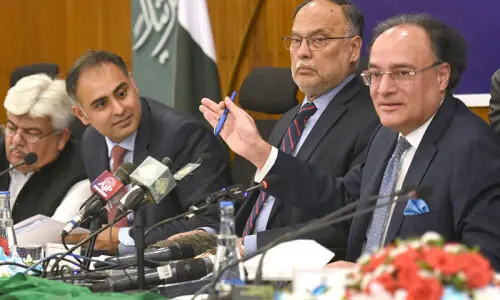
The Pakistani delegation, led by Mukhtar Ahmed, Energy adviser to the prime minister, also does not include any expert on nuclear technology. Air Marshal (retired) Shahid Hamid, one of the key members of the team, is chairman Alternate Energy Development Board while another senior member, Hilal Raza, heads the Pakistan Hydrocarbon Development Board.
“We need the skills necessary to exploit our reserves optimally,” said Ambassador Durrani when asked what Pakistan was seeking from the US.
Mr Ahmed also indicated this when he told a seminar in Washington earlier this week that Pakistan was seeking environment friendly technology to use its coal reserves.
He explained that since most of the coal deposits are located in inaccessible areas, Pakistan needed to develop the infrastructure for such large-scale projects.
A spokesman for the Pakistan Embassy, Akram Shaheedi, said that the Pakistani delegation would brief US officials on the country’s energy requirements for the next 20 years. The US chamber of commerce had arranged meetings with representatives of private companies and the delegation would also visit the national energy technology laboratory near Pittsburgh, he said.
One of the sticking points in the Pakistan-US energy is the proposed construction of a pipeline for importing natural gas from Iran for distribution across South Asia.
The US has discouraged both India and Pakistan from entering into any deal with Iran, because of concerns that Tehran intends to develop nuclear weapons. There’s also a US law that forbids any major investment in Iran’s oil and gas sector and requires mandatory sanctions against those violating the ban.
“The government of Pakistan is well aware of the fact that we are not in favour of Pakistan moving ahead with this pipeline to Iran,” Mr Simons, who will participate in the energy dialogue told reporters. But another proposed pipeline for bringing gas from Turkmenistan “deserves a close look”, he added.