

Rural women’s issues stay unresolved despite legislation, seminar told
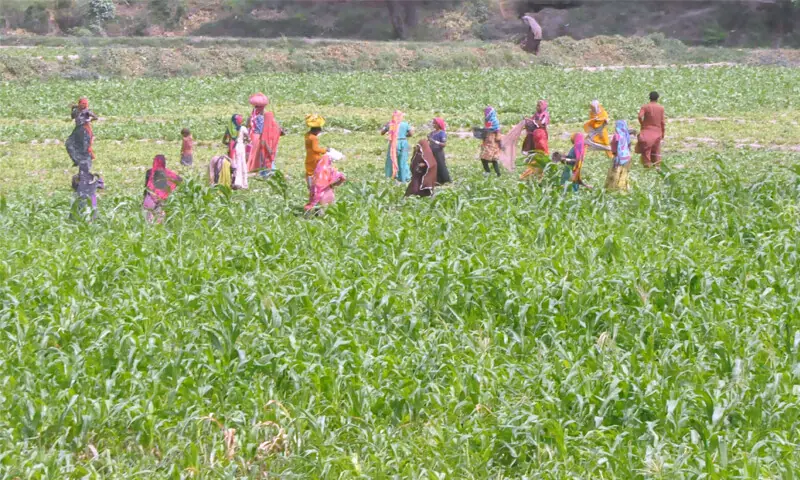

MIRPURKHAS: Unresolved issues concerned rural women were highlighted at a seminar held here recently in connection with the International Women’s Day.
Mirpurkhas Deputy Major Sumera Baloch was the chief guest.
Speaking to the audience, she emphasised the vital role of women in nation building and progress of the country, besides creating an inclusive society.
She said that empowering women through education, equal opportunities, and active participation in leadership was essential for sustainable development.
The seminar was organised by the Hari Welfare Association.
Govt urged to introduce skill development programmes, instead of BISP-like charity schemes
Ms Baloch reaffirmed her commitment to supporting the policies that protect women’s rights and promote gender equality. She urged the community to work collectively against gender discrimination work for creating a safer and more supportive environment for women in all spheres of life.
HWA President Akram Ali Khaskheli pointed out that an estimated 15 million women in rural Sindh do not have access to healthcare and education, which were their basis rights, and are denied fair wages.
A significant proportion is engaged in agriculture, livestock and fisheries, yet remained excluded from formal recognition, social protection and equitable compensation.
He referred to the recent report prepared by the HWA, and said that despite existence of the Sindh Bonded Labour System Abolition Act, 2015, enforcement mechanisms such as district vigilance committees remained largely inactive.
Similarly, the Sindh Tenancy Act, 1950 has not been effectively implemented, leaving sharecroppers vulnerable to eviction and deprived of their legal share in agricultural output. Wage disparities has remained widespread. Women working in farms typically earn between Rs500 and Rs700 per day while working more than eight hours while the minimum wage laws do not cover this segment.
He said that most women received approximately Rs5,000 per month for labour-intensive activities across entire crop cycles, including cotton picking, chilli harvesting, date processing, banana cultivation, and wheat farming. More than 70 per cent of women in rural Sindh are farm workers and related sectors, yet poverty, malnutrition, and food insecurity persist at the household level.
Despite the passage of the Sindh Women Agriculture Workers Act 2019, implementation remains absent across districts, limiting access to rights such as equal pay, unionisation, written contracts, and social security, he lamented.
In March 2026, the Sindh cabinet had approved rules under the Act of 2019, but these have not been notified and published.
Peasant women, including Fozia Laghari, Shahida Parveen, Ms Jameela, Abida Lashari and Azmina Baloch, said the women living in rural areas have been facing gender discrimination at all levels. They said that government should initiate skills development programme for women rather than charity schemes, like the BISP.
Asif Ali, Shahzad Ahmed, Anjum Shahzadi and others also spoke.
Published in Dawn, March 31st, 2026


























