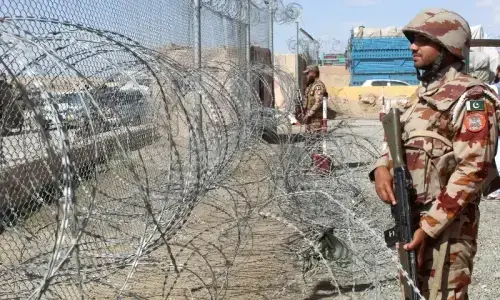
Israel has uprooted 370,000 children in Lebanon: UN
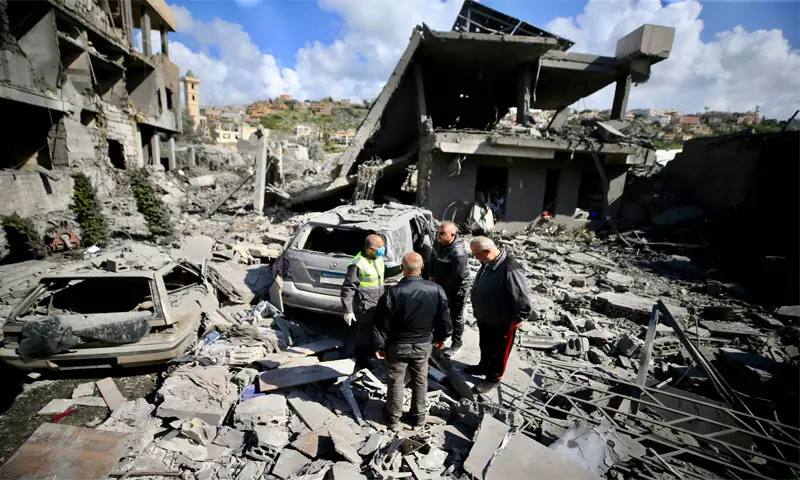

• Global body warns country at risk of ‘humanitarian catastrophe’
• Tel Aviv carries out fresh strikes on Beirut’s southern suburbs
• Hezbollah says its fighters clashed with Israeli forces at two villages in the south
GENEVA / BEIRUT: More than 370,000 children have been forced from their homes in Lebanon in just three weeks, as intensified Israeli strikes and mass evacuation orders trigger one of the fastest and largest population displacements in the country’s history, UN officials said on Friday.
Israel has launched heavy air strikes and a ground assault on Lebanon in parallel with the war in Iran, after Lebanon’s Hezbollah fighters fired into Israel in solidarity with Tehran on March 2.
Unicef’s country representative Marcoluigi Corsi said the scale of displacement was “staggering”, with 19,000 children uprooted daily, many for the second or third time since previous escalations just 15 months ago.
Meanwhile, the UN refugee agency has warned that Lebanon is facing a deepening humanitarian crisis that now risks teetering over into a catastrophe.
Since March 2, more than a million people — one in five residents — have been forced to flee their homes, said the UNHCR. With the numbers continuing to rise, “it is really a deepening humanitarian crisis that we here on the ground are seeing in Lebanon”, Karolina Lindholm Billing, the agency’s representative in the country, told reporters in Geneva, speaking from Beirut.
“More than 136,000 displaced people are staying in 660 collective shelters, most of them schools, filled far beyond capacity,” she said. UNHCR is appealing for more than $60 million to scale up its response, and warned that needs were rising faster than resources. The UN Women agency said pregnant women were giving birth in temporary shelters with limited access to care.
The shelters, such as school classrooms, are not set up for long-term displacement, said the agency’s Lebanon representative Gielan El Messiri.
The International Federation of Red Cross and Red Crescent Societies said the Lebanese Red Cross (LRC) was distributing aid to households, including blankets, mattresses, meals, bread and safe drinking water.
IFRC spokesman Tommaso Della Longa said the LRC was the main ambulance service provider. “Between March 2 and 23, LRC teams conducted 2,754 ambulance missions and 11 urban search and rescue operations,” he said.
One LRC volunteer had been killed and several others wounded during ambulance missions, Della Longa added.
Renewed attacks
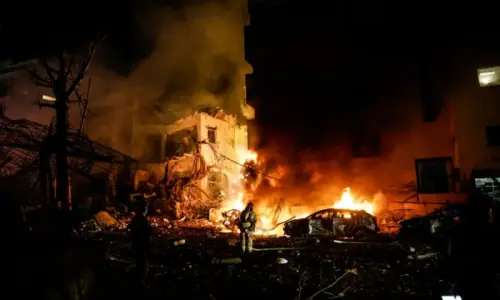
Israel’s military renewed its attacks on Beirut’s southern suburbs on Friday, saying it was targeting Hezbollah infrastructure, as the Iran-backed group said the foes had clashed directly in the country’s south. Lebanon’s state-run National News Agency reported an Israeli strike on south Beirut’s Tahouitet al-Ghadir area, where authorities said another raid without warning earlier Friday killed two people.
AFPTV footage showed smoke rising from the area, a Hezbollah stronghold that has largely emptied of residents after previous Israeli army evacuation warnings and heavy strikes.
Shortly after the Friday afternoon raid, Israel’s military said it had “begun a wave of strikes targeting Hezbollah infrastructure in Beirut”. The NNA also reported Israel strikes on the country’s south and east.
The health ministry said a raid on the town of Saksakiyeh in the south of the district of Sidon killed four people, while another in the east of the Bekaa region “killed a woman who was pregnant with twins”.
In south Lebanon, Hezbollah said its fighters had clashed with Israeli enemy army forces in the villages of Bayada and Shamaa at point-blank range with light and medium weapons. The group also claimed responsibility for attacks on Israeli targets across the border.
Published in Dawn, March 28th, 2026