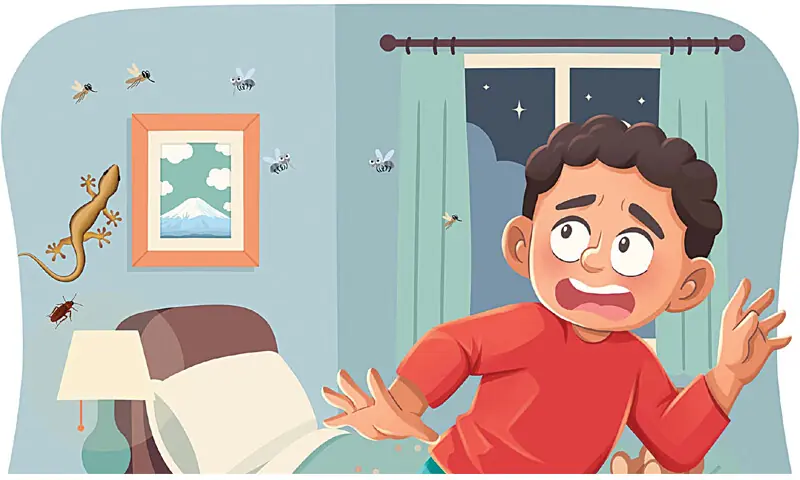

A few days ago, while dusting the furniture and curtains, I felt something quickly hide behind the curtains. My first instinct was that it was a lizard, but I ignored it and kept cleaning.
When I finally reached the curtains, I froze. It really was a lizard. I screamed and it started crawling around, trying to escape. When it finally found its way out, I felt a sudden relief, almost lightheaded, before I went back to cleaning.
There is no doubt that these creatures are really annoying. No one wants them crawling around their rooms or kitchen. But whenever I try to kill one, I remember how elders always say, “Don’t kill it, just let it go.” And it makes me think, why?
Maybe because these small creatures, like cockroaches, beetles, lizards, spiders and even moths, are not just random pests, perhaps they are part of a system that keeps things in balance, even if we don’t always see it.
So I did some research on the internet and found information worth sharing with all the young readers who probably do exactly what I did — screaming and running away. The truth is, once you actually understand what these creatures are doing, you will start seeing them differently. You will notice them more, you panic less and you realise, after all, they were never really the enemy.
We often see insects and small creatures as unwanted guests in our homes, something to be chased away or feared. These are not random pests, but are part of a complex urban ecosystem, working quietly behind the scenes to keep nature in balance
Whether you have noticed or not, insects are all around us. Under the carpet, in wall crevices, in our cupboards, in our living rooms, under the sofas, almost everywhere. All those that you know of and thousands of other species that you have no idea about are doing their job quite efficiently.
However, there is a big difference between urban and rural bugs! Some are commonly present in both environments, while others are unique to urban settings. Some of them are actually thriving. Some are adapting in ways that baffle scientists. And if they stopped doing their job, it would cause serious problems for humanity.
The role of these insects
Urban life is tough for animals and birds, but somehow, everyone is surviving. Farm animals are usually raised away from cities so they are less harmed by urban environmental effects. While birds like sparrows, pigeons and mynas have adapted remarkably well to urban settlements, often making nests in AC units, balcony ledges, building crevices and window gaps.
But insects are different; they can easily fit in a narrow crack between two paving slabs. A window with a few flower pots becomes a feeding ground for a bumblebee. A single old tree anywhere can host hundreds of insect species that don’t need anything else.
Hidden comforts of urban life
Cities create some unusual ecological advantages that insects have learnt to use. The heat is one of them. Cities are built with concrete and tarmac that absorb heat during the day and release it at night, so cities never really cool down the way the countryside does.
Scientists call this the urban heat island effect. For humans, a heatwave is a nightmare. But for certain insect species that prefer warmth, this is basically a homely setting.
Then there is plant diversity. As people have become more aware of plant benefits, people now buy exotic plants, native plants, ornamental plants, herbs, vegetables and trees from different regions, all growing side by side.
From an insect’s perspective, this is a buffet. A bee does not care that your sunflower came from a local nursery or from Lahore. It only knows it is good for nectar. Different plants across a city create a rich dining table for insects that a monoculture farm field simply cannot compete with.
The cleaners nobody hired
Insects that live in drains, bins or places we hate to pay attention to, are cockroaches, flies and certain beetles that live in dead and rotting material; they are actually decomposer insects doing something genuinely essential.
The city creates all kinds of waste, such as food scraps, fallen leaves, dead animals, sewage system, industrial runoff and construction debris. A lot of it is collected and the rest goes into bins. But a huge amount of garbage that lands on the streets ends up in gutters and patches of wasteland. What breaks it down is largely these insects. Fly larvae in particular are extraordinary decomposers.
Ants are doing something similar everywhere. The ant colonies living on your balcony or garden are constantly moving organic material, breaking down small bits of organic waste, etc.
In 2014, a study by researchers from North Carolina State University, led by scientist Elsa Youngsteadt, found that ants along Broadway and other median strips in Manhattan were processing a significant amount of food waste every year, just by taking crumbs and scraps back to their colonies.
Insects on the night shift
There’s a whole ecosystem that starts doing its job after the city sleeps. It is believed that bees and butterflies are the only pollinators, but moths are also among the pollinators. Yes, dozens of moth species do pollination work at night and visit flowers that stay open at night.
Then there are the predatory insects like ground beetles, which come out and hunt slugs, aphids, fly larvae and other invertebrates. They are effective natural pest controllers who know their job well.
By now, you have some idea of how these insects are contributing to the environment. So let me show you the bleak picture if these little buddies are removed from our lives.
What the data shows
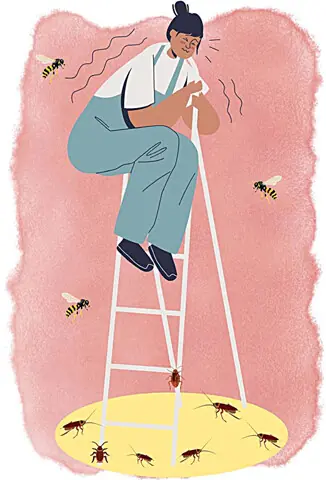
A study tracking flying insects in Germany over nearly 30 years found that more than three-quarters of them were gone. Not a species or two. The total mass of flying insects has decreased by 75 percent. Similar findings came out of North America, parts of Asia, and Europe. Scientists started calling it an insect apocalypse and looking at the numbers, it is hard to argue with that.
There is no single thing affecting the insect population; there are several at the same time.
Nature’s timing trouble
Climate change is one of the reasons that is breaking the timing of everything. Insects and plants followed the same schedule for millions of years. The caterpillar hatches when the new leaves are coming out. The bee appears when the flowers are in bloom.
But now, as the temperatures are shifting, it seems like everything is waking up at the wrong time. The flower blooms early, so the bee is not there yet. The leaf comes out and the caterpillar is already gone. This is happening more and more every year and the gap keeps getting wider.
How streetlights mess things up
Another problem is that the street light at night completely messes up moth behaviour. Moths use moonlight to navigate, but because of the LED lights, they get confused, causing them to fly in circles around streetlights instead of going where they need to go, which wastes energy and prevents them from pollinating, etc.
Light pollution is one of the major threats to urban moth populations and it doesn’t get proper attention.
Places they call home are gone
Habitat loss goes far beyond one’s imagination. For example, roads are made through woodlands, whereas wetlands are drained and coasts are developed. This is more catastrophic as many insects, like dragonflies, mayflies and caddisflies, spend their larval stages in water.
What happens if the chain breaks?
Think of nature like a chain where everything depends on everything else. Insects are sitting right in the middle of that chain. Birds eat insects. Lizards eat insects and they are eaten by small animals. When insects start disappearing, all of those creatures naturally starve. A bird cannot feed her chicks without insects, no matter how many trees are around. A lizard cannot survive on walls and crevices alone. The bigger animals that depend on those birds and lizards start struggling too. Nobody pays attention to the small things until they result in large damage.
Sadly, this is not some far-off problem. In Pakistan, where vegetable and fruit prices keep going up and more families are growing things on rooftops or in small kitchen gardens just to save money, losing the insects that make those gardens produce something is a very real issue. The soil stops working properly, too and you end up spending more on everything while getting less.
Then there is the health thing. Fewer predatory insects means more mosquitoes and more flies, the ones that actually make you sick. Pakistan deals with dengue every single year and it is getting worse. Dragonflies, certain beetles and even some wasps eat mosquitoes constantly. Take those out with spraying and you are removing the only free mosquito control that was actually working. The spray kills the mosquito you can see and also kills the dragonfly that was eating 50 mosquitoes a day that you never saw. You fix one small thing and make the whole problem bigger without even knowing it.
Published in Dawn, Young World, March 28th, 2026