Delay in PCCC, PARC merger fuels cotton industry concern


 0
0
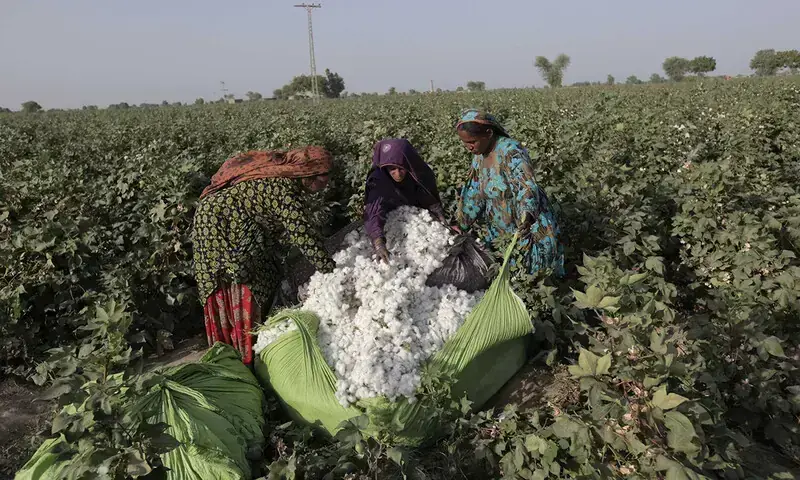

• Final summary held up at food ministry despite legal clearance on March 4
• Stakeholders blame ‘bureaucratic inertia’ for holding up crucial integration
• Directives from top officials, including deputy prime minister, fail to break stalemate
LAHORE: A planned merger of the Pakistan Central Cotton Committee (PCCC) into the Pakistan Agricultural Research Council (PARC) has stalled even after receiving final clearance from the Ministry of Law on March 4, intensifying concerns across the nation’s ‘struggling’ cotton sector.
Officials in the Ministry of National Food Security and Research have yet to move the summary for approval. The government’s plan to strengthen cotton research and boost production has failed to reach completion after more than a year, with legal, technical, and financial issues cited as reasons for the delay.
Kisan Ittehad Pakistan President Khalid Mahmood Khokhar, who had also been attending the meetings on the merger of the two bodies, blames the bureaucratic inertia for the delay. He regrets that the bureaucracy faces no dearth of funds for its perks and privileges but it is not ready to allocate resources for the scientific community.
He said the PCCC Act did not allow public funding and, since its inception, had been financed by the ginning and textile industry through a cess. The research work came to a standstill after the All Pakistan Textile Mills Association (Aptma) stopped paying the cess to the PCC in 2014, Mr Khokhar said.
Dr Muhammad Asif, vice chancellor of Muhammad Nawaz Sharif Agriculture University, said Aptma was not ready to take ownership of the PCCC.
“It does wish to govern the institute but is not ready to pay its administrative cost,” Dr Asif said. “The industry is only half-heartedly prepared to absorb the R&D expenses.”
The federal cabinet and the Establishment Division granted in-principle approval for the merger in January 2025, setting a June 30, 2025, deadline. While legal, administrative, and financial groundwork was largely finalised and a draft prepared, the formal notification has not been issued.
Informed sources said the final draft was sent from the Ministry of Law to the Ministry of National Food Security and Research on March 4, 2026, with clear directions to table it for approval. However, the file has been held up at the ministry, causing an unexplained delay.
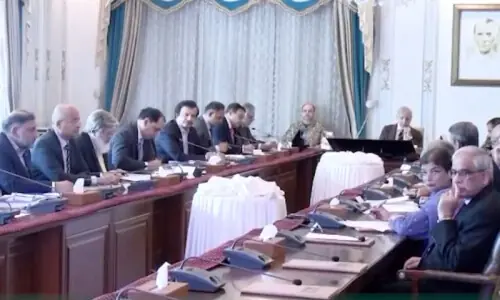
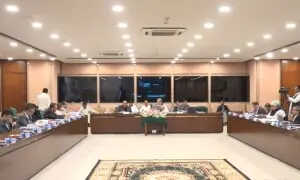
During a recent meeting on the Cotton Revival Plan, Deputy Prime Minister Ishaq Dar directed authorities to expedite the merger and avoid unnecessary delays. Despite the instruction, no tangible progress has been made.
Federal Minister for National Food Security and Research Rana Tanveer Hussain has repeatedly emphasised the need to revive the cotton sector and modernise the research system.
The Cotton Revival Plan itself highlights that merging PCCC with PARC would enhance institutional efficiency, improve resource utilisation, and support increased cotton production.
The delay is hampering essential research when Pakistan’s cotton output has declined significantly, warned former PARC chief Dr Yusuf Zafar. He noted that research institutions were also grappling with funding shortages and administrative challenges.
While Prime Minister Shehbaz Sharif approved a restructuring plan for PARC on March 17, aimed at modernising the institution and strengthening the research framework, the merger with PCCC was not explicitly mentioned in that decision.
The development reinforced the perception that the integration process remains pending.
Industry experts and stakeholders have urged the government to immediately issue the formal notification, arguing that with most formalities already completed, further delay could deepen the crisis in Pakistan’s cotton sector and undermine efforts to revive production.
Junaid Iqbal, a progressive ginner from Punjab, said the delay was dampening hopes for a revival of the sector, adding that cotton research and development in the major producing provinces of Punjab and Sindh was “zero plus zero.”
“No variety has been developed by any research institute that may withstand the climate change and pests causing collapse of this sector,” he said.
Dr Javed Hassan, Aptma’s cotton adviser, said textile mills were ready to pay the cess provided that 70 per cent was used for research and development and only 30pc for salaries and pensions. He said in the past, only 5pc of the cess was used for R&D, while 95pc went to perks for the PCCC staff.
Published in Dawn, March 24th, 2026