No shortage of fertiliser anticipated for Rabi, Kharif crops
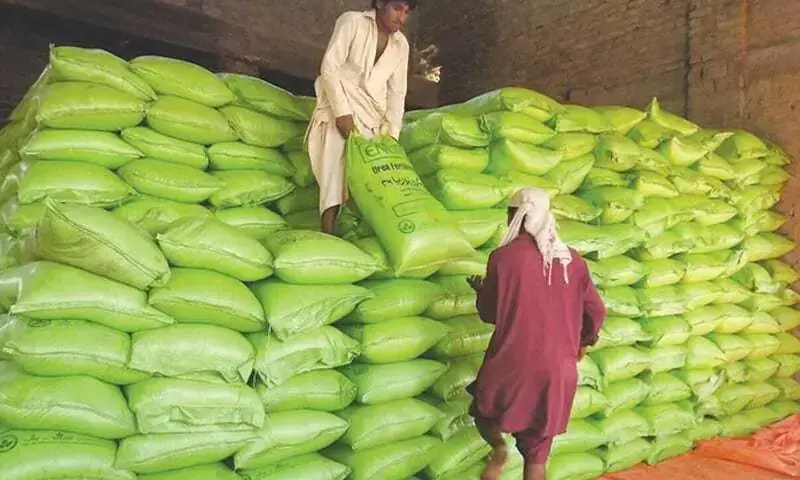

ISLAMABAD: The government anticipates no shortage of fertilisers for the current Rabi and forthcoming Kharif crops despite the escalation in the Middle East increasing risks to global energy and agrifood systems, the Ministry of National Food Security and Research said.
A situation report, released by the ministry on Friday, said that Pakistan’s fertiliser sector demonstrated strong supply-demand alignment, with production meeting 90 to 95 per cent of total urea demand and imports bridging the remaining gap. Growth in fertiliser consumption of 2 to 5pc annually reflected increasing agricultural productivity, it said.
With stock buffers ranging between 5 to 10pc of seasonal demand, both Rabi 2025–26 and Kharif 2026 were expected to remain free of shortages. Continued gas supply of 700 to 800 million cubic feet per day (mmcfd) will remain critical to sustaining this stability, the report said.
Quoting the latest data on fertilisers, the report said it reflected a stable, growing, and well-managed fertiliser ecosystem supporting Pakistan’s agricultural economy.
The data showed that urea availability during the current Rabi season exceeded 3.5 million tons against the demand of about 3.3 million tons, resulting in a surplus of 150,000 to 200,000 tons. Similarly, the availability of diammonium phosphate (DAP) remained above 700,000 tons against the demand of around 650,000 tons.
For Kharif 2026, it added that the projected urea availability was around 3 to 3.2 million tons against the expected demand of 2.9 to 3 million tons, whereas DAP availability was estimated at 750,000 to 800,000 tons against demand of about 700,000 tons, ensuring a comfortable buffer of 50,000 to 100,000 tons.
The domestic urea prices remain stable at around Rs3,700 to Rs4,000 per 50kg bag, compared to international prices exceeding Rs5,500 to Rs6,000 per bag. DAP prices domestically range between Rs11,500 to Rs12,500 per bag, while international equivalents exceed Rs14,000, the report said.
It added that Pakistan’s fertiliser production capacity stood at approximately 7 million tons of urea annually.
Major producers include Fauji Fertiliser Company (over 2.5 million tons capacity), Engro Fertilisers (around 2.3 million tons), Fatima Fertiliser (700,000–800,000 tons), and Fauji Fertiliser Bin Qasim (DAP capacity around 650,000 tons), it said.
“The sector consumes nearly 700–800 mmcfd of natural gas. Around 60pc to 65pc of production is dependent on Sui Northern Gas Pakistan Limited-supplied gas, while the remainder operates on dedicated or diverted gas sources.
Even when one to two plants temporarily shut down, the remaining capacity ensures production above 85 to 90pc of national demand, the report stated.
Over the last five years, it maintained that the urea consumption had grown from approximately 6.0 million tons to nearly 6.8 to 7.0 million tons, reflecting a compound annual growth rate (CAGR) of around 2 to 3pc. DAP consumption had increased from about 1.1 million tons to nearly 1.4 million tons, indicating a CAGR of 4 to 5pc.
Annual urea demand in Pakistan ranges between 6.5 and 7 million tons, while DAP demand fluctuates between 1.2 and 1.5 million tons, it said.
During Rabi, urea consumption accounts for nearly 55 to 60pc of total annual usage due to wheat requirements, whereas Kharif sees increased DAP demand, accounting for nearly 60pc of its annual consumption,” it reported.
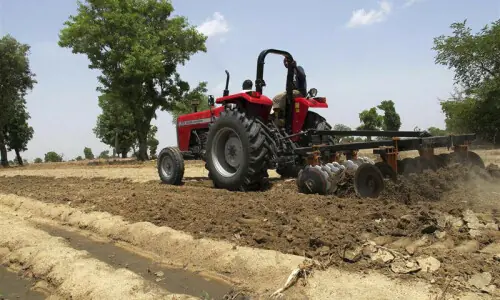
According to the report, Pakistan cultivated approximately 22–23 million hectares annually, divided into two major seasons.
During Rabi, wheat alone occupies about 9 million hectares, while gram and oilseeds cover another 2 to 3 million hectares. In Kharif, rice is grown on roughly 3 million hectares, cotton on 2 to 2.5 million hectares, and sugarcane on over 1.2 million hectares, it said.