KARACHI: Consumers remained upbeat towards new and old models, thus further propelling outstanding auto loans for the 15th consecutive month to Rs336 billion by the end of February from Rs328bn in January, data released by the State Bank of Pakistan (SPB) showed.
Auto loans grew despite fewer working days in February, while consumer spending continued to rise after December due to the model-year change.
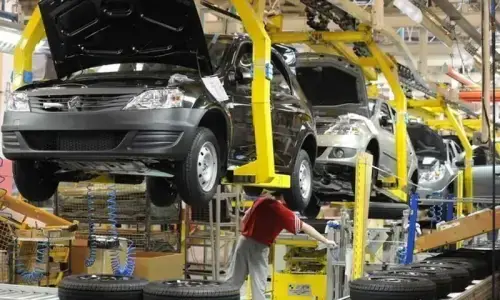
As per data from the Pakistan Bureau of Statistics (PBS), car assemblers imported semi- and completely knocked-down kits worth $1.3 billion in July-February FY26, up 126pc from $575 million in the same period last fiscal, suggesting a positive sales outlook in the coming months.
However, an uncertain situation has surfaced since February 28 over geopolitical conditions after the war in the Middle East between Iran, the USA, and Israel. Assemblers fear supply chain issues with imported parts and accessories, as well as price increases due to freight and war risk charges imposed by shipping lines.
Geopolitical tensions raise supply chain concerns
They also appear divided, with some saying that March auto sales may plunge due to the slowdown in consumer visits to showrooms ahead of Eid ul Fitre for fresh bookings and on-the-spot buying, while others say that auto buying has been going on as usual.
A Suzuki car dealer said new bookings generally slowed down in urban markets, but rural markets still have the pre-Eid rush. People are waiting and seeing the impact of the war. There may be some supply chain delays, as container ships usually arrive via Middle East shipping lines.
He said the used car market has seen an increase in footfall under Rs2.5 million, mainly due to reduced purchasing power.
New models are being launched, with some models attracting the majority of interest; however, this interest is short-lived, and once booked vehicles come to market for resale, the buyer may not be available at that time, the dealer said.
The management of Indus Motor Company (IMC), in a corporate briefing held in the first week of this month, expects disruptions and delays in the import of parts due to the ongoing Middle East crisis. Logistical congestion, higher freight costs, and shipping delays are likely to put pressure on supply timelines.
However, a broader ripple effect may become visible over the next month, making effective crisis management critical, although some disruptions may remain unavoidable.
Published in Dawn, March 18th, 2026