PHC declares levy of cess on timber transportation by tehsil municipal administration illegal
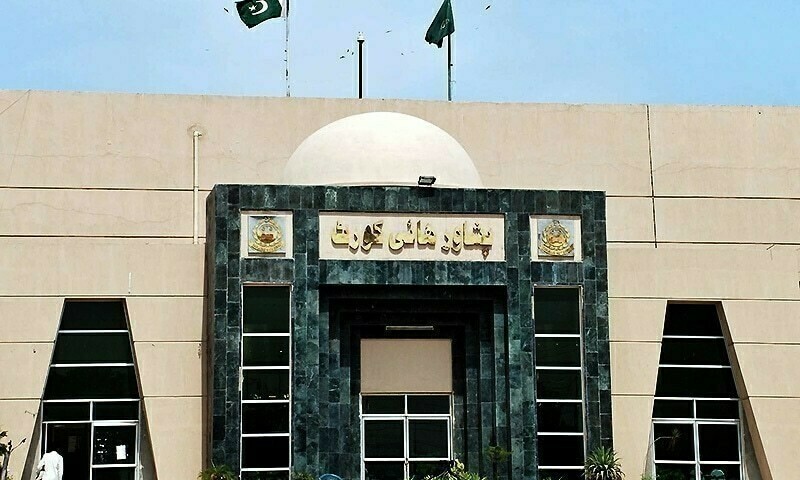
PESHAWAR: Peshawar High Court has declared levy of cess on transportation of timber by tehsil municipal administration (TMA) Mansehra as illegal, ruling that it had no independent authority to levy any tax, fee or cess.
A single-member bench of Justice Syed Mudassir Ameer ruled that the role of TMA was only confined to propose such levies to tehsil council for approval. The bench termed the said levy of cess contrary to the provisions of NWFP Local Government Ordinance, 2001 (now repealed).
“It is settled that no tax, fee or cess can be imposed or collected except by clear authority of law. This is also the requirement of Article 77 (read with Article 127) of the Constitution,” the bench ruled.
The bench made the observations in a 14-page detailed judgement while rejecting revision petition of TMA Mansehra , which had called in question the concurrent judgements and decrees of subordinate courts whereby the suit of Forest Development Corporation (FDC), challenging the levy of cess on transportation of timber, was decreed in its favour.
FDC had instituted a suit for declaration against the petitioner, asserting that it was legally entitled to transport timber from Balakot forest division to the roadside depot and thereafter to the market in Havelian without payment of any cess or timber tax.
The trial court had decreed the suit in FDC favour on July 21, 2008. The appeal filed by the petitioner (TMA Mansehra) was also dismissed by the district judge.
Rules it lacks authority to impose any tax, fee or cess
The bench discussed in detail relevant provisions of the erstwhile NWFP Local Government Ordinance, 2001, and noted: “The law is clear. A tehsil municipal administration has no independent authority to levy any tax, fee or cess. Its role is confined to proposing such levies to tehsil council for approval.”
“Even that power of proposal is not unlimited. It extends only to those taxes, fees and charges, which are enumerated in Part-III of Second Schedule to the ordinance,” the bench observed.
It said: “Correspondingly, the tehsil council may approve only such levies as specified in Part-III of the Second Schedule. The competence of petitioner/TMA is therefore strictly confined to the entries appearing in Part-III of the Second Schedule.”
“The statute draws the boundary of its taxing power. That is the full extent of its authority. Nothing beyond it, nothing more,” observed the court.
The bench further elaborated that the power to levy a tax or cess was not an inherent attribute of a public authority and it must flow strictly from the statute.
“A public authority cannot assume a taxing power, which the statute itself does not confer. Where the legislature has specified the taxes and levies that may be imposed, the authority must act strictly within those limits,” the bench ruled.
“Any demand raised without statutory sanction is not merely irregular; it is without lawful authority and therefore void. The courts are bound, in such circumstances, to protect citizens from exactions unsupported by law.”
The bench noted: “In the present case, the cess demanded from the respondent (FDC) finds no foundation in the relevant provisions of NWFP Local Government Ordinance, 2001, or the Second Schedule thereto. The courts below were therefore correct in declaring the levy illegal and restraining its recovery.”
The petitioner had also questioned the maintainability of the suit on the ground that the civil court could not examine the validity of a levy imposed by a public authority and that such challenge could only be brought before the high court under Article 199 of the Constitution.
“The argument carries no force. The civil court exercises plenary jurisdiction under Section 9 of Code of Civil Procedure, 1908, to try all suits of a civil nature unless such jurisdiction is expressly or impliedly barred,” the bench maintained.
Published in Dawn, March 16th, 2026