
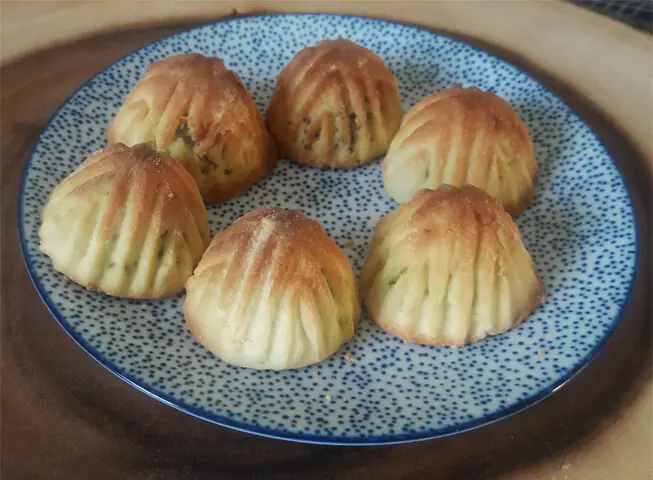
Ma’amoul, a shortbread biscuit made with sooji [semolina flour] and typically filled with a date paste, can be found at most celebratory occasions across the Arab world, such as weddings, Eid, Christmas and Easter. For Eid, the biscuit is usually made a few days ahead and served to guests along with coffee. While dates are the most popular filling, other variations include walnuts, pistachios or figs.
According to food historians, ma’amoul is believed to have ‘evolved’ from kleicha, which has its origins in ancient Mesopotamia (present-day Iraq). Kleicha can be traced back to qullupu, a crescent-shaped biscuit made by Sumerians 12,000 years ago, for festive events such as New Years and to celebrate Ishtar, the goddess of fertility.
The Ma’amoul biscuit is a favourite go-to for celebrations across the Middle East
Most people have surplus dates left in their pantries at the end of Ramazan; what better way to use them up than to make ma’amoul? This Eid, bake a biscuit that has been used to mark celebrations for thousands of years and bite into history.
Ma’amoul
Crunchy on the outside and soft on the inside, this biscuit is a perfect blend of different textures and flavours. The biscuit can be made a few days ahead and stored in an air-tight container. Dates are the easiest and most popular filling to make but feel free to go for a more indulgent one, such as walnut or pistachio (recipes for all pastes given below). Traditionally, powdered sugar is dusted on the biscuit but skip this step if you don’t like your biscuits too sweet.
Ingredients (Makes 24 Biscuits)
For the ma’amoul biscuit
1½ cup of ghee
2 cups sooji [semolina flour]
1 cup white/all-purpose flour
½ tablespoon cinnamon powder
½ teaspoon salt
1 tablespoon granulated sugar
½ cup or as needed milk
¼ teaspoon instant dry yeast
For the date paste
1 cup of dates
1 teaspoon ghee
1 tablespoon rose water (dissolve rose syrup such as Rooh Afza or Jam-e-Shirin in water)
1 tablespoon roasted sesame seeds
For the pistachio filling
2 cups pistachios
½ teaspoon ghee
1 tablespoon rose water
For the walnut filling
2 cups of walnuts
½ teaspoon ghee
1 teaspoon granulated sugar
½ teaspoon cinnamon
For decoration
Powdered sugar (optional)
Method
-
Make thebiscuit dough. Melt the ghee in a saucepan. In a mixing bowl, add and fold in all the dry ingredients except for the instant yeast. Add the melted ghee a bit at a time and stir well until a crumbly mixture forms and has the texture of sand. Cover in cling film and put aside.
-
Heat milk in a microwave or on the stove (milk should be lukewarm and not too hot or boiling, otherwise it will kill the yeast). Add the yeast to the tepid milk and set aside to let it bloom. Add the milk-yeast mixture to the semolina mixture. Keep on rubbing the crumbs together until a dough forms. Add more milk as needed. The dough should be soft but not too wet. If the dough is sticky, add a teaspoon of flour and if dry, add milk. Adjust accordingly. Roll dough into ball.
-
Sprinkle flour on a flat surface or a large, flat pan. Scoop out around a tablespoon and shape into a small round ball. Repeat this step until all the dough is finished. There should be around 24 to 25 pieces/biscuits.
-
Make the paste filling (date, pistachio or walnut). Mix all the ingredients in a blender and set aside in a bowl.
-
Flatten the small dough ball and make a deep indentation in the center by pressing down with your thumb. Scoop in a tablespoon of date/pistachio/walnut paste. Pinch the dough from all sides until the biscuit is sealed.
-
Decorate the biscuit either by pressing in a ma’amoul mould (a wooden biscuit mould) or by hand, using a fork to press lines along the biscuit.
-
Preheat oven to 250 degrees Celsius. Spread oil or butter on a flat baking tray. Sprinkle with flour. This should prevent the biscuits from sticking on tray. Place the ma’amoul on tray and bake for 15 to 20 minutes or until done.
-
Put on rack to cool. Dust with powdered sugar if desired. Serve with Turkish coffee or tea.g
The writer is a former staff member
Published in Dawn, EOS, May 15th, 2024