SBP maintains policy rate at 10.5pc


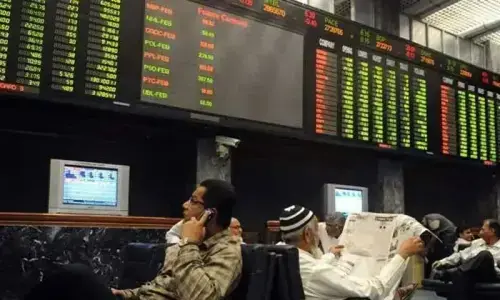
The State Bank of Pakistan (SBP) on Monday maintained its key policy rate at 10.5 per cent.
The announcement was posted on the central bank’s X account. A detailed statement by the central bank’s Monetary Policy Committee (MPC) was issued later in the day.
In its statement, the MPC said that while the incoming data was largely consistent with the macroeconomic projections shared after the January meeting, it was observed that the macroeconomic outlook had become “quite uncertain following the outbreak of the war in the Middle East”.
It noted that the conflict had led to a sharp increase in global fuel prices as well as freight and insurance costs, while also affecting cross-border trade and travel.
“Given the evolving nature of events, the MPC observed that the intensity and duration of the conflict will both be important determinants of the impact on the domestic economy,” the statement said.
The MPC also acknowledged the “important role of the prudent monetary and fiscal policies in increasing the economy’s resilience to shocks”.
It noted that the country’s macroeconomic fundamentals were better as compared to the start of the Russia-Ukraine war in early 2022.
“The MPC’s initial assessment of the evolving geopolitical situation indicates that the outlook for key macroeconomic variables for FY26 is within the earlier projected ranges. However, risks for the macroeconomic outlook have increased significantly,” it said.
It also noted several key developments aside from ongoing geopolitical events; inflation rising to 5.8pc and 7pc in January and February, respectively; current account surplus in January and buildup in forex reserves; large-scale manufacturing growing by 0.4pc year-on-year; consumers’ inflation expectations and confidence improving; tax collection by the Federal Board of Revenue remaining below target for January and February; and the US administration announcing global uniform tariffs.
“The committee noted the high degree of uncertainty in the outlook for international commodity prices and supply-chain disruptions in the backdrop of the war in the Middle East. In this context, the MPC deemed today’s decision as appropriate, and reaffirmed its commitment to ensuring hard-earned price stability. The committee also stressed the need for expediting structural reforms to ensure sustainable economic growth,” the statement said.
Analysts had widely expected the policy rate to remain unchanged, with Topline Securities noting that the decision was in line with their expectations.
A Reuters poll conducted earlier this month also indicated a consensus for a hold, as rising global energy prices and escalating regional tensions cloud the inflation outlook and limit the central bank’s room for further cuts.
The State Bank has cut the key rate by a cumulative 1,150 basis points since mid-2024, from a record 22pc in 2023, as inflation cooled sharply from multi-decade highs.
Pakistan has begun to feel the economic fallout of the escalating conflict between the US-Israel against Iran, which has led to the closure of the Strait of Hormuz and triggered a sharp rise in global fuel prices.
In international markets, Brent crude is on track for a record one-day gain, as mounting geopolitical tensions place severe pressure on global energy supplies. Meanwhile, gold fell 2pc.
Pakistan imports most of its energy needs, making domestic inflation sensitive to changes in global fuel prices.
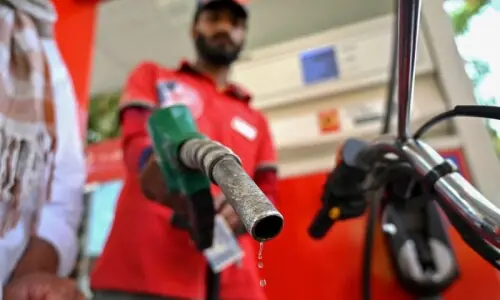
Last week, the government also raised the prices of petrol and high-speed diesel by Rs55 per litre, the largest single increase on record, as the country began absorbing the first direct economic shocks of the ongoing regional conflict.
The country is also in an ongoing $7 billion International Monetary Fund (IMF) programme, with the Fund urging policymakers to keep monetary policy tight and data-dependent to anchor inflation expectations and strengthen external buffers.
Additional input from Reuters