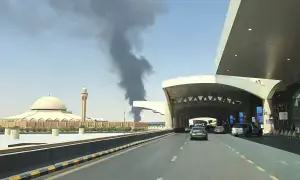
Karachi inches towards normalcy as roadblocks and protests continue
• Transport remains thin, businesses witness voluntary shutdown as tension prevails
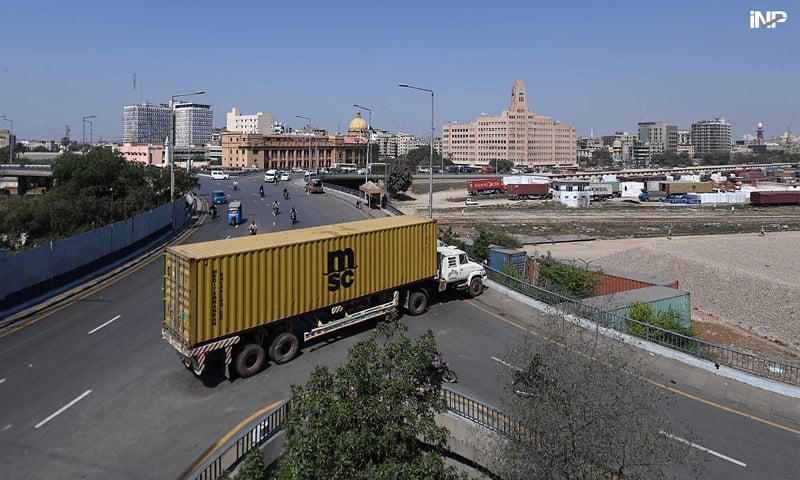
• Roads leading to US consulate stay closed for extra security; several key arteries sealed
• Demonstrations, condolence meetings held
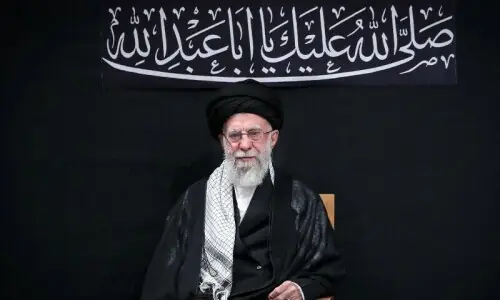
KARACHI: An uneasy calm, blended with grief and uncertainty, prevailed in the city on Monday amid a call for a “day of mourning” by Majlis Wahdat-i-Muslimeen (MWM) over the assassination of Iran’s Supreme Leader Ayatollah Ali Khamenei, an unannounced closure of markets by traders, and a late night decision by major public and private universities to keep their institutions closed for academic activities.
Protest demonstrations and sit-ins were also organised by the MWM and several other groups across the city after sunset.
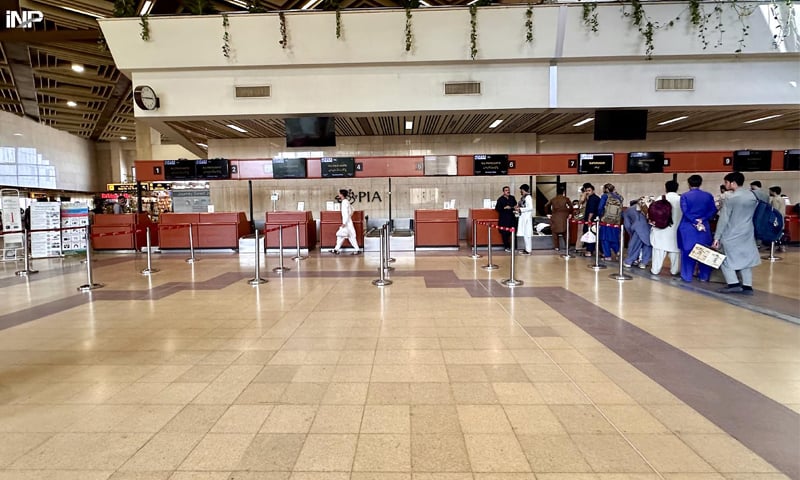
Apart from business activities, road transport also remained thin, and life only returned to normalcy in the evening when people took to the streets for routine shopping before Iftar.
Business leaders said that traders voluntarily stayed away from the routine business, showing what they described as a “kind of protest” over the recent aggression against Iran and also paying respect to the martyred leader.
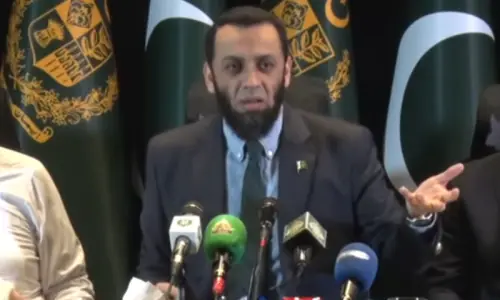
“No business body or traders organisation announced any shutdown,” said Atiq Mir, the chairman of All Karachi Tajir Ittehad (AKTI). “But obviously, many traders and markets decided on their own. They showed anger against the recent United States-Israeli aggression as well as respect for the martyrdom of Ayatollah Ali Khamenei. Several business centres of the city remained closed or operated partially.”
Similarly, the transporters operated “cautiously” following the deadly episodes a day before, when deadly protests and arson attacks left some 10 people dead and several vehicles burnt. The transporters’ body said that, with no formal advice from them, several of their members decided to stay away from roads on their own.
“We didn’t ask any [transporter] of our members to stay off the roads. It was a self-explanatory situation for everyone doing business after Sunday’s episodes. Then there was also a sense of mourning due to the situation in Iran, and then the killings of protesters in Karachi. They all accumulated and led to a much lower number of public transport on roads today [Monday],” said a senior member of the Karachi Transport Ittehad.
The late-night announcement from the University of Karachi (UoK) and other major private universities further created uncertainty for the next day’s routine life in the city. Late on Sunday, the UoK issued a notification saying that teaching activities would remain suspended on March 2, while examinations scheduled for the day were postponed, with new dates to be announced later.
In a separate statement, the varsity’s Teachers’ Association strongly condemned recent attacks on Iran by Israel and the US, which it said killed more than 200 civilians, including Iranian leader Ayatollah Khamenei.
Roads barricaded for security
Though earlier protests were over by Sunday evening, the police kept several roads closed as a “precautionary measure”, which further fuelled uncertainty among the Karachiites.
According to the traffic police, the road from PIDC Chowk to MT Khan Road towards Sultanabad was closed using containers, while the route from PIDC Chowk to Dr Ziauddin Ahmed Road leading to the Chief Minister House was also shut.
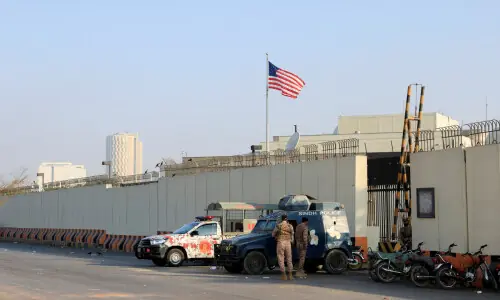
The traffic authorities also blocked the road from Tower to Mai Kolachi and the route from Boat Basin to Mai Kolachi, with barriers in place to provide extra security for the US consulate general, which was the epicentre of Sunday’s violent protests.
The Sharea Faisal track from FTC to Metropole remained closed for a second consecutive day, with traffic diverted at Gora Qabristan through a U-turn towards Saddar.
Officials said the closures were imposed due to security concerns amid fears of further protests.
‘Day of mourning’
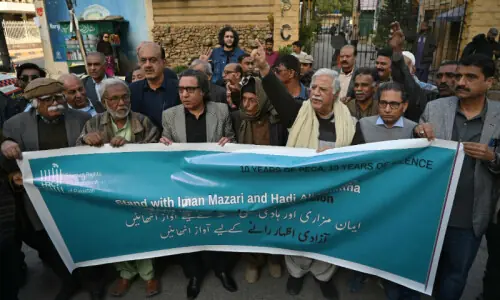
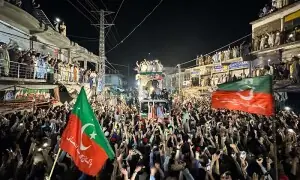
Meanwhile, protest demonstrations and sit-ins were organised by the Majlish Wahdat-i-Muslimeen (MWM) and several other groups across the city after sunset.
The demonstrations took place at multiple locations, including rallies from Shah-i-Khurasan to Numaish Chowrangi, from Shuhada-i-Karbala Imambargah in Ancholi to Shahrah-i-Pakistan and on the National Highway near Malir 15.
A large number of people, including women and children, participated in the protests.
Religious leaders from different schools of thought also joined to express solidarity. In their speeches, they paid tribute to Iran’s Supreme Leader Ali Khamenei and described him as a great leader and pledged continued support for Gaza and Palestine.
An MWM spokesperson later said that the sit-ins and demonstrations were called off later in the night and the protesters dispersed peacefully.
Meanwhile, condolence meetings were also held across the city on the call of MWM to observe a “day of mourning” over the martyrdom of the Supreme Leader and others.
Addressing the gatherings, central leader Allama Baqir Abbas Zaidi, provincial leader Allama Hayat Abbas Najafi and Karachi Division leader Allama Sadiq Jafri condemned the firing on “peaceful” protesters in Karachi, Islamabad, Lahore and Gilgit-Baltistan, describing it as an act of grave brutality. They termed the use of force against unarmed civilians an unforgivable crime and called for accountability.
The speakers criticised what they described as the government’s “hypocritical policy” regarding Iran.
They paid tribute to Ayatollah Khamenei, calling him a courageous leader of the Muslim world whose religious, intellectual and resistance-based contributions were being widely acknowledged globally. They said he consistently advocated for Muslim unity, supported oppressed nations and adopted a firm stance against global arrogance.
The Palestine Foundation Pakistan (PLF) held a conference and pictorial exhibition at the Arts Council, where the speakers from different parties strongly condemned the recent US-Israeli aggression against Iran and paid tribute to Ayatollah Khamenei, describing him as a hero of freedom-loving people around the world.
While expressing solidarity with the people of Iran, they said that Khamenei sacrificed his life for the people of Palestine and Gaza and embraced martyrdom with honour rather than accepting humiliation.
The conference was addressed by former chief of Jamaat-i-Islami (JI) Pakistan, Senator Siraj-ul-Haq, former Senator Nihal Hashmi of Pakistan Muslim League-Nawaz, former Member of Sindh Assembly Mahfooz Yar Khan of Muttahida Qaumi Movement-Pakistan, renowned religious scholar Allama Amin Shaheedi, secretary general of PFP Dr Sabir Abu Maryam, as well as representatives from Pakistan Tehreek-i-Insaf, Israr Abbasi, Jamiat Ulema-i-Pakistan, Pakistan Leader Allama Qazi Ahmed Noorani and several others.
Resolution files in PA
Muhammad Farooq, a JI member of the Sindh Assembly, on the other hand, submitted a resolution in the assembly condemning the joint attack on Iran by the US and Israel. The resolution said that the House condemned the attack on Iran by the US and Israel, as well as the reported martyrdom of Iran’s Supreme Leader, Khamenei.
The resolution stated that the US and Israel pose a threat to global peace and that they were bombing schools, hospitals and residential areas in Iran, resulting in the deaths of thousands of innocent civilians, including children and female students. It describes these actions as a blatant violation of humanitarian principles and the United Nations Charter.
Published in Dawn, March 3rd, 2026