0
0

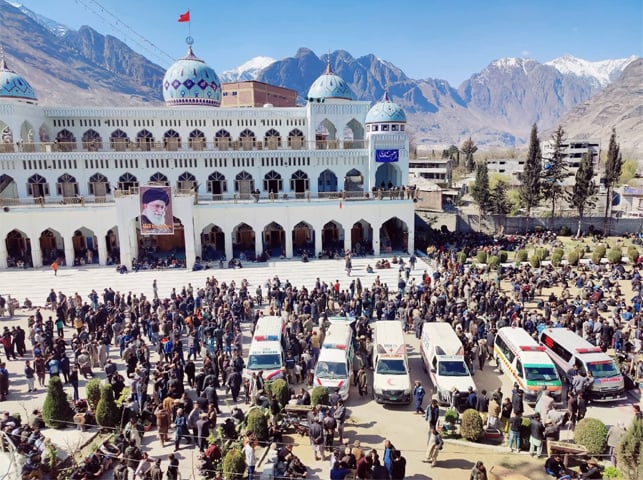
• Prayers offered at Markazi Imamia Jamia Masjid Skardu and Central Imamia Masjid Gilgit
• Three-day curfew imposed in both districts amid deteriorating law and order situation
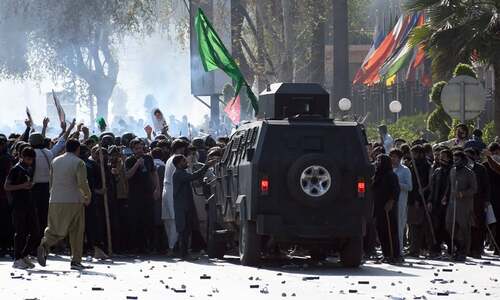
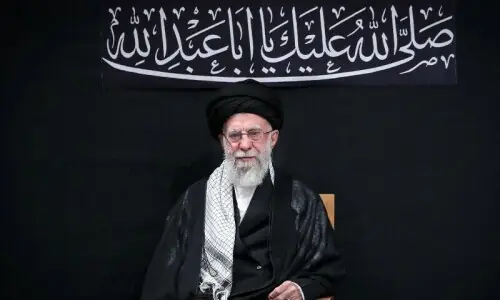
GILGIT: Funeral prayers for 13 people who were killed during protests after the assassination of Iran’s Supreme Leader, Ayatollah Ali Khamenei, were held in Skardu and Gilgit as authorities imposed a three-day curfew in both cities starting Monday to manage the prevailing law and order situation.
A total of 13 people, including one security official, were killed during clashes on Sunday.
Six people lost their lives in Skardu, while seven were killed in Gilgit.
According to official and hospital sources, a young man who had sustained injuries during the protests in Gilgit succumbed to his wounds, raising the death toll to 13. More than 100 people were reported injured.
Funeral prayers for five of the deceased were offered at the Markazi Imamia Jamia Masjid in Skardu. The prayers were led by Agha Syed Baqir Al-Hussaini, and a large number of people participated.
Meanwhile, funeral prayers for seven victims were held at Central Imamia Masjid in Gilgit. The prayers were led by Agha Rahat Hussain Al-Hussaini, with a large number of mourners in attendance.
Earlier, a curfew was imposed in Gilgit and Skardu for the next three days starting Monday in view of the prevailing law and order situation.
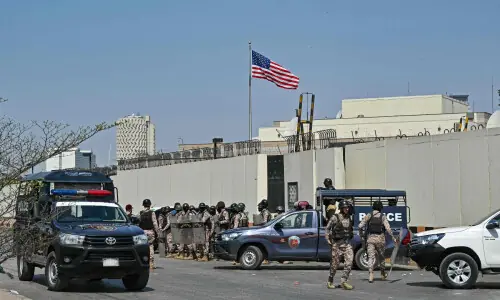
The Gilgit-Baltistan government relaxed the curfew from 12pm to 4pm. Tight security arrangements were in place. Mobile networks, which had been suspended on Sunday evening, were restored during the curfew relaxation period but were suspended again afterwards.
During the relaxation hours, citizens rushed to markets to purchase daily commodities, medicines, and other necessary items. People also faced difficulties due to road blockages, as several roads remained closed during curfew hours.
According to a letter written by the Gilgit-Baltistan Home Department to the Force Commander Gilgit-Baltistan, titled “Imposition of Curfew and Deployment of Army Personnel”, the decision was taken in light of the precarious security situation following large-scale protests after the assassination of Ayatollah Ali Khamenei.
The letter stated that the situation could deteriorate further, particularly in District Gilgit and Skardu.
It requested the deployment of Pakistan Army troops in both districts and the immediate imposition of curfew for an initial period of three days (March 2, 3 and 4) to prevent any untoward incidents and safeguards human life and property.
The schedule for the curfew and relaxation timings has been issued.
Published in Dawn, March 3rd, 2026