0
0

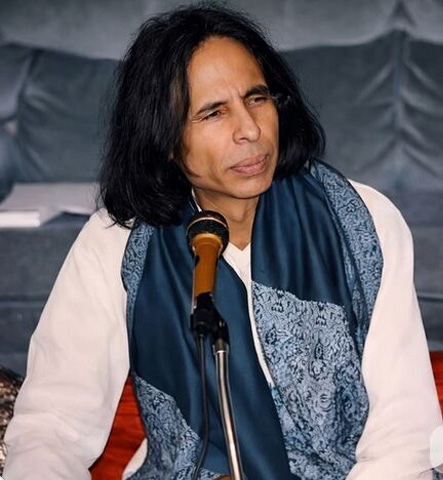
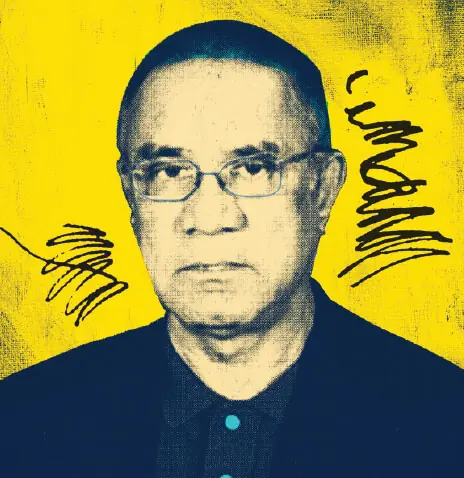
Jaun Elia’s immense popularity with the youth, paradoxically, works against a fuller and deeper appreciation of his genius. This is not merely because generational tastes shift, but because the very lens of this popularity narrows his profound literary legacy.
While celebrated, the depth and breadth of his work are often compromised. A small portion of his poetry — written in deceptively simple, conversational verse — is what is most remembered, quoted and discussed. His philosophical prose remains largely in the shadows. The truth is that Gen Z perceives only a fragment of Jaun; his iconic, unkempt hair is adored and imitated, while the vast landscape of his mind is overlooked.
To label Jaun a ‘Poet of the Youth’ is a limitation and an act of reduction. He is, rather, a poet for all generations and times. He is undoubtedly a true intellectual and poet-scholar. His approach to society, history, culture and human existence was a unique synthesis of the philosophical and the imaginative. Even his use of simple, prose-like style, though significant, represents just one shade of his art. His ghazals and nazms reveal a stunning variation in style, a diversity rooted in the evolution of his thought and his manner of engaging with different facets of human life.
Jaun was deeply immersed in the literary traditions of Arabic, Persian, Urdu and European literature. Commanding hundreds of thousands of words, he understood the precise place, role and power of each within the language system, and their utility in poetry. He held that while words occupy a fixed place in lexicon, in poetry they must create new space, accommodating themselves to an alien, sometimes uncanny artistic environment. Yet, this must be achieved without sacrificing a certain flow, a graceful musicality — for without this rhythm, all art is a futile exercise.
The popularity of Jaun Elia’s deceptively simple verse, which has become all the rage with the youth, often obscures the depth and breadth of his philosophical intellect and imagination
It is telling that, at mushairas, Jaun would often select ash‘aar [couplets] composed in accessible, ordinary language. Though he masterfully employed complex imagery and Persianised diction, it is these simpler couplets he recited and performed that are now persistently quoted. A few examples follow:
Yeh mujhay chaen kyun nahin parrta
Ek hi shaḳhs tha jahaan mein kya
[Why is that I can find no peace?/ Was there only one person in the entire universe?]
Kaun iss ghar ki dekh-bhaal karay
Roz ik cheez toot jaati hai
[Who is left to take care of this house?/ Every single day, something breaks]
Haasil-i-kun hai yeh jahaan-i-ḳharaab
Yahi mumkin tha itni ujlat mein
[This ruined world is all that resulted from the command of “Be”/ Perhaps this was all that was possible in such a great hurry]
These ash‘aar appear simple, but they are not simplistic. Their plain language is deceptive, a kind of poetic trickery. All major poets are, in some way, tricksters: they say one thing but mean another, revealing through concealment. Jaun, too, was a trickster. His unkempt appearance and casual demeanour — so often admired and imitated by the youth — were themselves a mask, worn not to hide, but to reveal something deeper. His simple language functions similarly: it is a veil through which he conveys uncomfortable truths about human existence.
Consider the first she’r [couplet] quoted above. It is not merely about a break-up; it questions our belief in a single liberator. The pronoun ‘mujhay’ implies a collective self — a nation, even humanity — that in its misery continually looks outward for salvation. Jaun raises subtle, profound questions: was there ever only one? If not so, who are the others? How, in such a vast universe, can there be only one?
The phrase “yeh mujhay”, difficult to translate, points to the immediate, visceral reality of personal pain, starkly juxtaposed with the abstract “ek hi shaḳhs.” Jaun’s poetic language is rich with such nuances, each line pregnant with complex, often disquieting, realities.
Yet, Jaun’s deeper work remains underexplored. ‘Raamuz’ [Code, Counterpart] stands as his most accomplished poem. Originally titled ‘Nayi Aag Ka Ehednama’ [A Testament of New Fire], it centres on fire as a dual symbol — destructive yet creative, consuming yet vital, embodying pain, love, passion and courage. Structured into 11 alwaah [clay tablets], this long poem is an epic of being-in-the-world.
Jaun was not only a poet but a scholar in the mediaeval tradition, steeped in theology, history, philosophy and the literary traditions of both East and West. His essays, collected in Farnood [Argument], reveal the breadth of his learning. Central to his prose is a steadfast advocacy for aql [reason]. Unlike much of classical and modern Urdu poetry, which often elevates dil [heart] or ishq [love] above intellect, Jaun asserts the supremacy of aql, yet without casting it in opposition to intuition. He argues that it is reason itself that frames the discourse on intuition’s superiority; reason even furnishes arguments against itself.
In one essay, he writes: “There is no possibility that science will destroy man’s creative aspirations, his literary soul, or his intuitive conscience. We should not fear it; rather, we should develop an affinity for it. … Where science collapses from exhaustion, literature begins its journey.”
He critiques those who fear for literature’s future, attributing their despair to a trivial conception of the art — one divorced from high intellect and scholarly perspective. This leads to two crucial reflections.
First, how does high intellect operate in literature? It is not the maximal, but the sanest and most discerning use of reason. It is non-conformist, courageous, willing to encounter reality, rather than blindly follow tradition. It embraces diverse, even opposing, perspectives and reflects deeply on everything from ordinary experience to the great riddles of existence. This intellect provides a springboard for literary imagination, which is evident in Jaun’s ghazals and especially in ‘Ramuz’, as seen in lines like these from the ‘Tablet of Circle’:
Trapped within the circle, I lick the stains of my own blood,
For the entire burden of my existence rests upon my head
At the threshold of my lips, my soul has long been crying out in anguish
I burn within my chest; I extinguish within my own eyes
I am the body of my own voice
The silence, its tongue, will rot in its mouth
I will speak, and my very speech will be deemed my crime
I am but a stone statue, which — having installed in the avenue —
The sculptor and the architect have already collected their wages for
Second, what happens when literature is severed from intellect? It descends into mediocrity, which is the death of ingenuity. Mediocrity becomes a tool for promoting ideologies privileged by the powerful. Imagination without intellect is a caged bird, its song of despair on repeat, wings unused.
In the preface to his first collection, Shayed [Perhaps], Jaun declares himself a nihilist and anarchist. This should not be taken as a rejection of all foundations, but as a bold insistence that every system — of ideas, knowledge, even poetics — can be questioned.
We can distinguish between passive nihilism, a disease of the soul leading to alienation and active nihilism, which dismantles outdated values to create new, humane ones. Jaun embraced the latter. He argued, for example, that the intellectual reconstruction of Pakistan should be led by the Pakistan Philosophical Congress rather than dogmatic bodies, criticising the prevailing preference for dogma over interrogative spirit. Though he admired aspects of European modernity, he condemned its racial ideologies and criticised British colonialism in India for its economic and cultural violence.
Ultimately, Jaun’s own sufferings were tied to this stance, his disbelief in dogma, his active nihilism, and his acute awareness of Western and indigenous colonial exploitation. His work remains a testament to a mind that refused to be caged, a voice that found music in reason and resonance in revolt.
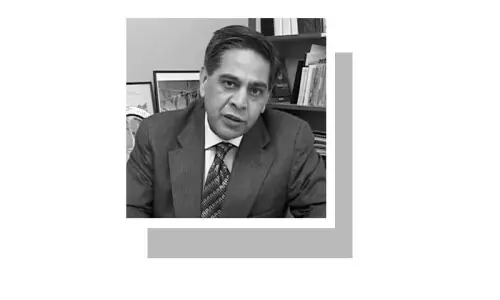
The writer is a Lahore-based Urdu critic and short story writer. Currently, he is associated with the Gurmani Centre at LUMS as Head of Publications. His most recent publication is Mera Daghestan-i-Jadeed
Published in Dawn, Books & Authors, March 1st, 2026