‘Righteous Fury’ halts Afghan aggression in its tracks
• Govt claims 297 Afghan fighters killed; 89 posts destroyed, 18 captured
• Military operation continues through the night amid fears terrorists may stage attacks on Kabul’s urging
• 12 Pakistani soldiers martyred, 27 injured, one missing in action
• ISPR chief confirms PAF strikes in 22 locations across Kandahar, Paktia, Nangarhar, Khost and Paktika
• Sees Indian hand behind Afghan aggression; tells Kabul to choose either ‘Pakistan or terrorists’
• FO terms Pakistan’s actions ‘self-defence’ under international law
• PM vows ‘zero tolerance’ for Taliban subversion
ISLAMABAD: Pakistan continued ‘Operation Ghazab lil-Haq’ (Righteous Fury) against Afghan aggression on Friday, as Islamabad — amid mounting international calls for de-escalation — hardened its stance against what it described as a deepening nexus between the Afghan Taliban and the Tehreek-i-Taliban Pakistan (TTP).
Underscoring zero tolerance for any such collaboration, Islamabad warned that further provocations would be met with a “measured, decisive and befitting response”.
The signal was delivered through separate, but carefully aligned statements from the Prime Minister’s Office, the Foreign Office, information ministry, and the military’s media wing.
Together, they framed the current hostilities not as a border dispute, but a confrontation rooted in Kabul’s support for anti-Pakistan terrorist groups, particularly the TTP.
Giving the latest figures on Friday night, Mosharraf Zaidi, the prime minister’s spokesperson for foreign media, said: “A total of 297 Afghan Taliban are confirmed killed, and more than 450 are reported injured.”
He further said that 89 Afghan Taliban posts have been destroyed and 18 have been captured, while 135 Afghan Taliban regime tanks and armed personnel carriers have been destroyed.
“Twenty-nine locations across Afghanistan have been subjected to aerial targeting,” he said.
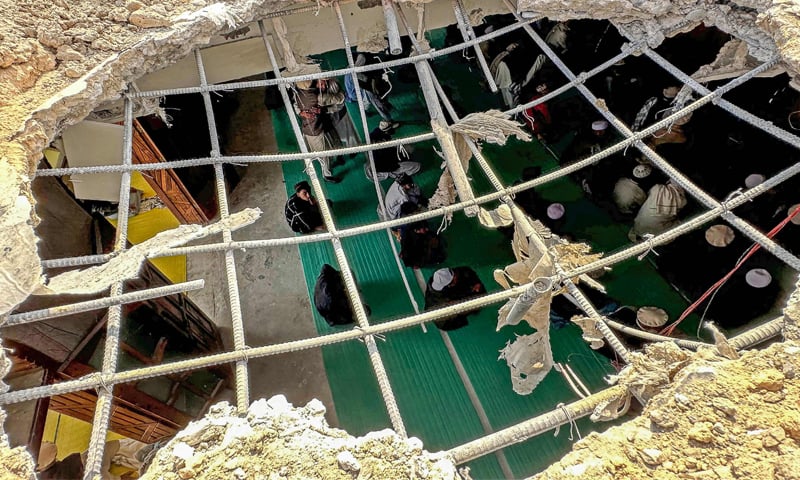
The operation, which continued through Friday night and into the early hours of Saturday, saw sporadic fighting flare up at several points along the Pakistan-Afghanistan border.
Reports suggested that security forces destroyed Afghan Taliban’s Aryana Complex, Dubgai checkpost, police headquarters, an Afghan checkpost near Mohmand sector and the Zakir Khail post. Security sources said Pakistani forces had forced the Afghan Taliban to flee their positions.
There were also reports of renewed fighting in the Angoor Adda area, where an exchange of fire erupted around Iftar time. However, local sources said security forces responded effectively, forcing the attackers to abandon their positions and flee.
Security officials further indicated that the scope of the operation extended across the border into Afghan territory, where positions in Paktia, Barmal district and adjoining areas near New Adda were also engaged.
Amid the prevailing hostilities, however, there are warnings that terrorist outfits allied with the Taliban regime could stage a number of attacks inside Pakistan. The fears follow instructions from Afghan Taliban interior minister Sirajuddin Haqqani, who reportedly called on fighters being sheltered by the regime to defend the ‘Islamic Emirate’, during a Friday sermon.
Late on Friday night, there were reports of a grenade attack on a Badhber police station, while a similar incident was reported from the Sra Khawra check post. Both are located on the Indus Highway, south of Peshawar.
ISPR briefing
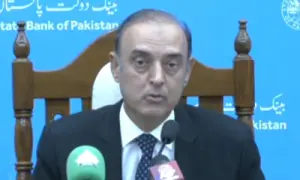
Briefing the media on the operation, Inter-Services Public Relations (ISPR) Director General Lt Gen Ahmed Sharif Chaudhry accused the Afghan Taliban of directly backing and participating in cross-border attacks in support of the TTP, which the Pakistani state refers to as ‘Fitna al-Khawarij’.
“The Afghan Taliban regime, which is the master proxy of all terrorist proxies, came into action last night and opened unprovoked fire and conducted physical raids in fifteen sectors on 53 locations along the Pak-Afghan border in Khyber Pakhtunkhwa,” he said.
He alleged coordination between Taliban fighters and the TTP. “They came with quad copters, armed quad copters, heavy and light weapons,” he added, portraying the assault as organised and technologically-enabled, rather than sporadic cross-border firing.
In response, Pakistan formally launched their counterattack, which the military said was being conducted under civilian oversight.
“Operation Ghazab lil-Haq is continuing under the direction of the Prime Minister of Pakistan,” Lt Gen Chaudhry said, adding, that it would continue until the “attainment of objectives”. According to the military spokesperson, Pakistani forces not only repelled ground incursions, but also expanded the scope of operations with deep airstrikes inside Afghanistan.
He confirmed aerial strikes at 22 locations in Kandahar, Paktia, Nangarhar, Khost and Paktika. “All these targets were very carefully selected based on intelligence. They are military targets and great care was exercised so that there is no civilian collateral damage.”
Detailing the targets, he said they included “corps, brigade, battalion, and sector headquarters, ammunition depots, logistic bases of the Afghan Taliban regime, along with the sanctuaries, offering protection and support to the terrorists and their abettors.”
“All their posts, their gun positions, their tank positions were taken out. Their battalion headquarters and sector headquarters were taken out,” he added.
Providing Pakistan’s account of military losses inflicted, Gen Chaudhry said: “So far… 115 tanks, armoured vehicles and artillery guns have been destroyed.”
He also said Afghan forces had retreated from several positions, leaving behind the bodies of their dead. Those dead bodies have been respectfully preserved as per Geneva protocol, he said.
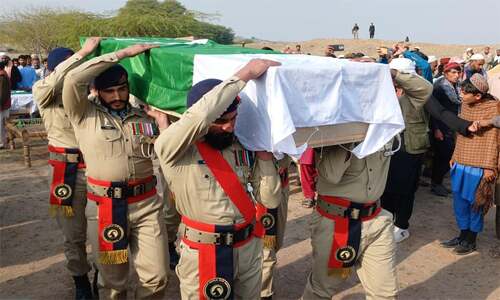
On Pakistan’s own casualties, he said, “12 sons of Pakistan embraced martyrdom during the operation, 27 sustained injuries, while one soldier is missing in action.”
“I want to make one thing clear: the oppressive Afghan Taliban regime has to make a clear choice, choose between TTP, BLA, Daesh, Al-Qaeda, terrorists and terrorist organisations and… Pakistan,” the spokesman said.
Upon being asked whether there was a “tangible trace” of Indian involvement, the military spokesperson maintained that “behind every terrorist attack was Indian sponsorship, abetment, and design”.
“Their base of operation is the Afghan Taliban regime [..] that is how they operate”.
At a separate presser, Information Minister Ataulllah Tarrar said that the nexus between terrorists and the Afghan Taliban regime “had become as clear as daylight”.
“Afghanistan is resorting to training these terrorists and facilitating all kinds of terrorists who come into Pakistan and kill innocent civilians, our security personnel,” the minister added.
Calling the Afghan Taliban government “illegitimate”, he said their rule is based on repression, “slavery, violence and repression of women”.
He also accused Kabul’s rulers of “using religion through their own interpretation of it”.
“They [rely] on the perversion of religion to further their illegitimate causes and strengthen their illegitimate regime,” he said.
Self-defence
The Foreign Office complemented the military briefing by situating the operation within international law.
“Pakistan’s actions were undertaken in exercise of its right to self-defence and to ensure the safety and security of its citizens, as well as that of the wider region and beyond,” it said.
It reiterated the warning: “Any further provocations by the Taliban regime, or attempts by any terrorist group to undermine the security and welfare of the people of Pakistan, will be met with a measured, decisive and befitting response.”
“Pakistan reserves the right to take all appropriate actions in its self-defence and to protect its citizens in accordance with international law, including the UN Charter.”
The Foreign Office also called on the international community to press Kabul to act against terrorist groups operating from its soil.
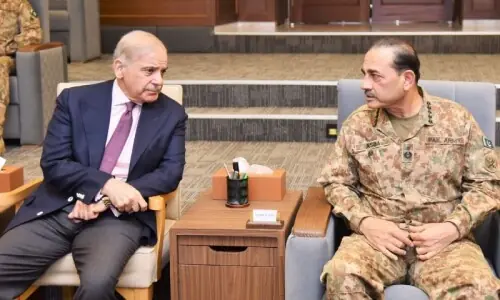
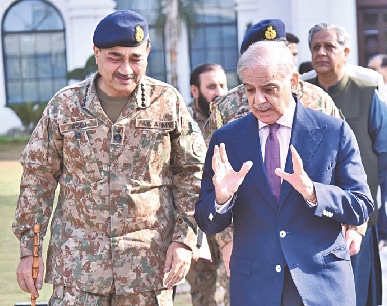
Prime Minister Shehbaz Sharif reinforced the message during a visit to General Headquarters, where he was briefed on the evolving situation.
“Zero tolerance will be adopted against the nexus between Fitna al-Khawarij and the Afghan Taliban regime and their subversive activities,” he said.
“The actions of the Afghan Taliban regime and Fitna al-Khawarij against Pakistan are unacceptable. Pakistan knows very well how to defend itself against any aggression.”
Our correspondents in KP, and Dawn.com’s News Desk also contributed to this report
Published in Dawn, February 28th, 2026