0
0

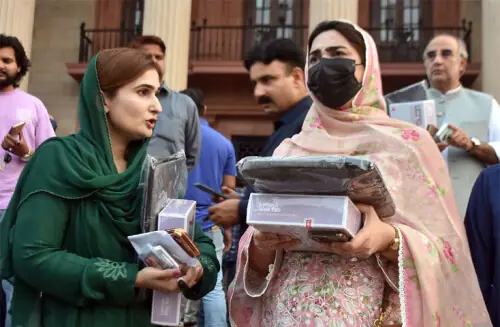
LAHORE: Hundreds of laptops were distributed among students at the University of Home Economics (UHE), the University Education (UE) and the Muhammad Nawaz Sharif University of Agriculture Multan (MNSUAM) on Friday.
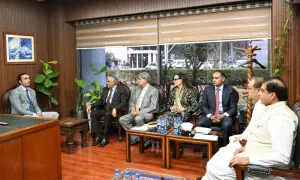
The UHE ceremony was held to distribute laptops among talented students under the Phase-IV of the Prime Minister’s Laptop Scheme. A total of 131 students of MPhil and BS programmes from more than fifteen departments of the university received laptops on merit during the event.
UHE Vice Chancellor Prof Dr Zaibun Nisa Hussain was the chief guest while Prime Minister’s Youth Programme representative Rizwan Anwar, Maha Jamil, Asfand Yar and Dr Muhammad Imran Din were present.
UHE VC Hussain said laptops were awarded on merit to BS (Hons) and MPhil students aimed at promoting the digital economy and equipping youth with modern technological tools.
She urged students to utilise the laptops to acquire digital skills and contribute to national development. She further remarked that the government had been empowering female students through such initiatives, adding that technology plays a pivotal role in professional fields and that access to laptops would enable students to effectively harness technological opportunities.
Speaking on the occasion, Dr Imran Din described the laptop as a “modern-day tool” and encouraged students to use it for learning new knowledge and enhancing their academic capabilities.
He said the provision of laptops reflected the government’s confidence in the potential and talent of young women.
Mr Rizwan highlighted that Prime Minister Shehbaz Sharif had launched national-level programmes for youth development. He noted that the distribution of 100,000 laptops to students across the country was clear evidence of the prime minister’s commitment to empowering youth.
He added that Digital Pakistan was the key to economic progress and pointed out that Pakistan had emerged as the world’s fourth-largest freelancing market.
Maha Jamil stated that women were indispensable to Pakistan’s development and provision of laptops would help female students align their education with modern technological advancements and enhance their academic and professional growth.
At UE, the laptop distribution ceremony was held under Phase-IV of the Prime Minister Youth Laptop Scheme at its Main Campus, Lahore. As many as 1,068 students were awarded laptops in recognition of their academic excellence and commitment to higher education.
The ceremony was presided over by Vice Chancellor Prof Dr Aqif Anwar Chaudhry while Prime Minister Youth Programme Focal Person Fahad Shahbaz was the guest of honour.
Addressing the ceremony, Prof Chaudhry congratulated the successful students and termed the initiative a landmark step toward promoting digital empowerment and academic excellence among youth.
He stated that the prime minister’s laptop scheme reflected the government’s commitment to invest in human capital and to equip them with modern technological tools to compete in the global knowledge economy.
Mr Shahbaz highlighted the transparency and merit-based selection process of the scheme. He emphasised that the Prime Minister Youth Laptop Scheme aimed to bridge the digital divide and ensure equal opportunities for students from diverse socioeconomic backgrounds.
At the MNSUAM, 400 students received laptops where Punjab Higher Education Commission (PHEC) chairperson Prof Dr Iqrar Ahmad Khan was the chief guest of the ceremony.
In his address, he stated that the government was undertaking several initiatives for the educational and professional development of youth, and the prime minister’s laptop scheme was one of the key programmes through which students were directly benefiting.
He emphasised that students should use the laptops responsibly and play a positive role in national development.
MNSUAM Vice Chancellor Prof Dr Asif Ali said that laptops could be a game changer in students’ academic lives, provided they were used for constructive and productive purposes. He encouraged students to focus on research, online learning, and effective use of modern technologies.
Published in Dawn, February 28th, 2026