Petrol, diesel prices likely to rise by Rs7 for next fortnight


 1
1
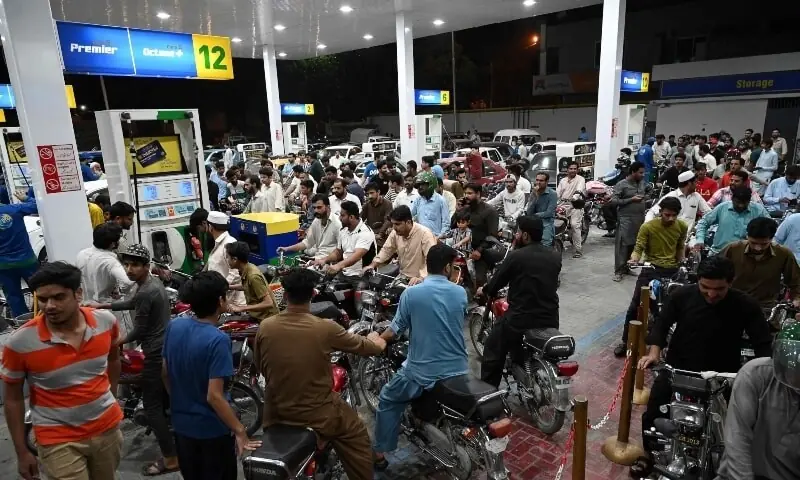

ISLAMABAD: The prices of all petroleum products were estimated to increase by Rs4.50 to Rs7 per litre on Saturday for the next fortnight ending March 15, owing to a slight upward trend in the international market.
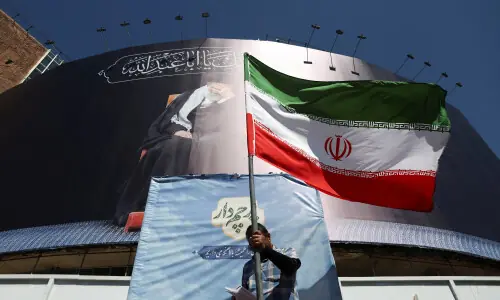
Official sources said the benchmark crude prices had slightly moved up this week in view of regional tensions. Therefore, the price of all products, including petrol, high speed diesel (HSD), kerosene and light diesel oil (LDO) were inching up and set to significantly impact the pricing pattern on February 28 for the following fortnight.
Based on existing tax rates, the sources said the ex-depot prices of petrol, HSD, LDO and kerosene had been estimated to go up by about Rs4.50 per litre, Rs4.70, Rs7, and Rs5 per litre, respectively, depending on final calculations on Saturday.
The ex-depot petrol price set by the government currently stands at Rs258.17 per litre but is sold at more than Rs259.30 per litre at retail stations. The official prices for HSD currently stands at Rs275.70 but is sold in the retail market on the higher side of Rs277 per litre.
The kerosene and LDO rates currently stand at Rs180.53 and Rs161.72 per litre, respectively. However, kerosene oil is nowhere sold below Rs300 per litre in the open market.
Together with customs duty, the petroleum levy and the climate support levy, the government is currently charging about Rs105 per litre taxes on petrol and about Rs98 on HSD.
Petrol is mostly used in private transport, small vehicles, rickshaws and two-wheelers and has a direct bearing on the budget of the middle and lower-middle class.
While the heavy transport sector runs on HSD, its price is considered inflationary as it is mostly used in heavy transport vehicles, trains and agricultural engines like trucks, buses, tractors, tube-wells and threshers, and particularly adds to the prices of vegetables and other eatables.
Besides the petroleum levy, the government is also charging about Rs17-18 per litre custom duty on petrol and HSD, irrespective of their local production or imports. In addition, about Rs17 per litre distribution and sale margins are going to oil companies and their dealers.
Petrol and HSD are the major revenue spinners with their monthly average sales of about 700,000–800,000 tonnes compared to just 10,000 tonnes for kerosene.
The government recovered about Rs1.161 trillion through the petroleum levy alone in FY2025 and expects this to jump by about 27pc to Rs1.470tr during the current fiscal year.