0
0

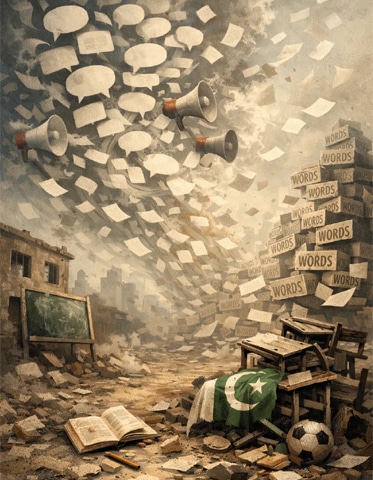
IT was in 2024 when the government had declared an education emergency in Pakistan — twice. The first announcement came on May 8 at a national conference addressing the alarming number of out-of-school children, and the second came on September 8 marking the International Literacy Day. Unfortunately, as often happens in Pakistan, these declarations sounded more like political symbolism than a roadmap for real reforms.
Recent findings from the Household Integrated Economic Survey (HIES 2024-25) expose the gap between promises and performance. Despite minor improve-
ments, nearly 20 million children —around 28 per cent of the school-age population — remain out of school. The inequality within this crisis is deeply troubling. Nearly one in three girls is out of school, compared to one in four boys. Regional disparities are equally stark: Balochistan tops the tragic list with 45pc exclusion, followed by Sindh at 39pc, while Punjab stands at 21pc. Even more alarming is the fact that one in five children has never entered a classroom, highlighting a systemic failure rather than a temporary setback.
This bleak reality is made even worse by declining public investment. Education spending has fallen below 1pc of GDP, an amount grossly insufficient to address a crisis of this magnitude. Without serious financial commitment, reforms remain nothing more than rhetoric. The causes are well known — poverty, unemployment, child labour and lack of parental awareness — but what remains missing is sustained political will.
If Pakistan is to move forward, education must be treated as a genuine national priority. Increased budgetary allocation, stronger collaboration with civil society, and firm action against child labour are essential. Until words are matched with action, Pakistan’s education emergency will remain declared — but unresolved.
Moin Ahmed Awan
Kandhkot
Published in Dawn, February 27th, 2026