Increased risk of glacial floods in Gilgit-Baltistan due to above-normal temperatures: PMD
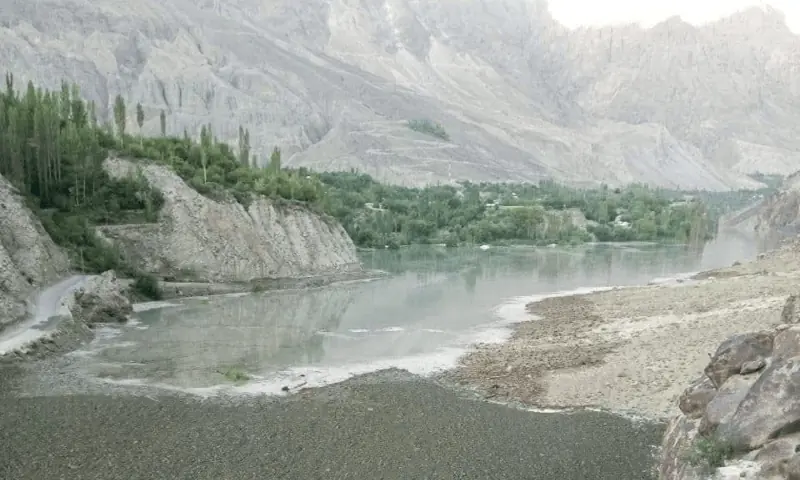
The Pakistan Meteorological Department (PMD), in its February-April weather outlook for northern areas, on Monday warned of a “high probability” of glacial lake outburst flood (Glof) in Gilgit-Baltistan, owing to “sustained above normal” temperatures.
Glof refers to the sudden release of water and debris from a glacial lake, leading to the loss of lives, property, and livelihoods in mountain communities. Over 7.1 million people in GB and KP are vulnerable to the phenomenon, according to the Ministry of Climate Change.
The PMD, in its outlook, noted that due to reduced rain and “persistent clear-sky conditions”, temperatures across GB and Azad Jammu and Kashmir (AJK) from Feb 1 to 22 recorded an increase.
“Daytime (maximum) temperatures were recorded 3–5°C above normal, while nighttime (minimum) temperatures remained 1–3.5°C above the 1981–2010 climatological average,” the PMD said, adding that the highest warming was recorded in the regions of Gilgit and Bunji.
“Chilas and Bunji have shown notable increases in minimum temperatures, reducing overnight refreezing,” it added.
The PMD predicted that the “above normal” temperatures were “accelerating snow and glacier melt, particularly at mid to lower altitudes”.
“Reduced nighttime cooling further enhances meltwater runoff into glacial lakes,” it added.
The weather body warned that the rapid melting increases “water accumulation in both moraine and glacier-dammed lakes, raising the likelihood of Glof events in downstream valleys”.
PMD noted that if the warming trend continued, “the risk of glacier melt acceleration and potential Glof occurrences may increase in vulnerable areas such as Gilgit, Ghizar, Hunza, Bunji, Chilas and Astore”.
It added that PMD was monitoring the “temperature trends, glacier melt conditions, and hydro meteorological parameters and will issue timely advisories to relevant authorities and communities”.
Pakistan is home to over 13,032 glaciers, the largest reservoir of glaciers outside of the polar regions. However, experts have warned that about 10,000 glaciers in Chitral and GB have been reported to be receding due to climate change–induced temperature rise.