Pakistan faces chronic energy shortages amidst mounting fiscal stress, with state-owned enterprise losses exceeding Rs832 billion in FY25 even as the country negotiates electricity tariff reforms with the International Monetary Fund.
Amid these pressures, a quieter but potentially transformative shift is taking shape in the corporate sector, as firms begin moving towards cleaner energy and more sustainable business models.
This transition is not driven by slogans or policy documents alone. It is being forced into existence by rising costs and fragile public finances. The growing commercial logic of energy efficiency is also a key factor. Pakistan’s power sector has become a major fiscal burden, with distribution companies suffering from electricity theft, poor recovery, and technical losses that contribute to the power sector’s circular debt — currently at Rs75bn as of the first half (July-December) of the current fiscal year — a key concern for international lenders.
One of the most visible signs of this change comes from Calcorp Limited. The company is undergoing a major corporate restructuring. Historically a low-profile holding firm, Calcorp’s board recently approved rebranding the company as ARM Green Industries Limited and explicitly entered the renewable energy sector. Its new mandate includes importing, assembling, and potentially manufacturing renewable energy equipment locally. This step goes beyond cosmetic diversification, placing the company within Pakistan’s emerging clean energy economy.
Despite promising developments, the clean-energy transition remains fraught with obstacles as policy uncertainty continues to complicate investment planning
This shift is not merely symbolic. Renewable energy has been increasing its share in Pakistan’s power mix, with solar and wind projects now contributing thousands of megawatts of generation capacity.
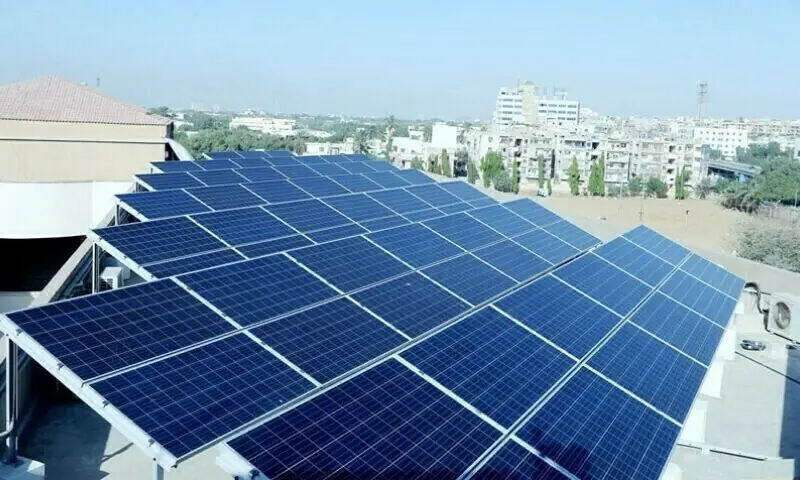
In November 2025, Pakistan’s climate change ministry projected that rooftop solar generation would exceed grid demand during daytime hours in 2026 in major industrial regions including Lahore, Faisalabad, and Sialkot as reported by Reuters — positioning Pakistan among the first major emerging markets where this phenomenon occurs.
Transport sector players are also reflecting this low-carbon shift. Sazgar Engineering Works Limited, known for assembling rickshaws and light vehicles, is expanding into new energy vehicles. The company has approved multi-billion-rupee investment plans including solar installations at its facilities and manufacturing lines for electric and hybrid vehicles.
This reflects a broader ambition to capture Pakistan’s emerging electric vehicle (EV) market and reduce reliance on fossil fuels in transportation. The federal government’s recently launched Pakistan Accelerated Vehicle Electrification scheme, providing Rs100.36bn over five years for electric vehicles, lends further policy support.
Sazgar’s push is unfolding alongside wider developments in the auto sector. K-Electric and Mega Motor Company — BYD’s local partner — have signed an agreement to provide a dedicated 5MW power connection, scalable to 7.5MW, for BYD’s forthcoming vehicle manufacturing facility scheduled to begin operations in 2026. The government has issued licences to 55 manufacturers for two and three-wheelers and two licences for four-wheeler assembly, while plans for charging stations are under consideration.
However, not all energy sector corporations are moving smoothly towards greener models. Even incumbents are being reshaped by broader energy reforms and market pressures. Nishat Chunian Power Limited (NCPL) reported losses following renegotiation of long-term power purchase agreements that reduced capacity payments and imposed greater cost discipline.
While NCPL remains primarily a thermal power producer, the financial pressure created by tariff reforms underscores challenges faced by fossil fuel-based utilities in a system tilting towards renewables.
At the same time, renewable adoption is finding tangible expression across Pakistan’s industrial base. In January 2026, Cherat Cement’s board approved installation of a 25MW battery energy storage system and an additional 5.4MW solar power plant at its Nowshera factory at a cost of approximately Rs1.85bn, expected to be completed within six months.
Meanwhile, Beco Steel Limited has initiated funding arrangements with its United Arab Emirates-based sister company to finance a 5MW solar power project, with installation already commenced and expected to generate 600,000kWh monthly.
A growing number of industrial units are installing behind-the-metre solar systems to mitigate expensive grid electricity. The government itself has approved pilot projects to solarise loss-making electricity feeders operated by the Peshawar Electric Supply Company and the Quetta Electric Supply Company, aiming to reduce losses and ensure uninterrupted supply in remote regions.
The regulatory environment, however, remains a source of uncertainty. Recently the National Electric Power Regulatory Authority’s (Nepra) proposed a shift from net metering to net billing in early February — which would have reduced the buyback rate for surplus solar power from approximately Rs26 per unit to around Rs11 per unit — drew widespread criticism.
Following intervention, Nepra issued draft amendments protecting the existing 466,506 net-metering consumers under previous arrangements until their contract terms expire, though new consumers will face the revised framework.
Corporate momentum is unfolding alongside official targets to raise renewable energy’s share to 60pc of the power mix by 2030. Pakistan has already surpassed its 2025 interim goal. More than 60 private sector renewable projects now contribute almost 5GW of capacity, including solar, wind and hydropower installations developed under the Private Power and Infrastructure Board framework.
Published in Dawn, The Business and Finance Weekly, February 23rd, 2026