0
0

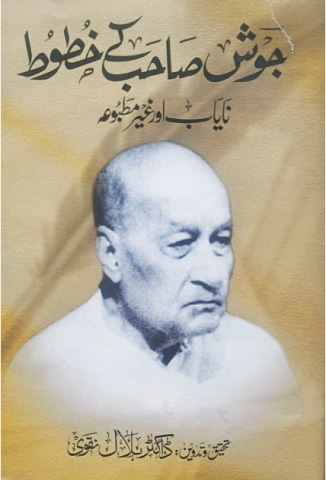
“ON this entire globe, no one longs for my instant death more than I do. Whenever I pass by a graveyard, I am envious of those sleeping in their graves peacefully as much as a pauper would be envious of a royal palace and its grandeur,” wrote Josh Maleehabadi (1898-1982) in a letter addressed to Divan Singh Maftoon. In another letter he wrote to Khursheed Ali Khan “since long my heart has been telling me that 1973 would be the last year of my life. Thank God! The signs have appeared”.
This deep despair was, perhaps, result of a lifelong struggle that Josh, one of the most celebrated poets of Urdu, had to go through. Josh often found himself in the eye of the storm. But he had himself to blame, partially, at least. One of the reasons for some upsetting events taking place in his life that Josh often talks about in his autobiography Yaadon Ki Baraat (1970) and his letters, was, perhaps, his unvarnished honesty. An outspoken person, with rather an irreverent and blunt sense of humour — and liberal views that were at loggerheads with the society over traditional values and norms — Josh was always in to receive the backlash from a conservative society like ours.
But Josh sounds as outspoken in his letters as in his autobiography and some of his controversial interviews, if not more, as he was not afraid of speaking his mind. Josh’s letters are collected and compiled by Dr Hilal Naqvi in his new book named Josh Sahib Ke Khutoot: Nayaab Aur Ghair Matboo’a (Josh Sahib’s letters: rare and unpublished). The book has just been published by Karachi’s Welcome Book Port.
Josh, on one hand, openly derided certain beliefs and rituals that our conventional society values so much, but on the other he strictly observed certain customary practices that reflect politeness and good manners, and it included replying to a letter. Josh would receive a large number of letters from friends, fans, relatives and literary figures. He would write back to everyone as he believed not replying to a letter was utterly rude, writes Hilal Naqvi in his preface to the book. Collecting these letters must have been an uphill task, but Hilal Naqvi was able not only to collect hundreds of published and unpublished letters by Josh but he has penned some valuable footnotes, too, highlighting the background of certain issues discussed in these letters. Some introductory footnotes on some personalities, whom Josh exchanged letters with, also add value to the book. The towering figures Josh wrote back to include, Abdul Majid Daryabadi, Maulana Abul Kalam Azad, Ross Masood, Firaq Gorakhpuri, Masood Hasan Rizvi Adeeb, Akhter Husain Raipuri, Kunwar Mahendra Singh Bedi Sahar, Moulvi Abdul Haq, Ralph Russell, Baba Zaheen Shah Taji, Raees Amrohvi, Farman Fatehpuri and Kausar Niazi, to name but a few.
One is not surprised to see how unrestrained Josh is while discussing certain issues in his letters. Josh was a born rebel, resisting authority and conventional ideas, though it often earned him the wrath of those who really mattered. For instance, Josh’s assumed remarks had cost him his coveted position at Urdu Dictionary Board, the then Taraqqi-i-Urdu Board. In these letters, we find a few references to the unfortunate incident. Hilal Naqvi has referred to Bedi Sahar’s autobiography Yaadon Ka Jashn (1986) that says Bedi himself was present at the time of the controversial interview that Josh gave in India. According to Bedi, Josh did not say a single word against Pakistan but Josh’s interview was misreported in Pakistan and Josh was sacked from Urdu Board. But Josh has clearly written in his Yaadon Ki Baraat that he was neither against Pakistan nor did he say anything against Ayub Khan, the then president of Pakistan, and that certain things attributed to him were fabricated.
Josh was a straightforward person and abhorred mincing words. He felt obliged to speak what he felt was the truth, no matter how awkward. This had made him much unpopular among certain section of the society, especially the religious quarters. Finally, Z. A. Bhutto’s government redressed his grievances and he was given a job at Islamabad. But the letters Josh wrote from Islamabad during those days, too, sound pessimistic and gloomy. These letters tell of Josh’s life, his times and his views on certain issues.
Hilal Naqvi with his constant and erudite research work on Josh Maleehabadi — has become one of the most prominent authorities on Josh.
Josh Maleehabadi died in Islamabad on Feb 22, 1982.
Published in Dawn, February 23rd, 2026