Political approach to resolving problems
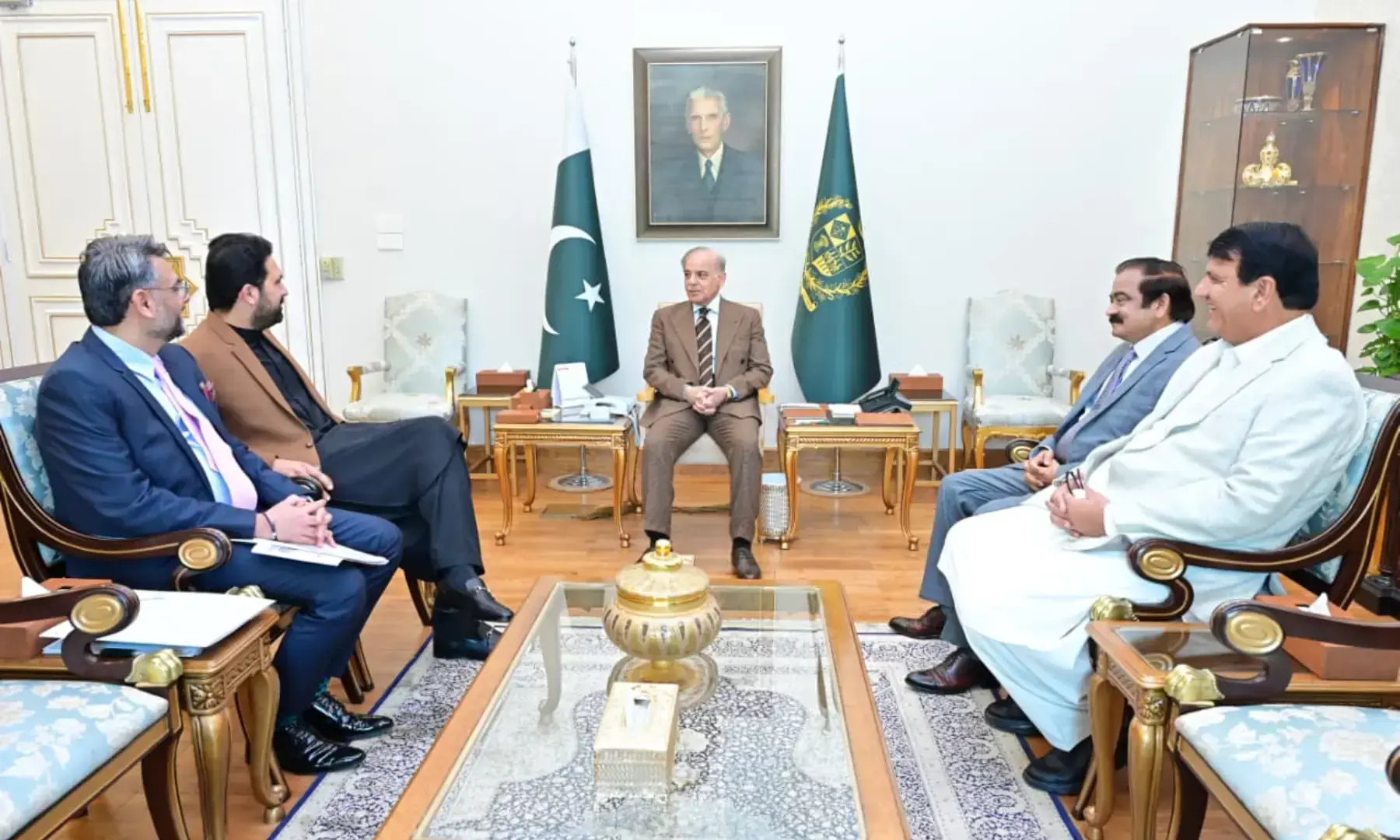
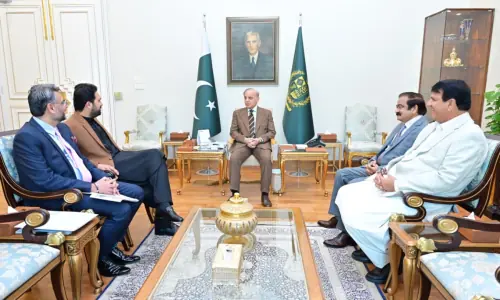
The initiatives preceding and following the first meeting between Prime Minister Shehbaz Sharif and Khyber Pakhtunkhwa (KP)Chief Minister Sohail Afridi indicates that the issues of fiscal federalism are primarily politics-related that require the collective efforts of the country’s political parties to resolve them.
While retaining their independence, the meeting raised some hope that political parties can narrow down their differences, evolve a consensus on a common minimum agenda to strengthen stability and security, spur national economic, political, social progress, and overcome external vulnerability. Then, finally, avenues would open up for the federation to attain sovereignty, reinforced by autonomous provinces and empowered local governments as provided in the 1973 Constitution and 18th Amendment.
The National Finance Commission (NFC) meeting has been delayed because the eight groups formed to recommend a new NFC award for sharing resources of the divisible pool among the federation and the four provinces have not met (save for one meeting of one group) to finalise their recommendations.
Having said that, one may also note the absence of the conducive political set-up as in the case of approval by the National Assembly of 1973 Constitution and 18th Amendment.
Provinces demand autonomy but resist local devolution and taxes, while the centre demands fiscal discipline but struggles to relinquish control
It may be recalled that the meeting of the two leaders followed a letter the KP chief minister wrote to the Prime Minister informing him that the province had received funds short of Rs54.4 billion than its NFC-allocated share, resulting in a fiscal and governance crisis for the province.
The next day after the meeting, in a reported move to bridging their differences, Planning Minister Ahsan Iqbal said his ministry had already authorised the release of Rs7bn reportedly for merged districts. He advised the KP officials to take up the matter with the Finance Ministry for immediate disbursements.
‘The degenerating economic order cannot be viewed in isolation from the political economy; it is a function of the political order’
The prime minister stressed the need for cooperation between the centre and the provincial government for the progress and prosperity of KP’s people. He added that close and effective communication between the Centre and the provinces is indispensable for national progress and public service.
Referring to KP’s “repeated flagging of financial strangulation and governance stress”, Dr Syed Akhtar Ali Shah, a former civil servant observed in an article for The Express Tribune: “Fiscal stress translates directly into weakened service delivery, delayed development projects, unemployment and public frustration. Left unattended, the frustration accumulates.”
“Timely and unconditional disbursement of NFC transfers, net hydel profits, oil and gas royalties and newly merged districts’ allocations are essential to restore fiscal stability and reinforce the credibility of Pakistan’s federal compact.”
One can notice a significant move by the provinces to help the federation in financial distress. Within the first half of the FY26, amidst federal revenue slippage, cash surpluses of Rs1.18tr were returned by the four provinces to the centre — only Rs285bn short of the annual target of Rs1.464tr set by the International Monetary Fund to be delivered to the centre — Despite reforms, revenue-to-GDP ratio fell to 8.2pc during July-December.
During the same period last year, the provinces had produced a cash surplus of Rs775bn against the budgeted target of Rs1.2tr.
Pakistan’s federation crisis is less about the inadequacy of the 18th Amendment than about its selective implementation, says Imtiaz Gul, head of Islamabad-based independent centre of Research and Securities study. Provinces demand autonomy but resist local devolution and taxes. The centre demands fiscal discipline but struggles to relinquish control; both ignore the spirit of Article 173(2) which calls for cooperative management of federal provincial relations.
On Feb 14, police broke up a Jamat-i-Islami rally near Sindh Assembly pressing for a “powerful and autonomous local government structure in Karachi”. The party has also been criticising the Sindh Government for “administrative failures” in the metropolis.
Similarly, local bodies’ representatives also staged a sit-in outside the KP provincial assembly building recently demanding funds and powers. The demonstrations were organised by the Local Council Association, KP chapter.
No less important is that the Sindh Assembly rejected the MQM-P resolution for activating the provincial Finance Commission to ensure transparent and equitable distribution of provincial resources among recipient local bodies.
That said, an integrated approach is required to reach a balanced and comprehensive solution to a long-persisting complex problem related to formulating the 11th NFC Award.
“An economic system is perforce a product of a political system,” says eminent economist Sakib Sherani who has been a member of several advisory councils under different prime ministers. The degenerating economic order cannot be viewed in isolation from the political economy. It is a function of the political order, kept in place to support the extraction and rent-seeking; as such, the economic reforms require political reforms.
Published in Dawn, The Business and Finance Weekly, February 23rd, 2026