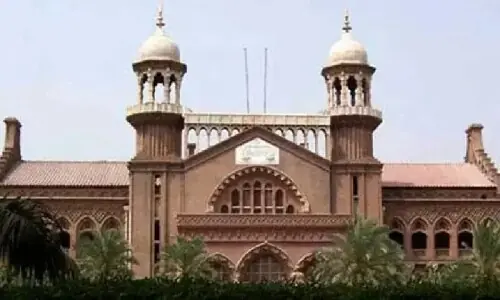
LAHORE: Lahore High Court Chief Justice Aalia Neelum has constituted a full bench to decide petitions challenging the Punjab Protection of Ownership of Immovable Property Act, 2025.
The full bench will be headed by the chief justice.
The bench is set to commence its proceedings from Feb 23.
The three-member full bench also comprises Justice Jawad Zafar and Justice Abher Gul Khan.
Chief Justice Aalia Neelum had on Dec 22 last year suspended the operation of the Punjab Protection of Ownership of Immovable Property Act, 2025, which empowers deputy commissioner-led dispute resolution committees to decide property disputes.
During a hearing of petitions against the law, the chief justice had commented that “patwaris (revenue officials) and ACs (assistant commissioners) seem to have developed a desire to become judges”, and questioned the jurisdiction of a patwari to take cognisance of a matter already pending before the Supreme Court.
Chief Minister Maryam Nawaz had criticised the court’s decision, saying the suspension of the law would benefit the land mafia.
The lawyers’ bodies, irrespective of their political affiliation, supported the high court’s decision.
Ventilators
The Lahore High Court on Friday sought details regarding the number of ventilators available in public hospitals across Punjab.
Justice Malik Awais Khalid heard a petition filed by the Judicial Activism Panel related to deaths caused by infectious diseases.
During the hearing, Advocate Azhar Siddique, on behalf of the petitioner, alleged shortage of ventilators at hospitals. He stated that a number of patients had lost their lives due to unavailability of ventilators.
The judge sought a detailed report from the Director General of the Expanded Programme on Immunization (EPI) on the availability of ventilators in each hospital across Punjab.
The judge would resume hearing on Feb 27.
Separately, Justice Farooq Haider of the Lahore High Court on Friday granted time to the Chief Traffic Officer and other relevant authorities to submit their replies on a petition challenging heavy fines imposed under the Motor Vehicle Ordinance.
The judge heard the petition filed by the Judicial Activism Panel, which challenges the imposition of substantial fines for traffic violations.
During the hearing, the petitioner’s counsel pointed out that the concerned authorities had not yet submitted their replies to the petition.
The judge adjourned the hearing for a week, allowing more time to the government for submission of responses.
The petition contends that excessive fines are being imposed for traffic violations, even issuing challans solely on the basis of zebra crossing violations.
It further argues that imposing heavy penalties without first improving the traffic management system is contrary to fundamental rights.
Published in Dawn, February 21st, 2026