Dialogue with Kabul must to address security issues: Kundi


 0
0
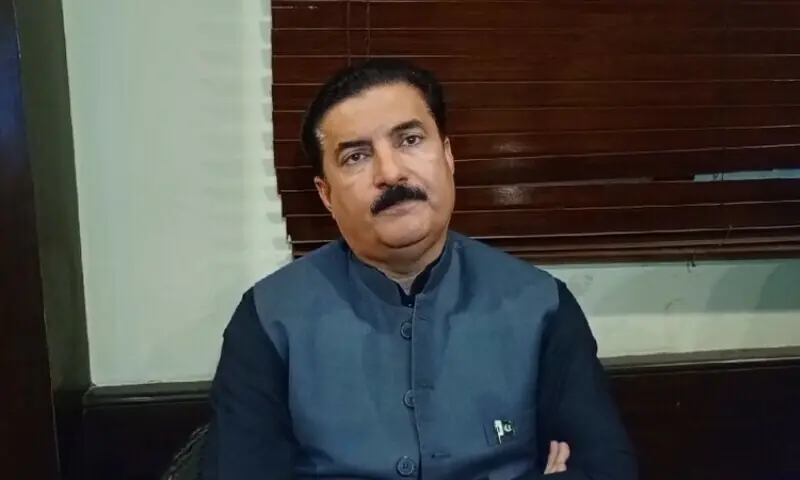

PESHAWAR: Faisal Karim Kundi, governor of Khyber Pakhtunkhwa, on Thursday stressed the need for sustained political dialogue with Afghanistan, saying durable solutions to external and internal challenges depended on collective political engagement.
Speaking at a dialogue session titled “Pakistan-Afghanistan Security, Trade and Regional Economic Affairs” at the University of Peshawar on Thursday, organised by Department of International Relations in collaboration with businessman Shahid Shinwari at the Governor’s House, Mr Kundi said a peaceful Afghanistan was essential not only for Pakistan but for the entire region.
He said Pakistan supported strong bilateral relations and enhanced trade with Afghanistan and other neighbouring countries, adding that sustainable peace across the region was key to economic and business development.
The governor said meaningful and timely dialogues played a constructive role in policymaking. He emphasised that border security, trade and regional economic issues between Pakistan and Afghanistan required a balanced strategy that ensured security while promoting legal trade and people-to-people contacts.
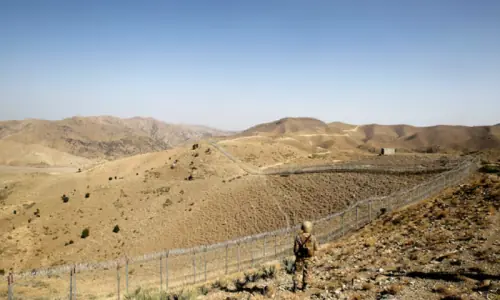
Referring to the province’s security situation, Mr Kundi said the border belt adjoining Afghanistan had directly affected law and order in the province.
He noted that the Soviet-Afghan War and the events of September 11 attacks had drastically altered the regional environment, contributing to extremist activities that impacted peace in the province.
He said Pakistan had made immense sacrifices in the fight against terrorism and that Khyber Pakhtunkhwa stood as a living example of those sacrifices.
Participants including academics, journalists, representatives of various chambers of commerce and students presented recommendations on regional security and trade challenges.
They also discussed measures to make the Pak-Afghan border fully functional to boost business activity and facilitate trade access to Central Asian States.
The governor expressed hope that the seminar’s recommendations would assist relevant institutions in informed and effective policymaking.
He stressed that identifying problems alone was not enough and called for practical and realistic solutions.
At the end of the session, certificates were distributed among students and other participants.
Published in Dawn, February 20th, 2026