Kabul’s reluctance creates impasse at Istanbul talks


• Held under watchful eye of Qatari, Turkish mediators, talks spill over into second day after Pak-Afghan delegations fail to reach consensus
• Pakistani officials share photo, documentary evidence of terror groups operating from Afghan territory
• Amid mixed signals from Taliban power centres in Kabul & Kandahar, Islamabad refuses suggestion to directly negotiate with TTP
ISLAMABAD: Stalemate persisted on Sunday at the Pakistan-Afghanistan talks in Istanbul, with the Afghan Taliban delegation appearing reluctant to take verifiable action against sanctuaries of the Tehreek-i-Taliban Pakistan (TTP), and other militant groups operating from Afghan soil.
This was the second day of the dialogue, which stretched into Sunday after both sides failed to find common ground on the issue of ending terrorist safe havens in Afghanistan.
After nearly nine hours of intense discussions late into the night, Pakistani security officials said their delegation had presented its “final position” to the Afghan side, insisting that the Taliban regime must take “concrete and verifiable steps to eliminate cross-border terrorism from and inside Afghanistan”.
“Pakistan has made it clear that the ongoing patronage of terrorists by the Afghan Taliban is unacceptable,” the senior security official said.
Taliban responses to Pakistani assertions about terrorism emanating from Afghan soil were rejected as “illogical and opposite to ground realities”.
In a thinly veiled reference to India, which has recently deepened ties with Kabul, the security official said the Taliban delegation “appeared to be following someone else’s agenda”.
This stance seemed to be vindicated when, in the midst of the Istanbul process, Indian forces apparently violated the ceasefire in the Leepa Sector of Azad Jammu and Kashmir. While there was no official word on losses, locals reported an intense exchange of fire on Sunday evening.
The official cautioned that this position of the Taliban “was not in the interest of Afghanistan, Pakistan, or the region”.
The source added that any further progress in the talks would depend on the “positive attitude of the Afghan Taliban”.
Earlier in the day, the Afghan delegation presented a written response to Pakistan’s demands submitted the previous day, after which Pakistan shared its counter-response.
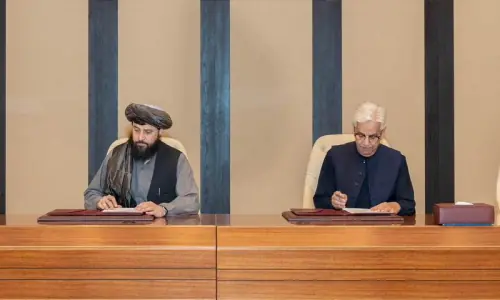
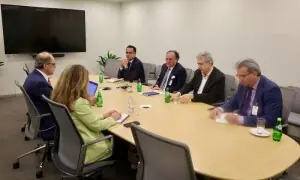
A second session subsequently began after midday, in the presence of senior Turkish and Qatari mediators.
There was initial optimism following the exchange of documents and the start of a second session that had not been planned earlier. However, after protracted negotiations, the optimism faded as the Taliban delegation refused to provide any written assurances.
The Afghan representatives, who were receiving directions from Kabul and Kandahar, appeared to lack the mandate to make decisions, officials said. Their reluctance to provide written commitments was interpreted by the Pakistani side as a sign of unwillingness to act against the TTP and other militant groups with hideouts in Afghanistan.
During the two days of talks, Pakistan presented photographic and documentary evidence of TTP, BLA, and other terrorist groups operating from Afghan territory, including details of their leadership and movements. The Pakistani delegation also shared photographs and Afghan identity documents of infiltrators captured during recent border incidents, insiders said.
At one stage, the Afghan Taliban offered to bring the TTP to the table for direct talks with Pakistani authorities. Islamabad, however, categorically refused, reiterating that it would not negotiate with a terrorist group and that it was the Taliban’s responsibility to end their patronage of the TTP.
Echoing Defence Minister Khawaja Asif’s earlier remarks, Pakistani negotiators told the Afghan side that Islamabad was ready to pay any price to neutralise the threat emanating from Afghan soil for the safety of its people. They cautioned that the Afghan population would suffer because of the Taliban regime’s continued intransigence.
Pakistan’s core demand throughout the talks remained decisive action against terrorist proxies operating from Afghanistan.
While the dialogue continued in Istanbul, Pakistan’s military reported major infiltration attempts across the Pak-Afghan border, further casting doubt on the Taliban’s intentions.
The two attempts, occurring in Kurram and North Waziristan, were framed by ISPR as occurring “while delegations of Pakistan and Afghanistan are engaged in talks in Türkiye”.
“This casts doubts on the intentions of the Interim Afghan government regarding its commitment to addressing terrorism emanating from its soil,” the military noted.
The two-day talks followed the Oct 19 Doha ceasefire, mediated by Qatar, which ended a week of deadly border clashes. Türkiye hosted the current round as part of its expanded mediation role, while Qatar acted as guarantor of the truce and facilitator of dialogue.
The Pakistani delegation comprised senior security and intelligence officials, including representatives from the Inter-Services Intelligence (ISI), the Directorate of Military Operations, and the Foreign Office.
The Afghan side was led by Deputy Interior Minister Mawlawi Rahmatullah Najeeb and included senior Taliban figures such as Anas Haqqani, Suhail Shaheen, Noorur Rahman Nusrat, and Abdul Qahar Balkhi.
Diplomatic sources said mediators were attempting to keep both sides engaged to prevent a complete breakdown in communication.
Published in Dawn, October 27th, 2025