THIS is with reference to the article ‘Remittances: boon or bane?’ (Jan 8), which offered a timely and data-driven reminder of the important role remittan-ces play in easing financial pressures on the national exonomy and in supporting household income.
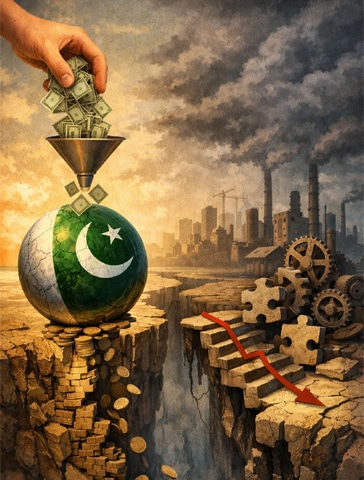
Acknowledging the stabilising contri-bution of overseas Pakistanis is both fair and necessary. However, recognising their value should not lead to overstating their role or treating them as a dependable pillar of long-term economic stability, especially when such inflows remain external, uncertain and beyond domestic control.
There is little disagreement that remittances provide timely relief. They help families meet basic needs, support consumption, and often act as a buffer during economic crises. However, relying on them as a central economic prop is essentially a makeshift arrangement.
Remittances are an external and un-certain inflow, shaped by global labour markets, host-country policies, geopolitical tensions, and unforeseen shocks, such as pandemics or recessions. A country cannot sustainably anchor its economic future on factors it does not control.
More importantly, remittances do not substitute for the hard work of building domestic economic strength. They do not reform a weak taxation base, revive industrial productivity, expand exports, improve energy efficiency, or generate quality employment at home. At best, they soften the impact of structural weaknesses; they do not correct them. As such, treating remittances as an economic strategy risks postponing essential reforms while masking deeper vulnerabilities.
True and lasting stability can emerge only from internal economic measures — productive investment, export-led growth, agricultural modernisation, skills aligned with domestic industry and sound governance. These reforms are difficult, politically costly, and slow to yield results, but they are also within national control and are, therefore, indispensable.
Remittances from overseas Pakistanis should be viewed as a supportive cushion rather than a substitute for reforms. Appreciating their benefits must not distract policymakers from confronting the harder task of fixing the domestic economy. Sustainable resilience will come not from external inflows alone. It will come from building a productive, competitive and inclusive economic base at home.
Majid Burfat
Karachi
Published in Dawn, February 19th, 2026