Govt notifies Rs4.04 per unit cut in industrial tariffs


 0
0

ISLAMABAD: The government on Monday formally notified an average Rs4.04 per unit reduction in power rates for all industrial consumers and requested the power regulator, National Electric Power Regulatory Authority (Nepra), to restore all contractual rights of old net-metered solar consumers until the expiry of their existing seven-year terms, as directed by the premier last week.
Under the notification, however, the Power Division also imposed a nominal Rs1,000 per consumer per month fixed charge on smaller industrial consumers, on the pattern of similar charges on residential consumers imposed last week. The new rates are effective from Feb 11, 2026.
This industrial consumer category is defined as B1 in official jargon for a connection load of up to 25kW. Its average tariff has been reduced from Rs30.80 per kwh (unit) to Rs26.03. This includes new off-peak rates of Rs25.48 instead of Rs30.05 and a new peak rate of Rs35.74 instead of Rs36.74 per unit. The fixed charges for the remaining three industrial categories have been kept unchanged at Rs1,250 per kilowatt per month.
The average energy rate for the B2 category, with a 25-500kW load, has been fixed at Rs26.16 per unit instead of Rs30.73. Its off-peak rate has been revised to Rs22.83 per unit instead of Rs27.41, while peak rates have been set at Rs35.68 instead of Rs36.68 per unit.
Tells Nepra to restore contractual rights of old net-metered solar consumers
Larger industrial consumers (B3) on 11–33kV transmission lines will now be charged an average energy price of Rs27 per unit instead of Rs31. Their off-peak rate has dropped to Rs23.67 from Rs28.24, while peak rates have come down to Rs35.68 from Rs36.68 per unit.
The tariff for the largest industrial consumers (B4) on main 66-132kV transmission lines has been reduced to Rs26.43 from Rs30.43 per unit. Their peak and off-peak rates are now set at Rs35.68 and Rs27.96 per unit instead of Rs36.68 and Rs23.38, respectively.
The Power Division also formally requested Nepra to suspend the withdrawal of specific contractual benefits to old prosumers under the PM’s directive. Nepra has again called for public comments within 30 days on fresh amendments to Nepra Prosumers Regulations 2026, notified only last week.
In the fresh amendments, Nepra is seeking deletion of subsection (2) of section 21 of the Prosumers Regulations 2026, which had changed payback rates for old consumers to Rs8.13 from Rs26 per unit and shifted them from net metering to net billing. The proposed clause now reads that existing approvals, licences and agreements will remain valid, and prosumers will continue to be billed under old rates and mechanisms until the expiry of their agreements.
Nepra introduced the prosumers regulations in February, attracting widespread condemnation from prosumers and political parties for disregarding government contracts.
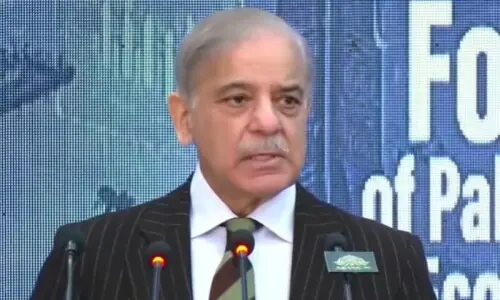
Reacting to the backlash, PM Shehbaz Sharif sought a review of Nepra’s revised rules for rooftop solar users and directed the Power Division to file a reconsideration request to restore all contractual obligations to existing prosumers who had invested in response to government policies.
The PM directed that all possible protections for existing consumers be ensured and that a mechanism be formulated to prevent any undue transfer of the cost burden of 466,000 prosumers onto other national grid consumers.
Sources said Nepra suspended the controversial clauses. Other regulations for upcoming prosumers, including net billing and the Rs8.13 per unit payback rate, will remain in field as notified on Feb 9.
Under the new regulations, prosumers will be shifted to net billing instead of net metering, and their exported units will be credited for one month instead of the current three months.
Under net billing, electricity generated by a prosumer is purchased by the relevant distribution company (Disco), and the consumer is billed for electricity imported from the grid at about Rs37-55 per unit, after receiving credit for exports at the National Average Energy Purchase Price of Rs8.13 per unit.
Published in Dawn, February 17th, 2026