Two Women Living Together suggests a new kind of family
LAST year, South Korea surpassed eight million single-person households for the first time. According to data released in December by the Ministry of Data and Statistics, 8.045 million households were made up of just one person, up from 7.166 million in 2021, bringing the share of solo households to 36.1 per cent, the highest level on record.
The proportion has climbed steadily, crossing 30pc in 2019 and 35pc in 2023, with Seoul posting the largest concentration of people living alone. As the country’s single-person households reach record levels, Two Women Living Together arrives as both an intimate memoir and a subtle social argument about how people might live and care for one another outside the institution of marriage.
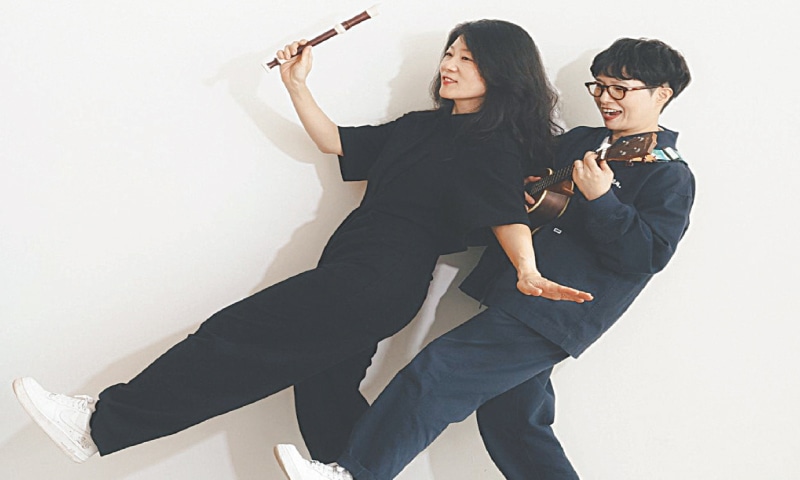
Co-written by Kim Ha-na and Hwang Sun-woo, two friends who decided in their 40s to buy a home together rather than marry, the book chronicles their decision to grow old together under one roof.
The two women met on Twitter, though both were already well-known in their fields — Hwang as a fashion journalist and Kim as a copywriter. Raised by the sea in Busan and long settled in Seoul, they had spent years living alone in cramped studio apartments. At first, independence and the perks of living alone felt exhilarating. By middle age, however, loneliness began to gnaw, and their boxy studio apartments felt oppressively small.
Their solution was deceptively simple: buy a sunlit home together and live not as a romantic couple, but as friends. As Kim playfully describes it, they form a new “molecular family”: W2C4 — two women and four cats.
First published in South Korea in 2019, where it became a bestseller and later inspired a popular podcast, the memoir is now available in English, translated by Gene Png and released last month by Ecco, an imprint of Harper Collins Publishers.
Across 49 warm, chatty essays, written in alternating voices, the authors invite readers into the minutiae of their shared life: the first chaotic moving day of boxes colliding with personalities, habits clashing like mismatched furniture, laundry standoffs, New Year’s rituals, grocery negotiations and territorial disputes over closet space.
Kim is minimalist and disciplined; Hwang is “crow-like,” accumulating clothes to the point that her wardrobe threatens to burst. Their differences generate friction, but also warmth. They bicker like siblings, tease like old friends, and care for one another with the seriousness of spouses. On sick days, birthdays and crises, their bond deepens in ways that feel both ordinary and quietly extraordinary.
At the same time, the book engages with broader questions about gender, independence and belonging. Their arrangement proves far more layered than it initially appears: a portrait of a society in transition. What begins as a story about roommates gradually becomes a reimagining of what “family” can mean in contemporary South Korea.
Running beneath the witty memoir is a pointed critique of South Korean society. Their partnership, the book suggests, deserves the same recognition as any family, yet legally it remains invisible. In a country where marriage is still the primary gateway to social legitimacy, their relationship exists in a gray zone. When Hwang undergoes surgery, Kim becomes her designated primary guardian, but remains ineligible for the free flu vaccine offered to employees’ families at Hwang’s workplace.
As the book reaches international readers, both authors have reflected on its journey.
Kim said she never imagined their story would travel so far: “After deciding to live together and buying a house, so many unexpected and funny things happened. The fact that this story is now reaching readers on a new continent is one of them.”
Hwang added that she hopes the book will resonate with women who believe they can define their own lives: “I want this story to reach many women who believe they can decide and shape their own way of living.”
Published in Dawn, February 16th, 2026