Why is Bangladesh holding a national referendum alongside its general election?


 1
1
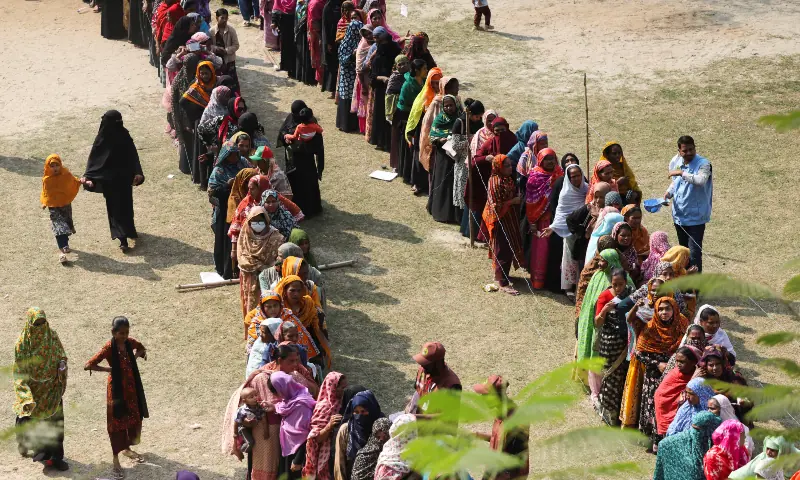

Bangladesh will hold a national referendum on Thursday together with its first parliamentary election since violent protests ousted former Prime Minister Sheikh Hasina in August 2024.
The referendum will give people a chance to vote on reforms to state institutions. Here is a look at why the referendum is being held, and what it entails.
Why is a referendum needed?
The referendum focuses on implementing the ‘July Charter’ drafted after the 2024 uprising to establish good governance, democracy, and social justice through institutional reforms, and to prevent “recurrence of authoritarian and fascist rule”.
The interim government that took power after Hasina’s ouster approved the charter’s implementation order in November, saying public approval was necessary for key changes.
What are people voting on?
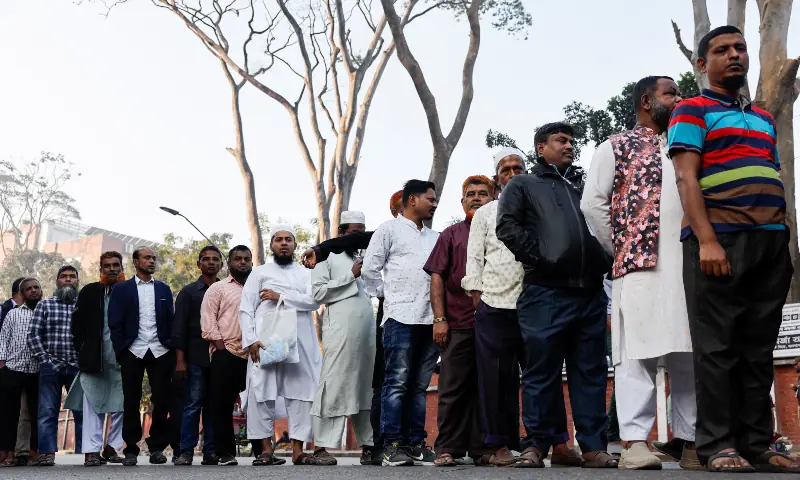
Voters will decide on four major reforms, including the creation of new constitutional bodies and the introduction of a bicameral parliament, whose upper house majority approval shall be needed for constitutional amendments.
Other questions cover the implementation of 30 charter reforms — including term limits for prime ministers and enhanced presidential powers, along with broader changes in line with political parties’ commitments.
How is the referendum being held?
Each person will cast their vote by secret ballot.
If a majority votes in favour, a Constitutional Reform Council will be formed to complete the reforms within 180 working days from its first session.
Has Bangladesh held a referendum before?
Bangladesh held three referendums before the Hasina government abolished the provision in 2011. A High Court reinstated it in 2024 after she was ousted.
While the 1977 and 1985 referendums asked people if they had confidence in the then-presidents and their policies, the third, in 1991, asked whether Bangladesh should return from a presidential system to parliamentary democracy.
People overwhelmingly voted “yes” in all three referendums.
What do critics say?
The referendum has been criticised for denying voters the chance to decide on reforms individually, instead clubbing together multiple proposals to force a single yes-or-no answer.
Critics say this confuses voters by presenting a complicated premise and limits their ability to properly understand and debate the reforms.
The interim government and political parties have also drawn criticism for framing a “yes” vote as essential, which critics say shrinks space for dissent by implying voting “no” means rejecting reform altogether.