Over 150,000 cops to guard ‘risky’ polling stations in Bangladesh
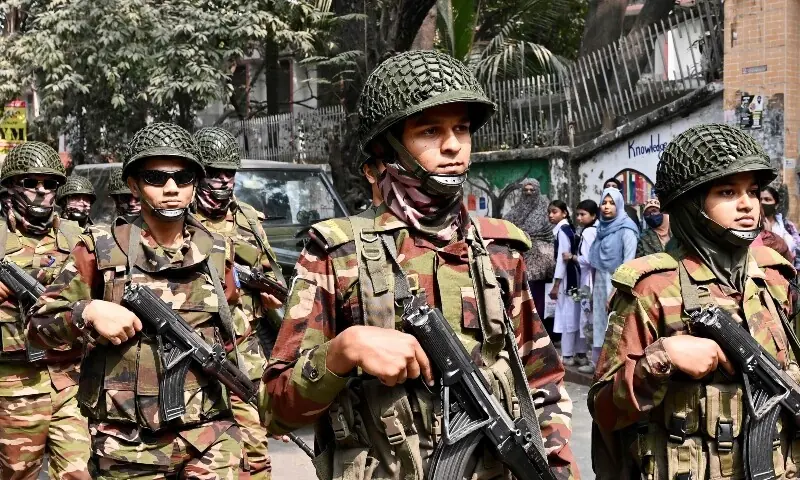
DHAKA: Bangladesh’s police chief said on Tuesday that more than 150,000 officers will be deployed for this week’s elections, warning that more than half of polling stations were flagged as vulnerable to violence.
Police records show that five people were killed and more than 600 injured in political clashes during the campaign period from Dec 11 to Feb 9.
More than 157,000 police officers, backed by 100,000 soldiers and other security forces, will guard Thursday’s vote — the first since a mass uprising toppled the autocratic government of Sheikh Hasina in 2024.
“We are 1,000 per cent confident about doing our part,” Inspector General of Police Baharul Alam told reporters in Dhaka.
Tarique Rahman warns of ‘huge’ challenges ahead
The country of 170 million has remained in political turmoil since the uprising against Hasina, when police carried out a deadly crackdown during her failed bid to cling to power.
Alam said police had assessed that “more than 24,000 polling centres have been marked as either high-risk or moderately risky” for possible unrest, violence or ballot stuffing — more than half of the 42,000 centres nationwide.
“The location of some centres is very remote, and there is intense competition, and hostility among candidates and their supporters,” he said, adding that 1,300 police guns looted during the 2024 unrest have still not been recovered.
“In high-risk and moderately risky centres, police will carry out patrol duty with body-worn cameras for the first time,” Alam said. He added that police were determined to ensure the polls were peaceful, but said he accepted that distrust of his force remained.
“It is quite understandable why people do not trust the police,” he said, adding: “Over the last 15 years, based on what we have delivered — in fact, for the last 150 years, our predecessors mostly beat people.”
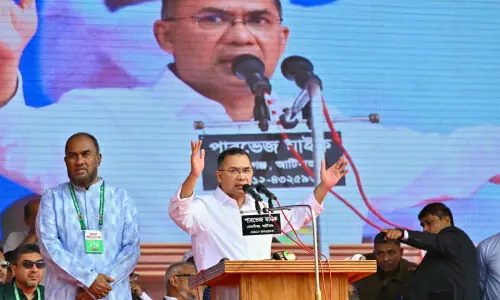
Meanwhile, Bangladesh’s leading prime ministerial hopeful Tarique Rahman said on Tuesday he faces “huge” challenges if he wins elections this week, vowing to repair a country he said was looted under the previous ousted government.
“We need to ensure a normal situation in the country, so that people are safe,” Rahman told AFP. But he warned the task ahead would be daunting.
Published in Dawn, February 11th, 2026