KP govt ordered to devise SOPs for use of social media by officials


 0
0
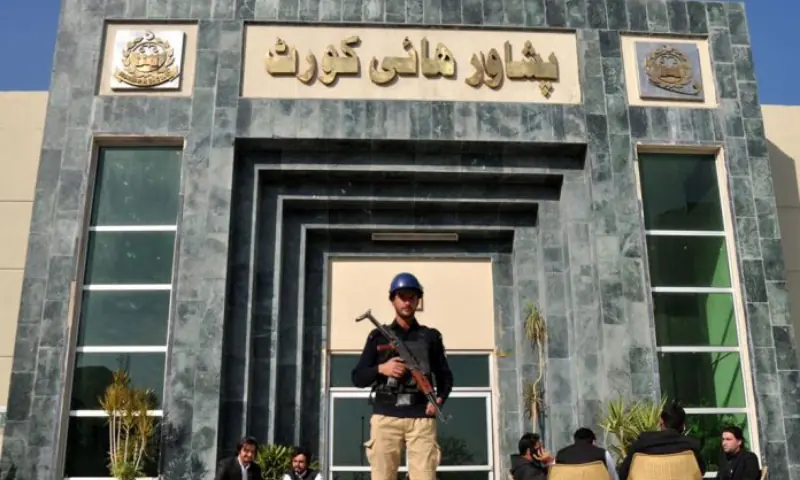

PESHAWAR: Peshawar High Court has ordered the Khyber Pakhtunkhwa government to devise standard operating procedures (SOPs) for regulating the use of social media by government officials and circulate the same among them.
A bench consisting of Justice Syed Arshad Ali and Justice Mohammad Faheem Wali directed the government to ensure that social media was not used for disseminating irrelevant or objectionable information relating to privacy of individuals.
The bench ordered that compliance report should be submitted to the court within a month.
The bench was hearing a petition filed by a citizen Mohammad Mehtab, challenging uploading of video footages of female students of Swabi Women University allegedly by the deputy commissioner from his Tiktok account last year.
PHC bench seeks submission of report within a month
The director of performance management and reforms unit (PMRU), office of chief secretary, had filed comments contending that the district administration maintained social media accounts for the purpose of public awareness.
“While the use of social media for public awareness may serve the public interest, uploading irrelevant information and soliciting public opinion thereon does not appear to be in the public interest,” the bench observed.
The PMRU in its comments stated that the interaction of government servants with media/social media was regulated under KP Government Servants (Conduct) Rules, 1987.
It stated that Rule 34(A) of the said rules stipulated that no government servant should use social media, discuss or share information on issues relating to government business. “However, social media may, if required, be used with the prior approval of administrative secretary, head of attached department, or commissioner, as the case may be, for disseminating information among the general public regarding government initiatives for better governance.”
Advocate Mohammad Hamdan appeared for the petitioner and stated that the grievances of his client were related to misuse of official social media accounts by officials of government departments, more particularly the administration including police as well as local administration of deputy commissioners, which had been established under the patronage of government.
He said that there were numerous complaints that those officials were misusing the said accounts, and in recent past, they had confronted several cases. He stated that the relevant deputy commissioner had visited a sports gala at Swabi Women University (SWU) and made videos of female students.
He claimed that after editing multiple video clips, the same was shared with objectionable songs through social media account of the deputy commissioner on Tiktok on Feb 21, 2025, which was in disregard to social norms and local code of life there.
He argued that videos of students couldn’t be shared on social media without their permission. He stated that government had given permission to officers to share information on social media applications of Facebook and X (former Twitter) through official accounts for public awareness, but they had been running personal accounts on Tiktok and sharing videos therein without the permission of relevant persons.
The counsel said that a government servant was not allowed to use Tiktok application as it had been affecting privacy of people. He requested the bench to stop government officials from making video clips of citizens anywhere, editing and uploading the same on social media.
Published in Dawn, February 11th, 2026