PM pledges $1bn investment in AI sector by 2030


 0
0

• Plan includes AI curriculum in federal schools, funding for 1,000 PhD scholarships, training of 1m non-IT pros in AI
• PM cites FBR digitisation as evidence of preparedness
• Digital Authority drafts ‘master plan’ to coordinate universities, global partners
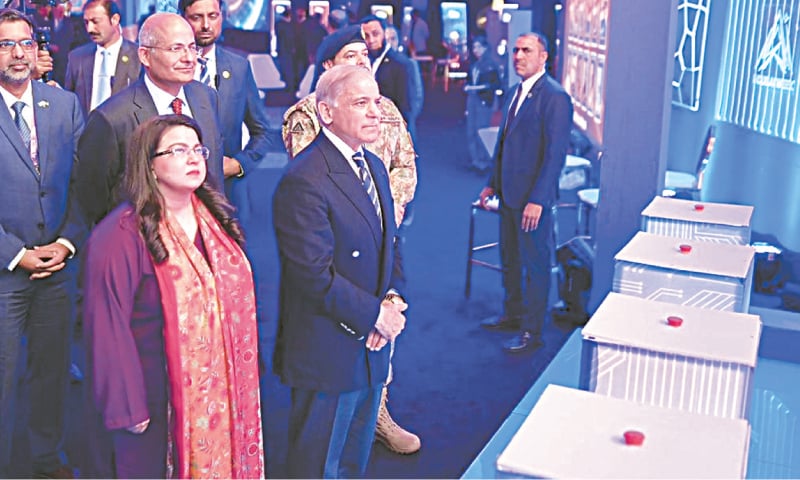
ISLAMABAD: Prime Minister Shehbaz Sharif announced on Monday that the government would invest $1 billion in the country’s artificial intelligence sector by 2030 to build a future-ready digital economy and empower the country’s youth.
Addressing the inaugural session of Indus AI Week, PM Shehbaz stressed the investment would help establish a robust AI ecosystem across Pakistan.
“Pakistan is absolutely ready to accept the challenge and work with our global partners, with great commitment and dedication,” he said.
In a move to equip the population with modern knowledge, the prime minister announced that an AI curriculum will be introduced in all federally run schools. Additionally, 1,000 fully funded PhD scholarships in AI will be offered to students from across the country by 2030. The government also plans to launch a nationwide programme to train 1 million non-IT professionals in AI skills to boost productivity and improve livelihoods.
Highlighting priority sectors, the prime minister said AI interventions would focus on agriculture, mines and minerals, industry, commerce, trade and youth empowerment.
He noted that with a population of around 240 million and nearly 60pc of young people there is an urgent need to equip them with modern techniques.
Addressing concerns among IT professionals about rapid technological change, he assured them that government programmes would help transform IT technicians into AI experts, unlocking “unprecedented gains” in agricultural yield, quality and efficiency, as well as industrial growth and women’s empowerment.
PM Shehbaz pointed to ongoing digital reforms as evidence of the nation’s readiness, citing the digitisation of the Federal Board of Revenue, improved revenue recovery through data-driven systems, and the use of modern scanners and digital instruments at ports to curb smuggling.
“We are recovering lost revenues through technology and offering quality training to our young men and women in agriculture, commerce and trade,” he said.
Recalling initiatives under the leadership of his brother, former prime minister Nawaz Sharif, the prime minister said the current push toward AI builds on earlier reforms.
He highlighted a laptop distribution programme for high achievers in Punjab, the establishment of e-libraries in remote areas, e-stamp papers and the digitisation of land records in partnership with the World Bank.
He also noted that Pakistan’s first Safe City project and first IT university were established in Lahore. “We have learned from the past, and today Pakistan is ready to join the world in AI interventions,” he said.
Minister for IT Shaza Fatima Khawaja said Indus AI Week aimed to strengthen coordination between universities, governments and international companies, underscoring Pakistan’s full commitment to a digital revolution.
She said the Pakistan Digital Authority was preparing a nationwide digital master plan to guide future transformation.
Minister for Planning Ahsan Iqbal noted that the world had entered a moment where intelligence itself has become a factor of production, with nations competing on ideas, talent, data and technology rather than commodities. He described AI as a bigger disruptor than electricity or the internet, noting that Pakistan’s engagement with technology began over two decades ago with early IT policies, the creation of the Nadra and large-scale investment in advanced human capital.
Published in Dawn, February 10th, 2026