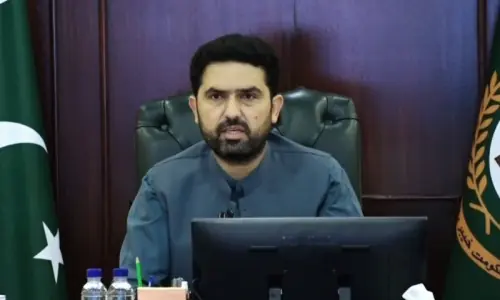
PESHAWAR: In a move to eliminate organised begging networks across the province, Khyber Pakhtunkhwa Chief Minister Sohail Afridi on Monday approved the ‘Vagrancy Control and Rehabilitation Bill’ for presentation before the provincial cabinet for consent.
He described the proposed legislation a historic and transformative step, saying the bill is aimed at dismantling the “beggar mafia” while adopting a rights based and rehabilitative approach for genuine victims of poverty and coercion, according toa statement from his office.
The bill was approved during a meeting chaired by CM Afridi, who emphasised that begging, driven by organised exploitation, coercion and fraud, would no longer be tolerated.
He said that the state had a constitutional and moral obligation to rescue children from forced begging and ensure their protection, rehabilitation and dignified reintegration into society and that the new law drew a clear line between the vulnerable and the exploiters.
Says professional beggars will be strictly punished, while those forced by poverty or abuse will be supported
“Those who turn begging into a profession or a business will face strict punishment, while individuals compelled by poverty or abuse will be supported through rehabilitation, skills training and employment opportunities,” he said.
According to details, the bill modernises the existing 2020 vagrancy law to address contemporary challenges, including organised begging rings, forced child begging, fake disabilities and fraudulent practices.
The statement said that begging was, for the first time, being treated not only as a law and order issue but as a complex social problem requiring long-term institutional solutions.
The punishments proposed in the bill include warnings, rehabilitation centre placement, or up to a month in the prison for first time offenders involved while those repeating the offense may face imprisonment of up to one year along with fines.
It has been proposed that begging through fraud, deception, or fake disabilities would carry prison terms of one to two years, while organised and forced begging networks may face up to three years in prison besides fines of up to Rs0.4 million.
“Ringleaders and facilitators of begging mafias will be subject to the strictest penalties under the law. A key feature of the bill is its strong focus on child protection,” the statement read.
Also, it has been proposed that children involved in begging will be dealt with under child protection laws, ensuring their removal from exploitative environments and placement into welfare and rehabilitation systems.
“To ensure effective implementation, the bill proposes establishment of a Provincial Steering Committee responsible for oversight, interdepartmental coordination, enforcement mechanisms, rehabilitation protocols and public awareness campaigns,” it said.
The statement added that the committee would have the authority to recommend administrative actions against organised begging networks, including restrictions on identity documents, financial instruments and international travel.
The proposed law also mandates the use of modern technology, including biometric systems, data sharing and digital monitoring tools, to enhance enforcement and prevent repeat exploitation.
Under the proposed framework, temporary shelter, healthcare, psychological support, education, vocational training and social reintegration services will be provided through rehabilitation centres and existing welfare institutions will also be utilised and upgraded for this purpose.
“To support these measures, a non-lapsable Vagrancy Control and Rehabilitation Fund will be created, financed through government grants, donations and support from national and international partners, the statement said, adding that the fund would be used for rehabilitation infrastructure, skills development, post rehabilitation support, employment pathways and public awareness initiatives,” said the statement.
It added that the proposed framework emphasised discouraging direct almsgiving on the streets and encouraging citizens to channel charitable support through verified rehabilitation systems, recognising public cooperation as a critical factor in breaking the cycle of exploitation.
“The bill positions KP to become the first province in the country to introduce a comprehensive, sustainable and humane framework to address begging, combining firm law enforcement with social justice, human dignity and long-term rehabilitation,” it added.
Published in Dawn, February 10th, 2026