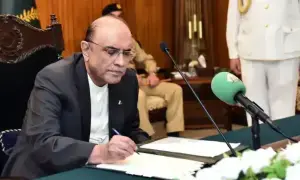
ICC, PCB officials meet in Lahore to discuss Pakistan’s boycotted match with India on Feb 15
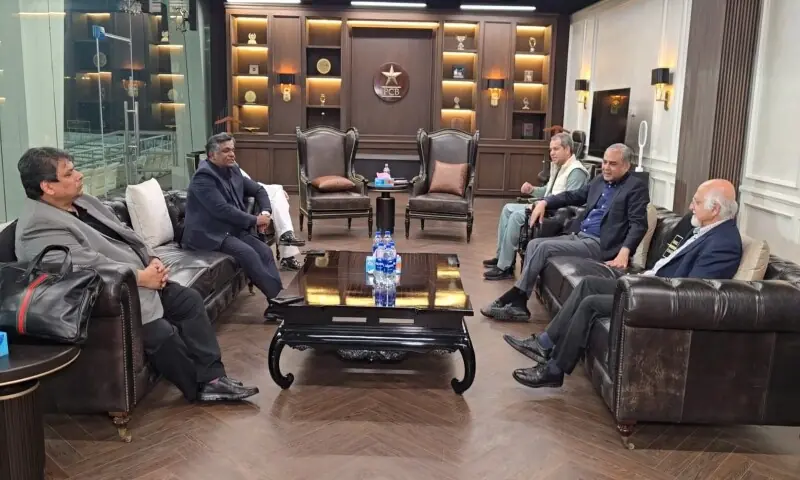


A meeting between the International Cricket Council (ICC) and the Pakistan and Bangladesh cricket boards was held at Lahore’s Gaddafi Stadium on Sunday to discuss Pakistan’s decision to boycott the T20 World Cup match with India on February 15.
The meeting was still in progress until late Sunday night, while the ICC, as well as the two cricket boards, decided not to speak to the media regarding the discussion.
After a four-hour meeting, no joint declaration was issued. Per sources, there was a break for a late-night dinner, and a second round of talks was scheduled after that.
Sources in the Pakistan Cricket Board (PCB) earlier told Dawn that the two sides will most likely announce the outcome of the meeting after receiving an endorsement from the Government of Pakistan.
They added that the main concern of the PCB expressed during the meeting was related to the “politics rampant at a large-scale level across the ICC affairs and India’s excessive involvement in it.”
The Board of Control for Cricket in India’s (BCCI) influence over the ICC decisions was not acceptable to Pakistan, according to a PCB source.
They added that the ICC had “nothing to offer to Bangladesh as compensation but to ensure it would get a full share from the ICC earnings.”
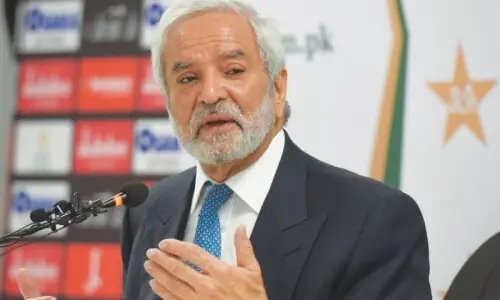
The sources further said ICC Deputy Chair Imran Khawaja advised the PCB to “move its case before the ICC arbitration committee or bring it up during the ICC board meeting, and end the boycott of the India-Pakistan match forthwith, as it was not good for cricket.”
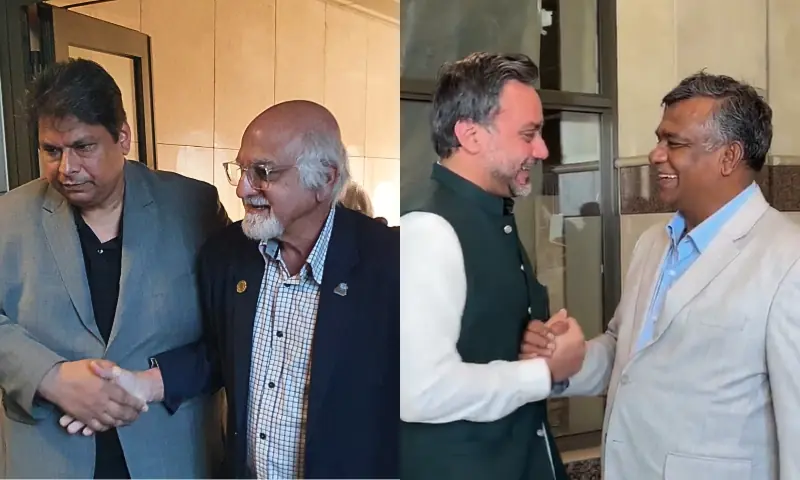
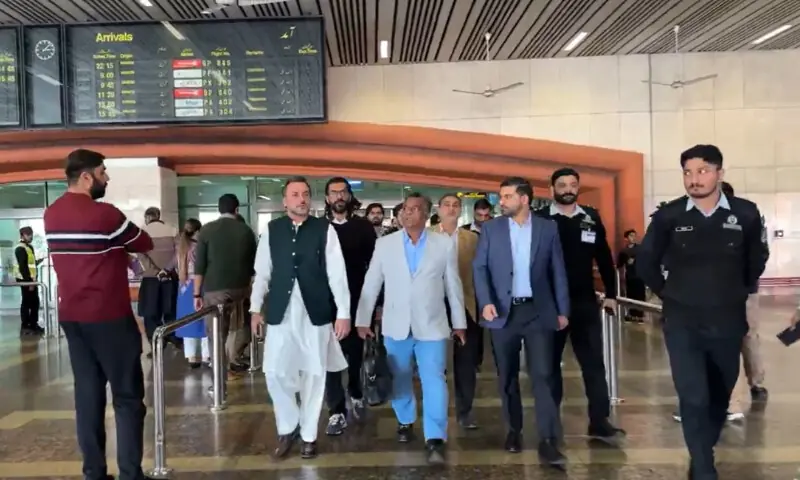
Earlier in the evening, Khawaja landed in Lahore to meet PCB Chairman Mohsin Naqvi, while Bangladesh Cricket Board (BCB) President Aminul Islam also separately arrived to partake in some meetings.
Confirming Khawaja’s arrival in a post on X, the PCB said the ICC official was greeted by Amir Mir, an adviser to the PCB chief, at the Lahore airport.
Separately, Naqvi welcomed Islam at Gaddafi Stadium, where the two held a meeting to discuss the “ongoing crisis”, the PCB said.
The BCB president thanked Pakistan for its “support” in the T20 World Cup matter.
Mir and Pakistan Super League (PSL) CEO Salman Naseer — also an adviser to the PCB chairman — were also present during the meeting.
Islam was welcomed earlier at the Lahore airport by Naseer and other officials.
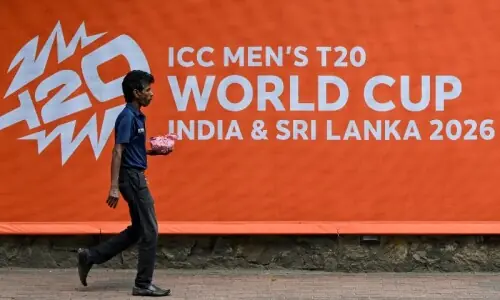
The high-level visits come a day after the ICC Men’s T20 World Cup commenced.
The 20-team tournament has been overshadowed by an acrimonious political build-up after Bangladesh, who refused to play in India citing security concerns, were replaced by Scotland.
Bangladesh remained firm on not taking part in the event after the ICC rejected their request to move their matches to Sri Lanka.
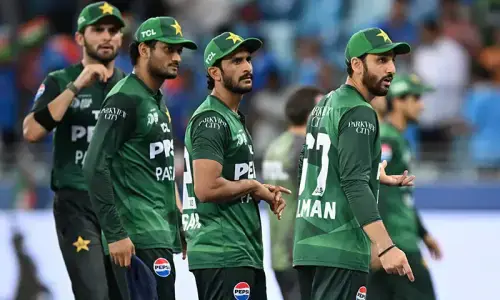
After mulling its stance over the arising situation, Pakistan gave its cricket team the nod to participate in the World Cup, but said the Green Shirts would not play their match with arch-rivals India, scheduled to be held in Colombo.
In response to the development, even before the official communication from the PCB, the ICC, in a statement, said the position of “selective participation is difficult to reconcile with the fundamental premise of a global sporting event where all qualified teams are expected to compete on equal terms per the event schedule”.
It expressed the hope that the PCB will consider the significant and long-term implications for cricket in its own country as this is likely to impact the global cricket ecosystem, which it is itself a member and beneficiary of.
“The ICC’s priority remains the successful delivery of the ICC Men’s T20 World Cup, which should also be the responsibility of all its member,s including the PCB. It expects the PCB to explore a mutually acceptable resolution, which protects the interests of all stakeholders,” the ICC stated.
A government source told Dawn at the time that Pakistan had refused to play against India to express solidarity with Bangladesh, who had been dropped from the tournament after refusing to play in India, which is one of the co-hosts of the ICC T20 World Cup.
According to the government source, the primary reason for boycotting the match with India was the ICC’s “biased decision” towards Bangladesh.
“The government of Pakistan wanted to show solidarity with Bangladesh. Therefore, as a protest, the national team was restricted from playing its match with India scheduled for February 15,” the source added.
Any clash between arch-rivals India and Pakistan is one of the most lucrative in cricket, worth millions of dollars in broadcast, sponsorship and advertising revenue.
It was reported earlier this week that ICC had initiated back-channel efforts to resolve the issue and avoid significant financial losses.
Sri Lanka’s cricket board asked Pakistan to reconsider the decision to boycott the match with India.
Sri Lanka Cricket (SLC) told the PCB that a boycott would result in a financial hit and also hurt the island’s tourism industry, which is still recovering from the 2022 economic meltdown.
Pakistan, who edged out the Netherlands in the tournament opener on Saturday, will lose two points if they forfeit the match and also suffer a significant blow to their net run rate.
Skipper Salman Agha has stated that if Pakistan were to face India in a semi-final or final, they would again consult the government.