0
0

BRUSSELS: The European Union is pushing ahead with plans to deport Afghans with no right to stay in the bloc back to their country, raising practical challenges and concerns from the UN refugee agency.
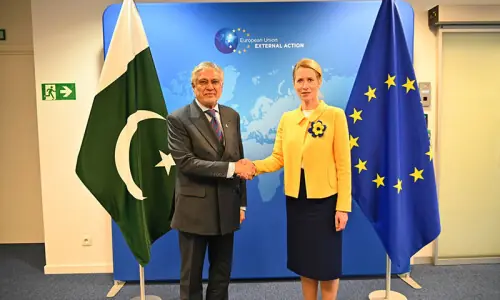
Under pressure from member states to crack down on irregular migration, Brussels has initiated contacts with the Taliban government in Kabul to assess the feasibility of returns.
European officials carried out two “technical missions” to the country — the latest in January — to “explore the structuring of the work on readmission and possible organisation of return operations”, Markus Lammert, a European Commission spokesman, said this week.
Returns would have been unthinkable only a few years ago and are fraught with legal and ethical concerns. Human Rights Watch warned this week the Taliban authorities “increased their repression” last year, citing new rules curbing media freedom and restrictions on women and girls.
But the issue of returns is now being pushed by a majority of the EU’s 27 nations following a souring of public opinion on migration that has fuelled right-wing electoral gains across the bloc.
“There has been a shift… where there’s much more talk about this,” said Arafat Jamal, the United Nations refugee agency’s representative in Afghanistan.
“It is extremely worrying because it seems like a policy based on emotion and reaction, but not on actual wisdom.”
Stepping up deportations has become a common refrain among EU nations, as fewer than 20 per cent of people ordered to leave the bloc are currently returned to their country of origin, according to official data.
Countries in the EU received about a million asylum applications filed by Afghans between 2013 and 2024, according to the bloc’s data agency. About half as many were approved over the same period.
Last year, Afghans represented the largest group of applicants, followed by Venezuelans and Syrians.
Italy, Poland and Sweden are among 20 EU countries that backed Belgium in urging the commission to enable voluntary and forced returns of those whose applications were rejected, with some lamenting that even convicted criminals could not be expelled.
Freddy Roosemont, director general of the Belgian Immigration Office, said his government was “currently working” with the EU executive and like-minded partners “to find a solution to this problem”.
Mass deportation
Meanwhile, some have pushed ahead.
Germany has deported more than 100 Afghans since 2024, via charter flights facilitated by Qatar.
Attitudes in the country have been hardened by a string of deadly attacks by Afghans in recent years, including a car-ramming in Munich last year and a 2024 stabbing spree in Mannheim.
Austria has followed, deporting the first Afghan man since 2021 in October.
Others, like France, have aired reservations.
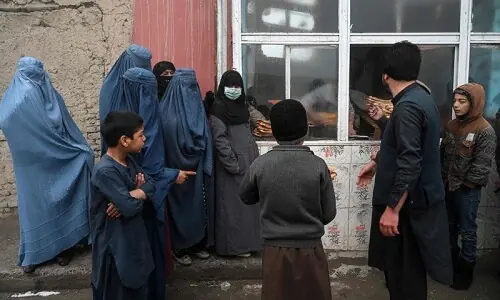
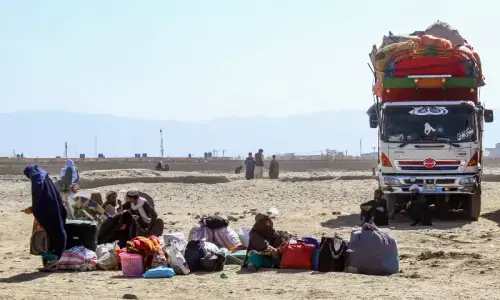
The country is in the midst of a humanitarian crisis, compounded by drought and huge cuts in foreign aid, rights groups say.
Published in Dawn, February 7th, 2026