0
0

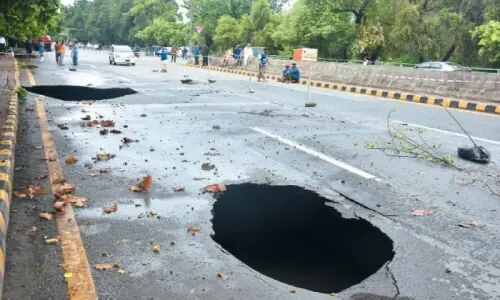
THE growing frequency of side-road cutting and refilling in the Defence Housing Authority (DHA) area in Karachi for gas pipelines, waterworks, and telecommuni-cations reveals a structural problem in infrastructure governance rather than a series of isolated inconveniences.
Each intervention is typically approved and executed within the mandate of a single utility or department. However, when viewed as a system, these actions form a reinforcing negative feedback loop that gradually degrades the residential environment.
Repeated excavation undermines the perceived durability of the public right-of-way. Residents respond rationally by deferring private investment in frontage repairs, boundary walls, sidewalks and surface finishes, anticipating future disruption. This results in a visible decline in streetscape quality that is often mis-interpreted as neglect, rather than as a predictable response to uncertainty.
The degraded visual and structural condition of the road then lowers the effective threshold for approving subse-quent cuts. Streets already in poor condition attract less resistance and weaker restoration scrutiny, which, in turn, accelerates deterioration. What emerges is a classic self-reinforcing downward spiral, driven not by malice or incompetence, but by fragmented decision-making and misaligned incentives.
From a technical perspective, utilities plan capital works independently, without a mandatory mechanism to synchronise interventions within a shared excavation window. As a result, the same road section may be opened multiple times within short intervals. The long-term cost of poor restoration is borne by residents and Cantonment Board Clifton (CBC), while utilities face minimal post-completion liability. Residents are given no credible signal that a restored road will remain undisturbed for a defined period, elimi-nating the incentive for complementary private maintenance.
These failures are well documented in urban infrastructure literature and have been addressed in other jurisdictions through relatively standard policy instruments. These include the ‘cut-once’ rule, meaning coordinated excavation policies, requiring all known utilities to complete planned upgrades during a single road opening cycle. Restoration per-formance bonds should be released only after the reinstated surface meets quality and durability benchmarks over time.
There should be shared underground asset registries, reducing reactive exca-vations caused by incomplete information. Finally, there should be moratorium periods following major restoration during which further cuts should be restricted except for emergencies.
Without such mechanisms, repeated short-term efficiency at the utility level produces long-term inefficiency at the neighbourhood level. Infrastructure meant to improve quality of life, instead, incre-mentally erodes it.
Until planning frameworks internalise cumulative impact and long-term beha- vioural responses, localities like the DHA would continue to experience slow, but persistent environmental decline even in the absence of any single, pointed failure.
Hasan Raza
Karachi
Published in Dawn, January 29th, 2026