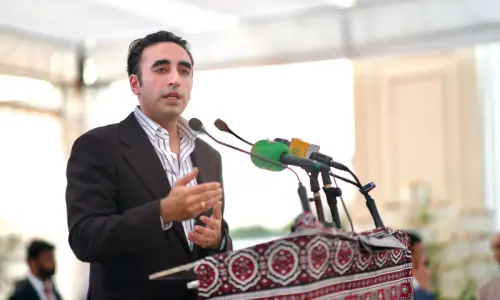
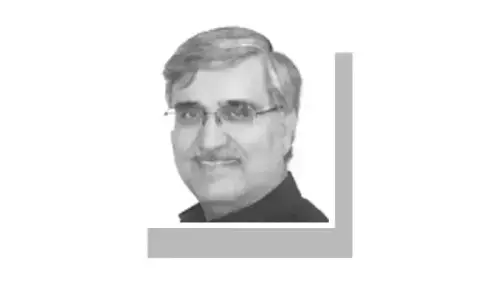
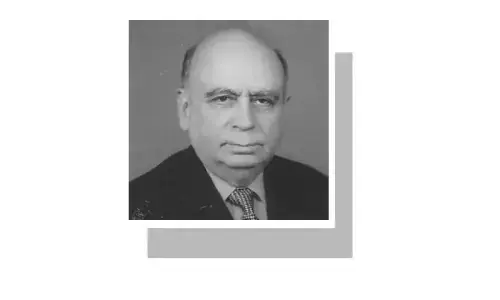
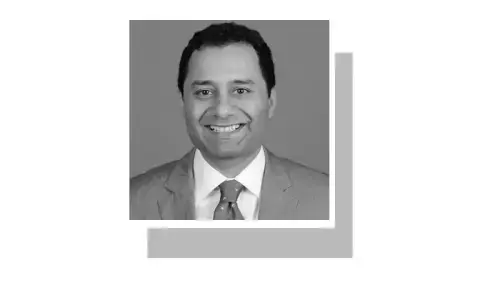
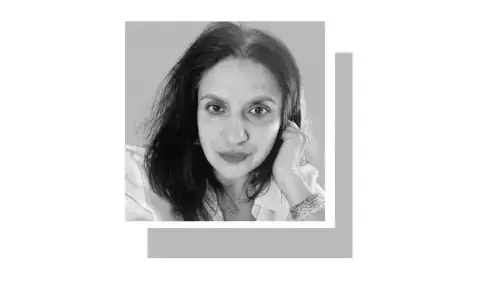
LAHORE: Minister of State for Finance Bilal Azhar Kiyani has said that the federal government will soon direct all retail outlets to at least give one option of digital payment to their customers.
He was speaking at the ThinkFest session on ‘Cashless Economy and Inclusion’ here on Sunday.
He said that provinces were also being asked to bring a harmonised set of laws in this regard to give an impetus to the cashless economy era. To incentivise the measure, the government had set aside a sum of Rs3.6 billion to subsidize the cost of introducing QR codes, he added.
The minister said that the government was also close to digitising all payments of the Benazir Income Support Programme by June 2026. He said that through the move, around 10 million beneficiaries would be able to draw their money from any microfinance outlet and would not be bound to any specific bank’s branch.
Mr Kiyani said that a steering committee, with due representation of the private sector, was working on a cashless economy and clear targets had been set for a 50 percent increase in the banking customers by June 2026. He said that all federal and provincial departments and service providers would only accept digital payments from July 2026.
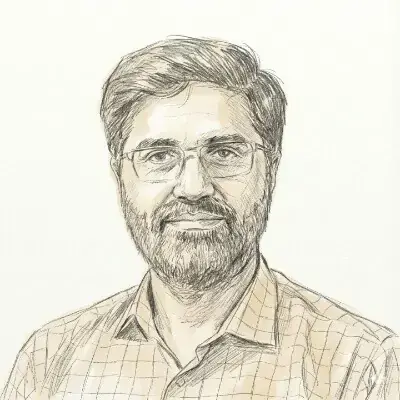
To highlight the behavioural difference between Pakistanis and other regional nations, State Bank of Pakistan former governor Dr Ishrat Hussain recalled that 18 years ago his cab driver in China stopped for food and paid his bill by scanning a QR code. However, he had to purchase a Rs300,000 air-conditioner from Karachi in cash last year. Four large shops of different known brands he visited refused to accept payment through digital or bank channels to avoid tax officials, he added.
He suggested making all business transactions through formal banking channels or digital wallets mandatory beginning with large shops. He said that so far 90pc digital transactions were being made through easypaisa and jazzcash wallets. He said that people preferred wallets over banking channels perhaps because of the long banking process and cost.
He said Pakistan would have to adopt a cashless economy because the cost of printing currency bills was too high and it could be curtailed only through digital transactions. He suggested that tax authorities should offer rebates on digital transactions.
Referring to e-commerce platforms in the country, Dr Ishrat said that 78pc of the transactions were being made in cash, while in other countries it was a maximum of 30pc.
He lamented that Bangladesh, which was once trailing far behind Pakistan, had surpassed Pakistan by ending poverty only because of the inclusion of the womenfolk into their labour force thanks to the Grameen Bank. He said poor areas, including Balochistan, interior Sindh and south Punjab, were still being ignored in taking various initiatives for eliminating poverty.
Nassir Salim, President and CEO of HBL, talked about the incentives and government support for promoting cashless economy as the policy required technology that was expensive and required huge investment.
Nofel Daud, Chief Digital Officer of the Bank of Punjab, shed light on the hurdles in the existing digital payments and BoP’s experiences in handling disbursements to small farmers and women entrepreneurs.
Published in Dawn, January 26th, 2026